
Vladimir Gusinsky's estimated net worth in 2026 is in the range of roughly $5 million to $10 million, a dramatic collapse from the peak of his fortune in the late 1990s when his Media-Most empire was valued at close to $1 billion. That number comes directly from a January 2025 financial affidavit Gusinsky filed in Connecticut divorce proceedings, where he declared total assets of $5,929,000 and described himself as essentially living in debt. So if you came here looking for a clean headline figure: the man once considered one of Russia's most powerful oligarchs now has a publicly documented net worth that wouldn't put him on anyone's billionaire list.
Vladimir Gusinsky Net Worth: How Estimates Are Calculated

Konstantin Volkov
16 Apr 2026
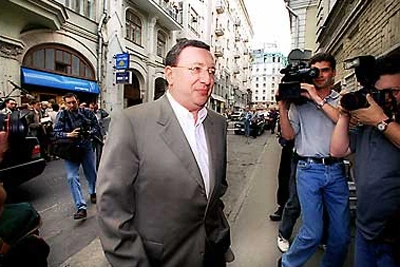
Who Gusinsky is and why his wealth is genuinely hard to pin down

Vladimir Aleksandrovich Gusinsky is a Russian-Israeli media tycoon who built the Media-Most group in the 1990s, which included the NTV television channel, the newspaper Segodnya, and several other media properties, along with Most Bank as a financial backbone. He was one of the emblematic oligarchs of the Yeltsin era: a media owner with enormous political reach who used his platforms to shape public opinion and, by many accounts, used political connections to build his business empire in the first place.
The problem with valuing Gusinsky is layered. First, his wealth was built during Russia's chaotic privatization period, when asset valuations were opaque, debt was entangled with equity, and ownership structures ran through multiple jurisdictions. Second, his exile from Russia starting around 2000 and the forced transfer of his media assets to Gazprom meant that most of what he built was stripped away through a combination of debt enforcement and political pressure. Third, he has since operated outside the public business spotlight, making it very hard to track what, if anything, he retained or rebuilt. Those three factors together mean that any net worth estimate requires careful sourcing and a clear explanation of which time period you're talking about.
The current estimate and what it's based on
The most reliable data point we have for Gusinsky's current wealth is the January 1, 2025 financial affidavit he submitted in Connecticut court as part of divorce proceedings, first reported by Agentstvo. In that document, Gusinsky listed total assets of $5,929,000. The breakdown includes two Connecticut properties: one valued at approximately $1.8 million after deducting mortgage debt, and another at roughly $4 million after deducting debt. He also listed an account at Israel's Mizrahi-Tefahot bank. Critically, the affidavit also references outstanding liabilities that offset those asset values, and Gusinsky explicitly stated he had lost his business and was carrying debt.
Based on that affidavit, a defensible range for his current net worth in 2026 is approximately $5 million to $10 million. The low end reflects the declared asset total essentially at face value with liabilities factored in. The upper end allows for the possibility of assets not captured in the U.S. court filing, such as undisclosed interests in Israeli or offshore accounts, or stakes in private businesses that were not required to be listed. In the absence of any contradicting documentation, the affidavit number should be treated as the floor, not an exaggeration. Court-filed financial disclosures carry legal consequences for misrepresentation, which makes them more reliable than most secondary estimates.
How the estimate is actually calculated

When building a net worth estimate for someone like Gusinsky, the methodology involves four components: documented assets, estimated stakes in private or semi-private businesses, known income streams, and verifiable liabilities. Here's how those break down in his case.
- Documented assets: Two Connecticut real estate properties (gross values approximately $1.8 million and $4 million before debt, per the 2025 affidavit), plus a bank account at Mizrahi-Tefahot in Israel. Total documented assets roughly $5.9 million.
- Business stakes: No known current operating business stakes have been publicly verified. His Media-Most holdings were transferred to Gazprom by 2001 following debt enforcement. There is no public record of subsequent major business interests.
- Income streams: No verified current income stream from business operations is documented in public sources. Any income from real estate, consulting, or private arrangements is unconfirmed.
- Liabilities: Mortgage debt against both Connecticut properties and other obligations referenced in the affidavit. Net equity is materially lower than gross asset values. Gusinsky himself characterized his financial position as one of net debt.
The honest answer is that the calculation is largely constrained to what the 2025 affidavit tells us, because no other verified financial disclosure exists for the post-exile period. Unlike some of the other Russian-origin figures tracked on this site, Gusinsky has not appeared on Forbes Russia or Forbes billionaire lists for well over two decades, which itself is informative.
The wealth-building milestones that shaped his holdings
Understanding how Gusinsky accumulated wealth in the first place matters for interpreting what he lost and what might remain. His ascent followed a pattern common to the Yeltsin-era oligarchs: early access to privatized assets, proximity to power, and rapid leverage of banking relationships into diversified holdings.
- Early 1990s: Founded Most Bank, which served as the financial engine for Media-Most's later expansion. Banking access in the immediate post-Soviet period was enormously lucrative for those who obtained licenses early.
- Mid-1990s: Built the NTV television channel into Russia's first independent national broadcaster with genuine editorial credibility, and assembled Media-Most as an umbrella group covering print, radio, and television assets.
- 1996: Media-Most and NTV were widely credited with helping Boris Yeltsin win reelection through favorable coverage, which at the time cemented Gusinsky's political influence and shielded his business interests.
- Late 1990s: Media-Most accumulated significant debt, including a $260 million loan backed by Credit Suisse-First Boston, with Gazprom as a guarantor. That debt arrangement became the lever used to transfer NTV control.
- 2000: Gusinsky was arrested briefly in June 2000 under Putin's government on fraud charges, then released and allowed to leave Russia. He signed an agreement to transfer Media-Most assets to Gazprom, later claiming the deal was made under duress.
- 2000-2001: Gazprom, in exchange for writing off approximately $211 million in debt, displaced Gusinsky as the largest voting shareholder in NTV and obtained stakes in Media-Most subsidiaries. PBS Frontline/World described NTV as 'valued at $1 billion' at the time of the takeover, indicating the scale of what was effectively confiscated.
- Post-2001: Gusinsky settled in Israel and Spain, attempted limited media ventures, but never rebuilt anything approaching his former scale.
Legal controversies and why they complicate the data

Gusinsky's case is almost a textbook example of how legal and political entanglement makes wealth estimation unreliable. The NTV affair, as it became known, involved simultaneous use of criminal prosecution, debt enforcement, and shareholder dilution. Gazprom received additional NTV shares tied to the Credit Suisse-First Boston loan guarantee, and also became a co-owner holding 46% of NTV shares at a key point in the dispute. The Los Angeles Times reported in November 2000 that the debt-for-equity swap effectively handed Gazprom control of both NTV and significant portions of Media-Most's subsidiary holdings.
For net worth purposes, this matters because it is genuinely unclear how much Gusinsky received in cash or retained in non-Russian assets from these transactions. He signed over assets under conditions that he and his representatives have consistently described as coerced. Whether any meaningful cash consideration changed hands, and where it went if so, is not publicly documented. This creates a legitimate data gap: the theoretical value of his media empire at its peak tells you almost nothing about what he actually retained.
The ongoing divorce proceedings in Connecticut, which produced the 2025 affidavit, add another layer. The Connecticut Judicial Branch hosts official family-court filing information and legal forms, including Financial Affidavit resources used in divorce matters. Court filings are the most reliable public window into his current finances, but divorce proceedings are also a context where parties may have strategic reasons to minimize declared assets. That's worth keeping in mind when using the $5.9 million figure as a baseline.
For context on how other controversial political-adjacent Russian figures handle wealth disclosure, the profile of Vladimir Zhirinovsky's net worth is instructive: political proximity in Russia rarely produces transparent financial records, and the same opacity that characterized Zhirinovsky's finances is even more pronounced in Gusinsky's case given his exile status.
Why different websites show wildly different numbers
If you've searched for Gusinsky's net worth before landing here, you've probably seen figures ranging from a few million dollars to several hundred million dollars. Here's why those discrepancies exist and how to read them.
| Source Type | Typical Figure Cited | Why It's Unreliable |
|---|---|---|
| Celebrity net worth aggregator sites | $50M–$300M | These sites typically anchor to peak-era valuations or estimates from the late 1990s without accounting for asset losses after 2000. Many use each other as sources rather than primary documents. |
| Wikipedia-style summaries | Vague or no current figure | Often accurate that 'Media-Most was valued at ~$1 billion' but conflate that with personal net worth, which is a different number entirely. |
| Court filings (2025 affidavit) | $5.9M in declared assets | Most recent, legally sworn, primary source. Best available data for current wealth. |
| Forbes historical lists | Not listed (post-2001) | Gusinsky dropped off Forbes Russia lists after losing Media-Most. Absence from the list is itself data. |
| Investigative journalism | Variable; context-dependent | Most reliable secondary source if based on verified documents, but conclusions depend on time period covered. |
The core methodology problem is that many sites estimate net worth by taking a historical peak valuation and applying a rough discount rather than tracking actual documented assets over time. Gusinsky's case is extreme because the gap between his 1990s peak and his documented 2025 position is so large. If a site tells you he's worth $200 million, they are almost certainly working from outdated or unverified estimates. The 2025 court affidavit is a hard data point that should anchor any credible current estimate.
This kind of valuation drift is common across the profiles we track. Compare it to someone like Vladimir Yakunin's net worth, where the estimates from different outlets also vary significantly because much of his wealth is held through structures that are deliberately difficult to trace. The difference is that Yakunin's wealth is likely understated in public sources, whereas Gusinsky's is often overstated due to anchoring on pre-confiscation valuations.
How to verify and track this yourself going forward

If you want to stay current on Gusinsky's financial position or verify what you've read here, the following checklist covers the most useful practical steps you can take today.
- Check Connecticut court records: The divorce proceeding that produced the January 2025 affidavit is in Connecticut state court. PACER (for federal cases) or the Connecticut Judicial Branch's online case lookup can surface new filings if the case is ongoing or produces updated financial disclosures.
- Search Israeli corporate and property registries: Gusinsky has long-standing ties to Israel and holds at least one Israeli bank account (Mizrahi-Tefahot per the affidavit). Israeli land registry records and company registrar filings (accessible via the Israel Corporation Authority) can surface property ownership or business interests.
- Monitor Agentstvo and iStories (Important Stories): These Russian investigative outlets have demonstrated access to Gusinsky-related documents and are the most likely venues to break new verified financial information.
- Cross-reference with Gazprom's historical filings: If you want to understand the full scope of what was transferred, Gazprom's annual reports from 2001 to 2004 contain references to the Media-Most asset acquisitions, which helps bracket what Gusinsky gave up.
- Flag any new Forbes or Bloomberg mentions: Gusinsky's absence from wealth rankings is significant. Any reappearance would signal a verified financial recovery worth investigating.
- Be skeptical of any estimate above $20 million that lacks a source: Given the 2025 affidavit, any site claiming Gusinsky is worth hundreds of millions should be asked for its primary source. If they can't name one, the number is unreliable.
One additional note on methodology: when reading net worth profiles of Russian or post-Soviet figures generally, always check whether the cited figure represents personal liquid wealth, the estimated value of a business the person controls, or the declared value of assets in a court or regulatory filing. Those are three very different things, and conflating them is the single most common error in this space. For a cleaner comparison of how wealth is estimated for figures with more stable and traceable portfolios, look at the approach used for Vladimir Chernukhin's net worth, where UK court proceedings and property records provide a more complete documentary trail.
Where Gusinsky sits among Russian-origin wealth profiles
To put Gusinsky's current financial position in perspective, consider that he went from controlling a media group that PBS Frontline/World associated with a $1 billion valuation to declaring roughly $5.9 million in assets in a U.S. court. That trajectory is almost uniquely dramatic, even by the volatile standards of post-Soviet oligarch wealth. Most of the figures tracked on this site either retained or grew their wealth after the 2000s consolidation of Russian business under state-aligned interests. Gusinsky is one of the clearest examples of what happened to those who didn't.
By comparison, figures like Vladimir Ashkenazy, whose net worth was built through an entirely different path in classical music performance and conducting, show that substantial wealth accumulation outside of Russia's privatization economy produced very different long-term stability. Similarly, the financial arc of Vladimir Kramnik, built through chess prize money and sponsorships, illustrates how career-based wealth in a non-political field carries entirely different risk profiles than oligarch-era business empires.
Gusinsky's case also illustrates why tracking wealth across different asset classes and jurisdictions matters. His Israeli banking relationship and U.S. real estate are the visible remnants of what was once a sprawling cross-border financial network. For another example of how Soviet-era figures navigated international financial positioning, the profile of Vladimir Horowitz's net worth offers useful context on how personal wealth was structured across borders during very different political periods.
It's also worth noting that Gusinsky's story involves media-sector wealth specifically, which follows different dynamics than resource or industrial wealth. The profiles of Vladimir Galkin and Vladimir Korneev reflect how entertainment and performance-based wealth in the Russian-speaking world tends to be smaller in absolute terms but also less exposed to state-directed confiscation, making it structurally more durable over time.
The bottom line on Gusinsky's wealth in 2026
Vladimir Gusinsky's current net worth is best estimated at approximately $5 million to $10 million, anchored by a January 2025 sworn financial affidavit declaring $5,929,000 in assets. A Connecticut divorce financial affidavit is a sworn disclosure document used for court decision-making and includes disclosure of assets and liabilities, among other categories sworn financial affidavit. He controls two Connecticut real estate properties and an Israeli bank account, carries mortgage and other debt against those assets, and has no publicly documented active business interests. His peak wealth, tied to the Media-Most empire and NTV, was stripped through a combination of debt enforcement and political pressure between 2000 and 2001, when Gazprom acquired effective control of his media holdings in exchange for writing off roughly $211 million in debt. Any online estimate significantly above $10 million should be treated as anchored to his pre-confiscation peak rather than his current documented position.
FAQ
If the filing is from January 2025, why does the estimate say 2026 net worth? What changes in between?
Yes, but it should be treated as a snapshot tied to a specific filing. Divorce-court disclosures are dated and reflect what the person was willing or required to describe at that time, so they can drift afterward (for example, unpaid obligations changing, property values moving, or income changing). For Gusinsky, the most defensible baseline is still the January 2025 affidavit, not an open-ended “current year” claim.
Why do some websites claim Vladimir Gusinsky net worth is hundreds of millions?
You should assume most billionaire-style numbers come from peak-era valuations or from mapping business valuations onto personal ownership without proof. In Gusinsky’s case, that is especially misleading because his peak media valuations do not translate cleanly into personal assets after the debt enforcement and forced transfer period. A credible estimate should align with court-filed asset and liability information rather than reuse older peak figures.
Does the $5 million to $10 million estimate already account for debt, or could his liabilities be higher?
The range is meant to be a net figure after considering liabilities, but the quality depends on how complete the liabilities list is. The affidavit you’re anchored to includes debt offsets, but it may not capture every contingent obligation (for example, disputes, potential claims, or obligations that were not finalized at the time). That is one reason credible estimates are expressed as a range rather than a single number.
Could Vladimir Gusinsky’s actual net worth be higher than $10 million if he has undisclosed assets?
It is possible, but the article’s range already includes that possibility in a limited way. An estimate above the affidavit could come from undisclosed stakes in private entities, unlisted accounts, or assets held through structures not reflected in the U.S. filing. Because there is no publicly documented update, those upside possibilities cannot be quantified, which is why the range tops out near $10 million.
Why doesn’t the NTV or Media-Most peak valuation equal his current net worth?
It would be easy to overestimate if you assume he “still owns” the Media-Most or NTV stakes at historical valuation levels. The article describes that ownership and effective control shifted through debt enforcement and political pressure, so net worth today depends on what he retained afterward, not on what those companies were once valued at.
What’s the biggest mistake people make when comparing net worth figures for Vladimir Gusinsky?
Use the context to avoid mixing categories. Court filings often describe declared total assets, which may include real estate and accounts, and they are not the same as the value of a business he does or does not control, and they are not the same as liquid wealth. A common mistake is to treat a business valuation or a peak portfolio estimate as “personal cash,” which inflates the number.
Could the divorce affidavit understate Vladimir Gusinsky’s net worth, even if it’s court-filed?
Yes. In the divorce setting, parties can have incentives to emphasize financial hardship, but court filings still come with penalties for misrepresentation and must be internally coherent to survive scrutiny. The practical takeaway is not that the affidavit is perfect, but that it is more reliable than secondary estimates, while still leaving room for uncertainty about what was not listed.
How can I verify a new net worth estimate I see online for Vladimir Gusinsky?
Check the source and the timing. If a claim does not tie back to a dated sworn disclosure, it is usually a reconstruction based on old valuations. Also verify whether the figure is presented as net worth, asset value, or business value. Even a number that sounds plausible can be wrong if it is not clearly defined.
Why might Israeli banking or offshore structures make net worth hard to estimate accurately?
It can, because some assets are easier to list than others. Real estate and identifiable bank accounts tend to be visible in filings, but private business interests, offshore structures, and partnership stakes can be harder to characterize, which can cause estimates to undercount or require assumptions. That is why the article includes the “not captured in the filing” possibility in the upper bound.
What would be the most reliable way to get an updated Vladimir Gusinsky net worth beyond the 2025 affidavit?
Look for any additional court filings or sworn disclosures that update the asset and liability picture, such as later amendments in divorce proceedings or other legal matters in relevant jurisdictions. Without new verified documents, most “updated” numbers are just rehashing the 2025 baseline using new rounding or outdated peak assumptions.
Next Articles

Vladimir Galkin Net Worth Estimate and How It’s Calculated
Vladimir Galkin net worth estimate with method, income sources, assets, uncertainty factors, and how to verify today.
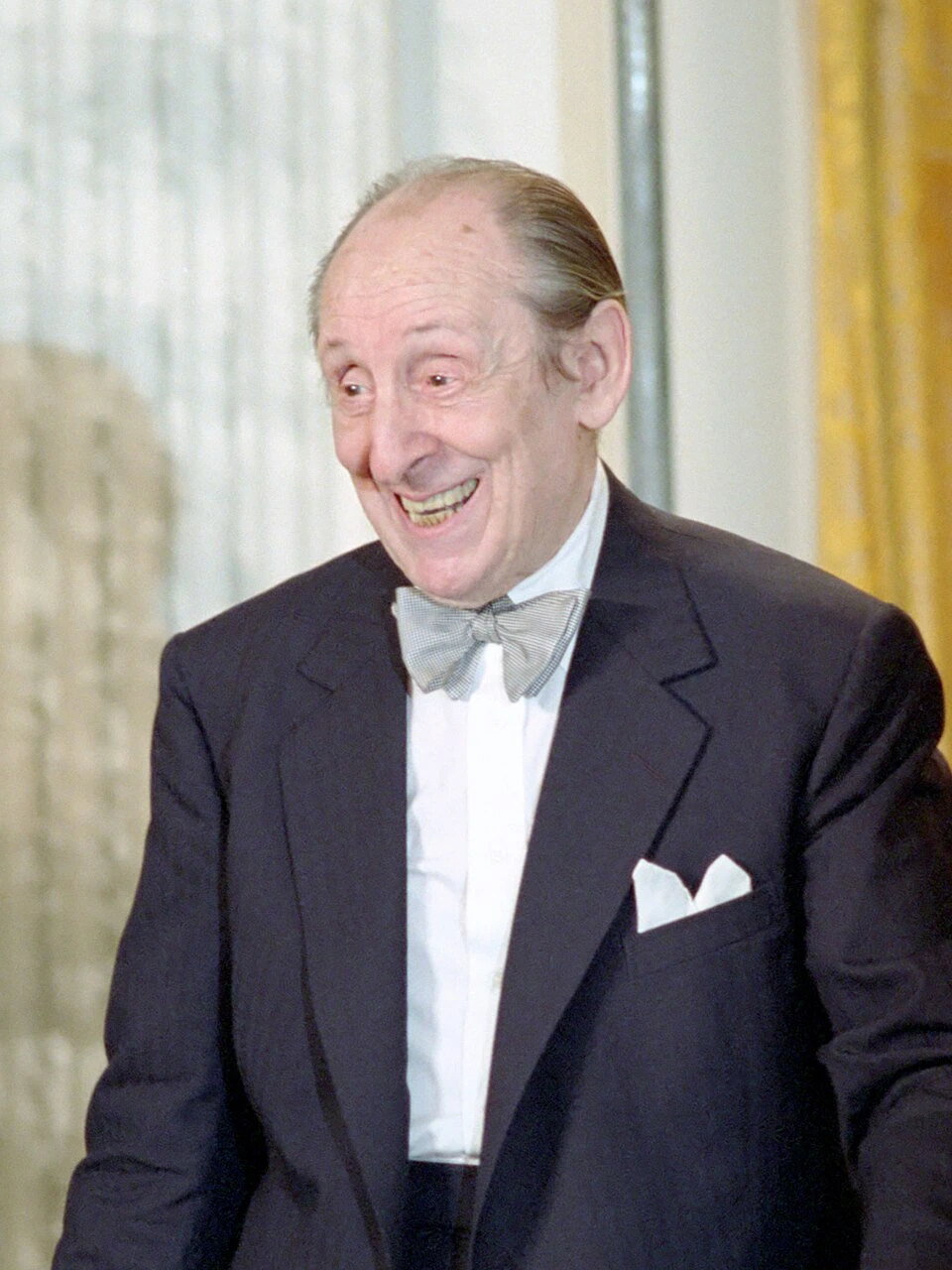
Vladimir Horowitz Net Worth Estimate Today and How It’s Calculated
Vladimir Horowitz net worth estimate today with range, assumptions, and step-by-step method using earnings, assets, and
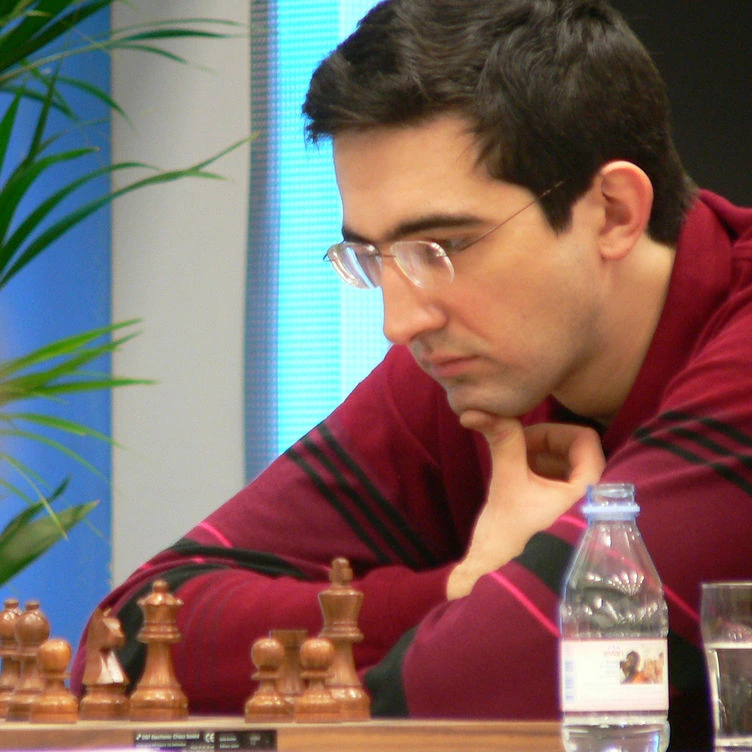
Vladimir Kramnik Net Worth: Estimated Wealth and How It’s Measured
Vladimir Kramnik net worth estimate explained: income sources, valuation methods, why figures differ, and how to verify.