Vladimir Zhirinovsky's estimated net worth sits in the range of $130 million to $150 million, driven almost entirely by assets his family holds that were never declared through official Russian channels. The headline figure comes from an OCCRP investigative report that valued undeclared family property at approximately $135 million, covering a villa in Spain, a hotel in Ibiza, and multiple Moscow apartments. His official Duma income declarations, by contrast, showed roughly 22.4 million rubles (around $300,000 at 2019 exchange rates) for his best-declared year. The gap between those two numbers is exactly what makes his wealth profile so important to understand before quoting any single figure.
Vladimir Zhirinovsky Net Worth: Estimated Wealth, Sources

Konstantin Volkov
30 May 2026
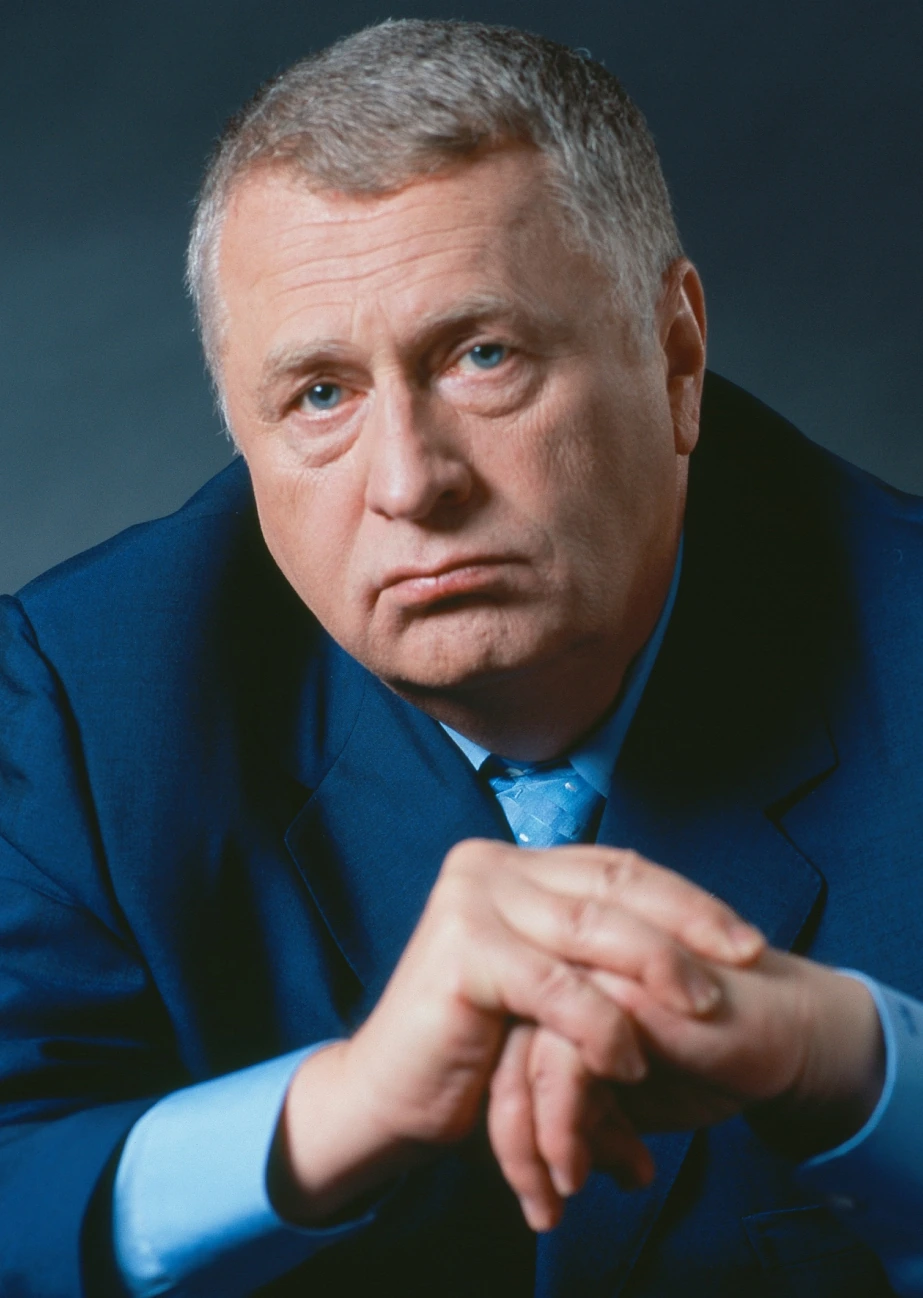
Who Vladimir Zhirinovsky was and why the net worth question matters

Vladimir Volfovich Zhirinovsky (April 25, 1946 – April 6, 2022) was one of the most recognizable politicians in post-Soviet Russia. He founded and led the Liberal Democratic Party of Russia (LDPR) from its establishment in 1991 until his death, making him one of the longest-serving party leaders in modern Russian politics. Despite the party's name, the LDPR functioned as a loyal nationalist opposition within the Kremlin's political ecosystem, giving Zhirinovsky a permanent platform in the State Duma across multiple parliamentary terms.
His net worth matters for a few reasons beyond pure curiosity. For context, Vladimir Galkin net worth questions are typically discussed using the same kind of public-source and asset-tracing approach. First, he was a career politician in a country where public officials are required by law to file annual income and property declarations, so there is a paper trail to examine.
Second, investigative journalism revealed a large gulf between what he declared and what his family reportedly controlled, making his case a textbook example of how wealth can be structured around a political figure without appearing on their personal balance sheet. Third, he died in 2022, meaning any ongoing updates to his estate value relate to posthumous asset tracking rather than new income streams, which changes how you interpret estimates you find online today.
What 'net worth' actually means in this context
When a website publishes a net worth figure for a Russian politician like Zhirinovsky, that number is almost never a direct measurement. It is an estimate, and the inputs that go into it vary widely depending on who is doing the calculation. There are three layers worth separating out.
- Official income declarations: Russian Duma deputies file annual declarations listing their income and property. These are public documents posted on the State Duma's website. They show what the official chose to report, not necessarily everything they own.
- Investigative asset estimates: Journalists at outlets like OCCRP trawl land registries, corporate filings, offshore leak databases, and court records to identify assets linked to a politician or their close associates. These estimates are broader but carry their own methodological assumptions.
- Aggregated net worth estimates: Celebrity net worth sites combine declared income, known real estate, and investigative findings into a single headline figure. These are blended estimates, not audited figures, and they can go stale quickly if they are not updated after new investigations drop.
- Posthumous estate value: Because Zhirinovsky died in April 2022, any figure published after that date reflects asset values at or near the time of his death, adjusted for property market shifts since then. His estate is not generating new political income.
The most honest way to read any published figure is as a floor or midpoint estimate with significant uncertainty on the upside, especially when offshore holdings are involved. The OCCRP methodology for its Russian Asset Tracker, for instance, explicitly draws on land records, corporate registries, and offshore leak data to build profiles for politically connected individuals, and the researchers note that beneficial ownership structures frequently obscure the true picture even after deep investigation.
The credible net worth range and where the numbers come from

Here is what the available evidence actually supports, broken down by source type.
| Source | Figure / Detail | What it covers |
|---|---|---|
| State Duma declaration (2019) | 22,450,933 rubles (~$300K at 2019 rates) | Official declared income only; no offshore or family assets |
| State Duma declaration (2018) | 6,761,000 rubles (~$100K at 2018 rates) | Official declared income only |
| State Duma property declaration (2018, via URA.ru) | 8 residential houses, 2 garages, 2 land plots, 1 pool | Declared property in his name; does not include assets held by family members |
| OCCRP investigative report | ~$135 million in undeclared family property | Villa in Spain, hotel in Ibiza, multiple Moscow apartments held through family members not formally married to him |
| Aggregated estimate (analyst range) | $130M – $150M | Blended figure combining declared assets, OCCRP findings, and estimated property appreciation |
The OCCRP investigation is the single most significant data point for the high end of the range. Investigators found that assets worth around $135 million were structured so that they were held by women in his family network rather than in his own name, which is why none of it appeared in his official declarations. The OCCRP investigation similarly found undeclared property worth about $135 million belonging to Vladimir Zhirinovsky's family. That structure is not unusual among Russian political figures; it is a standard mechanism for keeping assets off a personal declaration while maintaining practical control.
The low end of the range is anchored by his declared income history. His 2019 Duma declaration, reported by both TASS and Interfax, showed him as the highest earner among Duma faction heads that year at 22.4 million rubles, but even that figure converts to under $400,000. Add the declared property portfolio, apply reasonable Russian real estate valuations, and you are still well under $5 million on declared assets alone. The OCCRP $135 million figure is therefore the dominant driver of any credible net worth estimate.
Why the numbers you find online often conflict
If you have searched Zhirinovsky's net worth and gotten wildly different answers, there are several concrete reasons for the discrepancy.
- Different base years: Some sites use his 2018 declared income, others use 2019. The 2019 figure is more than three times higher, so the starting point alone creates a large spread.
- Currency conversion timing: Ruble-to-dollar conversions fluctuate significantly. A 2019 calculation at 63 rubles per dollar gives a very different result than one done after 2022 sanctions-driven ruble volatility.
- Inclusion or exclusion of family assets: Sites that only count declared personal assets will produce a figure in the low millions. Sites that incorporate the OCCRP findings will produce a figure above $100 million. Neither is necessarily wrong; they are answering different questions.
- No direct valuation of private holdings: The OCCRP report identified assets but did not perform a formal appraisal of each property. The $135 million figure is an investigative estimate, not a certified valuation, so analysts applying different discount rates or market comparables will land on different numbers.
- Posthumous stagnation: Some sites published a figure in 2021 or early 2022 and have not updated it since his death. Russian real estate values, ruble exchange rates, and the status of offshore assets have all shifted materially since then.
- Offshore opacity: Assets held through Spanish or offshore corporate structures are inherently difficult to value without access to current ownership records and sale prices, meaning any published figure carries a wide confidence interval.
How to verify or update the estimate yourself

If you want to go beyond any single published estimate, here is a practical checklist of the primary sources worth checking. Most are publicly accessible.
- State Duma income declarations: Go to the official State Duma website (duma.gov.ru) and navigate to the deputies' declarations section. Declarations for Zhirinovsky cover years up to 2021. You can download PDFs listing income, property owned, and vehicles. These are the raw data the Russian press uses for its reporting.
- OCCRP Russian Asset Tracker: OCCRP built this interactive tool specifically to track assets of Kremlin-connected figures using land records, corporate registries, and offshore leak data. Search for Zhirinovsky or his family members' names to see what is on record.
- TASS and Interfax archives: Both newswires covered his annual declaration filings with consistent, well-sourced reporting. Cross-referencing their 2018, 2019, and 2020 coverage gives you a time series of declared income.
- Rosreestr (Russian Federal Property Registry): For Moscow-area real estate, Rosreestr is the official land registry. It is partially searchable online and can help confirm ownership of specific apartments or land plots.
- Panama Papers and Pandora Papers search tools: ICIJ maintains searchable databases from major offshore leak investigations. Searching for names connected to Zhirinovsky's family network may surface additional corporate structures.
- Currency converter with historical rates: Use a tool like the CBR (Central Bank of Russia) historical exchange rate data to convert ruble income figures into dollars at the rate applicable to the declaration year, not today's rate.
- Russian investigative media archives: Meduza, The Insider, and iStories have covered Russian political wealth in depth. Their archive searches can surface reporting that post-dates the OCCRP investigation.
When you find a figure on any site, ask four questions: What year does it cover? Does it include family-held assets or only declared personal assets? What exchange rate was used? Has it been updated after his 2022 death? If a site cannot answer those questions clearly, treat the number as illustrative rather than definitive.
Where Zhirinovsky fits among Russian political figures
Zhirinovsky was not an oligarch in the traditional sense. He did not accumulate wealth through privatization deals or resource extraction the way Russia's billionaire class did in the 1990s. His wealth, to the extent it is confirmed, appears to have been accumulated through a combination of political salary, party finances, and family asset structures built over three decades in high office. That puts him in a middle tier of Russian political wealth, well below the richest figures in the system but significantly above what his official declarations ever suggested.
For comparison, figures like Vladimir Gusinsky, the media oligarch, operated at a scale of several hundred million dollars driven by business empires rather than political positioning. Vladimir Yakunin, who led Russian Railways for over a decade, similarly accumulated wealth through a state-adjacent corporate role rather than a purely political one. If you want a related comparison to how state-adjacent power can translate into assets, see the Vladimir Yakunin net worth profile.
Zhirinovsky's profile is different: the majority of what investigators found is real estate and property held through family networks, not equity stakes or corporate structures. That makes his estimated net worth more concentrated and less liquid than the typical oligarch profile you would see elsewhere on this site.
Within the Duma leadership specifically, the contrast between declared and actual wealth is a running theme across all major faction heads. Zhirinovsky consistently declared among the highest official incomes in his peer group (leading all faction heads in 2019), but the investigative picture suggests declared income was only a small fraction of the total wealth picture, a pattern that holds for many of the political figures profiled in this regional niche.
How to use this estimate responsibly
The $130 million to $150 million range is the most defensible estimate based on currently available public information, with the OCCRP $135 million figure as its anchor. That figure should be understood as an investigative estimate of family-linked property at a point in time, not a certified net worth. For a clear Vladimir Cherukhin net worth estimate, focus on similarly sourced reporting and the specific year each figure covers. It does not include whatever cash, financial instruments, or additional offshore assets may exist and have not been documented. It also does not account for post-2022 asset value changes in Russian and European real estate markets, which have been material in both directions.
Because Zhirinovsky died in April 2022, this profile is now essentially static. New income is not being generated, and any changes in the estimate will come from estate proceedings, further investigative reporting, or new offshore data leaks rather than fresh declarations. If you are reading this in 2026 and want to know whether anything material has changed, the most productive place to check is the OCCRP Russian Asset Tracker and current coverage from Russian investigative outlets, since those are the sources most likely to surface post-death estate information. If you are also looking into Vladimir Korneev, check similarly sourced reporting and explain what portion of assets is confirmed versus inferred vladimir korneev net worth.
Use the figure for what it is good at: understanding the financial scale of a major Russian political figure relative to his official disclosures, contextualizing how wealth can be structured around rather than within a career politician's personal balance sheet, and benchmarking him against comparable profiles in this site's broader coverage of Eastern European public figures. For a different example of how net worth estimates are discussed for public chess and political figures, see vladimir kramnik net worth as a related option. Do not use it as a precise valuation for any analytical or journalistic purpose without going back to the primary sources listed above and noting the limitations that come with each one. If you are also researching related wealth estimates for other Russian-linked figures, compare how sources and methodologies affect reported vladimir ashkenazy net worth figures.
FAQ
Is the $130M to $150M figure a legally proven net worth number?
No. The commonly quoted $130 million to $150 million range is an investigative estimate of family-linked property value at a certain time, not a court-certified total of Zhirinovsky’s estate. For anything approaching a legal value, you would need to rely on estate filings and transfers rather than asset-tracing reporting.
Why do his official income and property filings not match the net worth estimates?
His Duma disclosures are typically best used to estimate what was declared, not what he controlled. When you compare them to investigative valuations, the gap usually reflects assets held through relatives or entities where the beneficial owner is not shown directly in the politician’s own declaration.
How can I tell if an estimate is gross assets or actual net worth (after debts)?
Look for three specifics: the valuation year, whether the holdings are described as declared vs beneficially owned, and whether the estimate includes mortgages, liens, or company debts. Many net-worth websites present gross asset values without subtracting liabilities, which can make the figure look inflated relative to true net worth.
Can two sites both use the same reporting but still produce very different net worth totals?
Yes, especially if the calculation includes only real estate while excluding cash, brokerage accounts, and offshore financial instruments. If one site focuses on named property and another uses a broader entity map, their totals can diverge even when both start from the same underlying reporting.
Do these net worth estimates stay accurate after 2022, or do market changes matter?
Because property values move and because reporting can lag, any estimate that is not updated to a recent valuation date may be misleading. Even without new data, an older valuation can be high or low depending on market swings in Russia and Europe after 2022.
Do estimates assume Zhirinovsky personally owned all “family network” assets, or only partly?
It is possible, but it requires asking whether “family network” assets are treated as fully attributable to him. Some models assume 100 percent beneficial control, while others assign partial attribution based on evidence. That assumption alone can shift the midpoint materially.
What would actually cause the estimate to rise or fall after his death?
For a posthumous profile, the main sources of change are estate administration updates and any new investigative data releases (for example, new leaks or registry corrections). Without those, most updates are just reinterpretations, not new discoveries.
What quick test can I use to judge whether a net worth estimate is mostly tracing versus declared records?
A good sanity check is comparing the “declared” scale to the “investigative” scale. If the declared assets are in the hundreds of thousands to low single-digit millions while the investigative report values properties in the tens or hundreds of millions, you should treat the website figure as driven by tracing assumptions rather than by declared paperwork.
How much can exchange-rate assumptions change the reported net worth?
You should be cautious about numbers that do not specify the currency conversion method. Exchange rates, date of conversion, and whether valuations are in USD or converted later can create noticeable differences, particularly if a site converts at an old rate.
What wording should I use to avoid overstating certainty when discussing his wealth?
If you are writing or analyzing, distinguish three labels: “declared income,” “declared property,” and “estimated beneficially held property.” Collapsing them into one number without noting what is actually being estimated is the most common mistake and can overstate certainty.
Next Articles

Vladimir Korneev Net Worth: How Much He’s Worth and Why
Estimated Vladimir Korneev net worth, identity checks, income and assets breakdown, and why figures differ
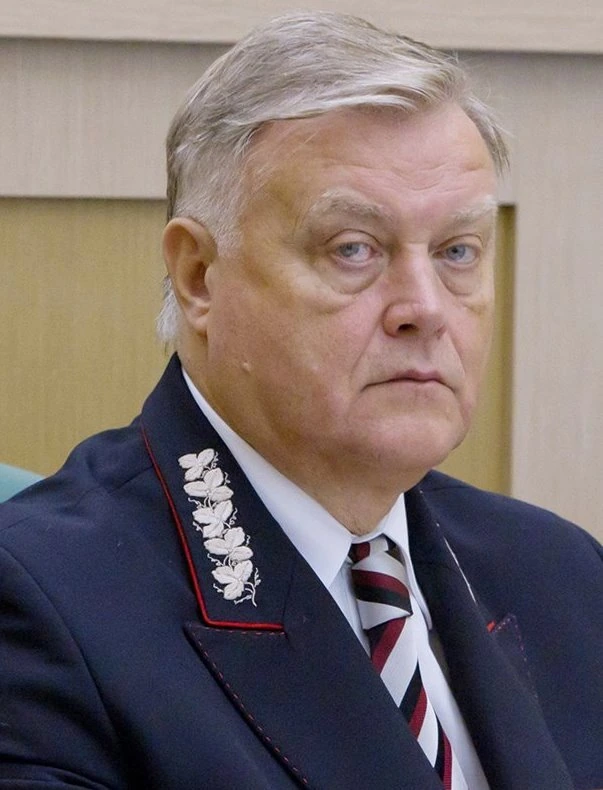
Vladimir Yakunin Net Worth: Estimate Range, Methods, and Updates
Vladimir Yakunin net worth estimate with range, methodology, source types, change factors, and steps to verify today
Vladimir Ashkenazy Net Worth: Estimate, Income Sources, and Proof
Estimate Vladimir Ashkenazy net worth with evidence-based income and asset sources, plus why figures vary and how to ver