33 million in 2025 and $2. 07 million in 2024. On the lower end, CelebsMoney estimates somewhere between $100,000 and $1 million, which frankly undershoots given the scope of his career. The honest answer is that no audited financial disclosure exists, so every number you see is an informed estimate, not a confirmed figure.
But the $2 to $5 million window is defensible when you map it against his career arc.
Who Vladimir Ashkenazy is, and why it matters for wealth estimates
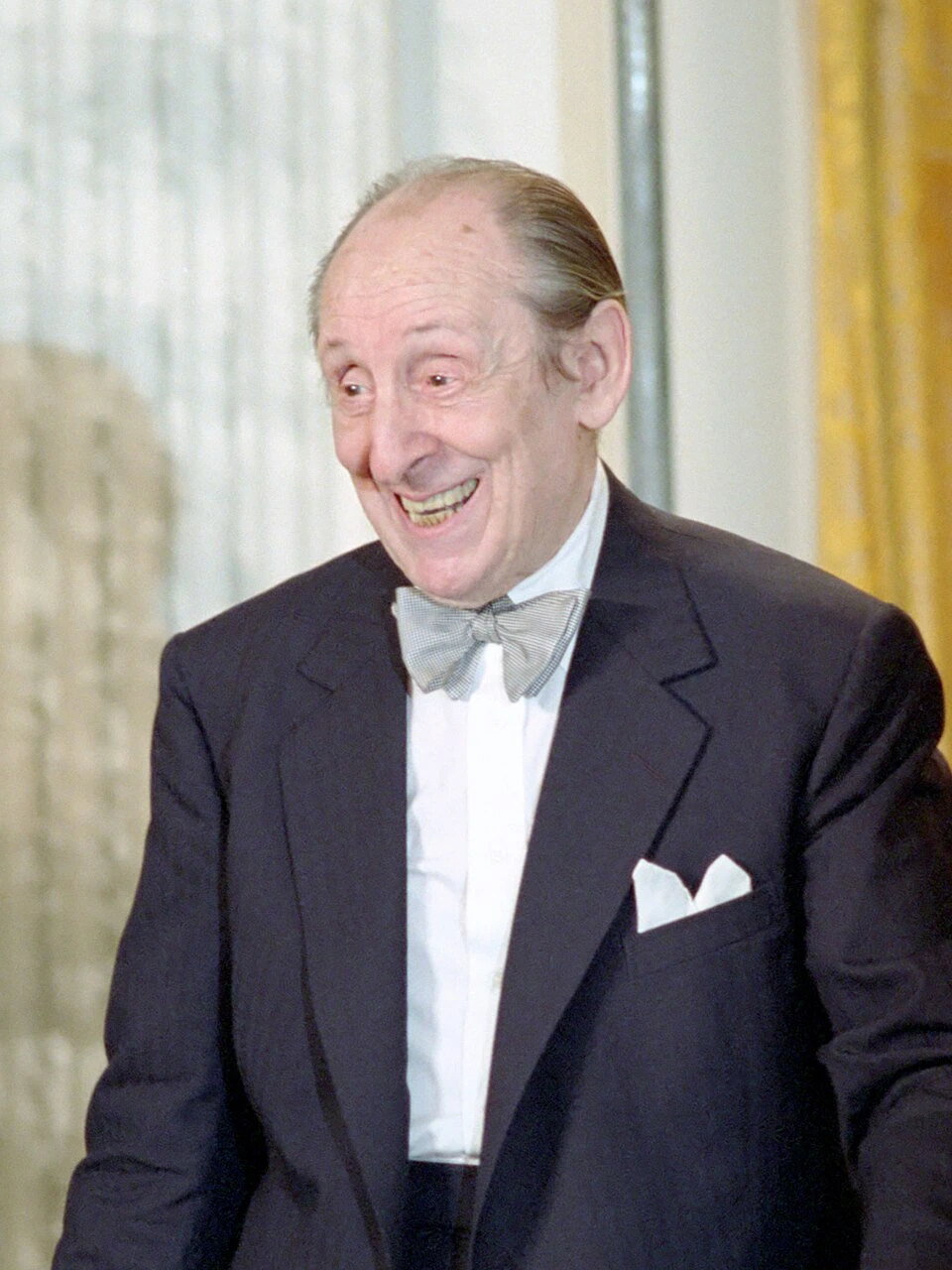
Vladimir Ashkenazy is one of the most celebrated classical pianists of the 20th century, born in 1937 in the Soviet Union and later a citizen of Iceland and Switzerland. He defected from the USSR in the 1960s and built a long international career as both a solo pianist and conductor. This matters enormously for any wealth estimate because his income streams span decades, continents, and multiple professional roles, none of which generate the flashy disclosed compensation you see with corporate executives or athletes.
He is not a political figure, an oligarch, or a tech billionaire, so readers landing here should calibrate their expectations accordingly. Unlike the profiles of figures such as Vladimir Gusinsky, who built wealth through media empires and business networks, or political actors tracked on this site, Ashkenazy's wealth comes almost entirely from performance fees, recording royalties, and conducting contracts accumulated over more than six decades of professional work. That makes his wealth more modest in absolute terms but genuinely earned through artistic output.
One important disambiguation note: if you search 'Ashkenazy net worth' and land on figures in the billions, you have almost certainly been served results about Ben Ashkenazy, a completely unrelated American billionaire real-estate developer. Vladimir Ashkenazy the pianist and conductor operates in an entirely different financial universe. Conflating the two is a common error on name-matching aggregator sites.
Where his money actually comes from

At the peak of his performing career, Ashkenazy commanded fees consistent with top-tier international soloists. Elite pianists at his level have historically earned anywhere from $50,000 to over $150,000 per major engagement, though exact figures are rarely disclosed publicly. There is at least one documented instance of Ashkenazy waiving an undisclosed but described-as-substantial performance fee for free concerts in Hong Kong, which itself signals that his standard fee was significant enough to be worth mentioning as a meaningful sacrifice. Multiply that over a career spanning more than five decades of active international touring and the cumulative performance income is substantial, even if most of it is long since spent, invested, or simply lived on.
Recording catalog and royalties

Ashkenazy has been an exclusive Decca artist since 1963, one of the longest continuous label relationships in classical music history. Decca issued a 50th-anniversary box set featuring 50 of his recordings as both pianist and conductor, and the label continues to actively market and reissue his catalog.
That catalog is a genuine long-tail asset. Classical recordings generate what are called neighboring rights, meaning performers and producers receive royalties when their recordings are broadcast or publicly communicated, not just when physical copies are sold. Organizations like PPL (Phonographic Performance Limited) in the UK distribute these payments, though the actual splits between Ashkenazy and Decca are undisclosed.
The practical point is that a catalog this size and this well-maintained almost certainly generates some ongoing passive income, even if it is impossible to quantify precisely without access to his royalty statements.
Conducting roles and institutional fees
From the late 1980s onward, Ashkenazy transitioned increasingly into conducting, which added a second major income channel. He served as music director of the Royal Philharmonic Orchestra from 1987 to 1994, chief conductor of what became the Deutsches Symphonie-Orchester Berlin (appointed in 1989, with the organization renamed in 1994), chief conductor of the Czech Philharmonic from 1998 to 2003, and chief conductor of the Sydney Symphony Orchestra from 2009 to 2013.
Each of these roles typically comes with a fixed annual conducting fee negotiated with the orchestra's board, plus additional guest-conducting engagements. Chief conductor roles at orchestras of this tier generally pay in the range of $300,000 to $700,000 per year, though Ashkenazy's specific contracts were never publicly disclosed. Across four decades of major conducting appointments, this adds a meaningful layer to his cumulative lifetime earnings.
Teaching, masterclasses, and honorary roles
Ashkenazy has also been involved in teaching and masterclass work throughout his career. Documented examples include visits to institutions like The Purcell School, where he gave a class to the piano department, and jury chairmanship roles such as the Chopin Society Hong Kong competition, which note his continued masterclass activity across multiple countries. Masterclass fees for artists at his level can range from a few thousand dollars to tens of thousands per session depending on the institution and format.
He also holds honorary roles, such as Honorary Chairman of the Greater Princeton Steinway Society, which are prestige positions that support event and fundraising connections rather than direct salary. These contribute modest but real income on top of his performance and conducting earnings.
How net worth estimates are actually built for someone like Ashkenazy
Net worth, in the most basic sense, is total assets minus total liabilities. For a private individual like Ashkenazy, who has no public company filings, no disclosed real estate records in widely searchable jurisdictions, and no regulatory disclosures, estimators have to work backward from observable signals. The methodology typically works like this: researchers aggregate known career milestones (roles, label deals, touring history), apply general industry benchmarks for fees at that tier, factor in reasonable assumptions about savings rates and investment returns, and then cross-reference against any interviews or third-party reporting that hint at lifestyle or asset holdings. It is modeling, not accounting.
The PeopleAi figures cited earlier are explicitly framed as social-factor model estimates based on publicly available information. That is a honest framing, and it is broadly how most celebrity net worth figures are built. What these models typically include: accumulated career earnings (discounted for estimated taxes and living expenses), plausible investment portfolio values based on savings assumptions, and sometimes inferred real estate based on known residences. What they typically exclude or undercount: offshore accounts, trust structures, art collections, private pensions, and any assets held through a spouse or family entity. For a musician of Ashkenazy's generation who has lived and worked across Iceland, the UK, Switzerland, and elsewhere, asset visibility is genuinely limited.
Why different sources give you wildly different numbers
The gap between CelebsMoney's '$100,000 to $1 million' and a more reasoned estimate of $2 to $5 million comes down to methodology and effort. Low-end aggregator sites often pull from each other, apply a generic formula based on social media metrics or search volume, and produce a figure that has almost no relationship to actual career economics. They are not wrong because they are lying; they are wrong because they are not really estimating Ashkenazy's wealth at all. They are running a model designed for Instagram influencers and applying it to an 88-year-old classical pianist.
A separate source of disagreement is which income period a site is anchoring on. Someone writing about Ashkenazy in 2010, at the height of his Sydney Symphony tenure, might estimate his active annual income very differently than someone writing in 2026, when he is largely retired from major conducting posts. Net worth is a snapshot; career income is a flow. Sites that conflate the two produce inconsistent results. This is a challenge that affects wealth reporting across the arts world, whether you are looking at a classical pianist or comparing profiles like Vladimir Horowitz's net worth, another legendary Soviet-born pianist whose estate value and lifetime earnings were similarly difficult to pin down.
There is also the issue of royalty income visibility. Classical recording royalties are notoriously opaque, as PPL has acknowledged publicly in its own discussions of metadata gaps that cause missed or delayed payments to performers. Ashkenazy's Decca catalog generates some income, but whether that is $10,000 a year or $200,000 a year is genuinely unknown from public data. Sites that ignore this entirely will underestimate; sites that extrapolate aggressively will overestimate.
Comparing what the sources actually say
| Source | Estimate | Methodology | Reliability |
|---|
| PeopleAi (Mar 2026) | ~$2.59 million | Social-factor model, explicitly labeled as estimation | Moderate: transparent about its limitations |
| CelebsMoney (2025) | $100,000 – $1 million | Aggregated formula, likely social/search signal based | Low: wide range suggests minimal career research |
| Career-logic estimate (this article) | $2 million – $5 million | Benchmarked conducting fees + recording catalog + performance income history | Moderate-high: grounded in documented career data, no verified disclosure |
| Britannica / Wikipedia | No figure given | Biographical, career-focused only | High for career facts, not applicable for net worth |
How to check and verify this yourself today

If you want to pressure-test any figure you find, here is a practical approach. Start with the career timeline. Britannica and Wikipedia both document Ashkenazy's major roles with dates and institutions, which gives you a skeleton of his earning history. Britannica identifies Vladimir Ashkenazy (born July 6, 1937) as a Russian-born Icelandic pianist and conductor Britannica and Wikipedia both document Ashkenazy's major roles with dates and institutions. If a site claims he is worth $50 million, ask yourself whether that is plausible for a classical musician with no known business empire and a career that has wound down significantly since 2013. It is not.
Next, check the recording catalog. Decca's discography pages for Ashkenazy show the breadth and continued availability of his recordings, which supports the case for ongoing backend income. If a site ignores his recording career entirely and bases its estimate purely on social metrics, that is a red flag. Royalty income from a 60-plus-year Decca relationship is a real asset, even if unquantifiable.
Then look at who is actually doing the estimating. Sites that disclose their methodology (even a simplified one) are more trustworthy than sites that present a single precise figure without explanation. A site that says '$4.2 million' with no sourcing is almost certainly less reliable than one that says '$2 to $4 million based on modeled career income.' Precision without transparency is a red flag in this space, not a sign of quality.
Finally, watch out for name confusion. Any site that attributes real-estate holdings or business interests to Vladimir Ashkenazy without clearly explaining they are talking about the pianist (not Ben Ashkenazy or any other similarly named figure) should be treated with skepticism. This is a common error across wealth aggregator sites and it can inflate figures dramatically. This kind of misidentification risk is worth keeping in mind when evaluating profiles of other Vladimir-surnamed public figures too, whether that is someone like Vladimir Zhirinovsky, whose political wealth profile is genuinely distinct, or Vladimir Yakunin, whose business and government ties require entirely different analytical frameworks.
What the best estimate likely is, and what to watch going forward
Given everything above, the most defensible single-figure estimate for Vladimir Ashkenazy's net worth in April 2026 is somewhere around $3 million, with a credible range of $2 million to $5 million. The lower bound reflects the PeopleAi modeled figure and accounts for the reality that classical musicians, even world-famous ones, rarely accumulate the kind of wealth associated with business founders or oligarchs. The upper bound reflects the cumulative logic of decades of elite performance fees, four major conducting appointments, a 60-plus-year recording relationship with Decca, and the kind of masterclass and institutional income that fills the gaps. He is not wealthy by the standards of the figures typically profiled on sites tracking oligarch and business wealth, but he is comfortably into the multi-million range by any honest accounting.
What would move this estimate significantly? Two things: verified real estate holdings in Switzerland or Iceland (where he has lived), or a disclosed estate/trust structure that reveals assets not visible from public data. Neither is likely to surface without a formal disclosure event like a legal proceeding or a published biography that includes financial detail. Barring that, the $2 to $5 million range will likely hold as the working estimate for the foreseeable future. As his Decca catalog continues to be exploited through streaming and reissues, it is also worth watching whether neighboring-rights income becomes more transparent as metadata standards improve across the industry, something PPL has been actively working on.
For readers who want to explore how wealth accumulates across different kinds of public figures from Eastern Europe and the former Soviet sphere, the contrast with other profiles is instructive. A chess grandmaster like Vladimir Kramnik or an actor like Vladimir Galkin shows how differently wealth accumulates depending on the field, era, and geography. And for business-side contrast, comparing Ashkenazy's artist-path wealth with that of a figure like Vladimir Chernukhin or Vladimir Korneev underscores just how distinct the financial outcomes are between the arts and the business-oligarch track that defined post-Soviet wealth accumulation. Ashkenazy's money came from music, across six decades, across continents, and that is both why the number is moderate and why the estimate is credible.
One final note on the broader classical music wealth context: Vladimir Yakunin's financial profile and Ashkenazy's are sometimes lumped together under 'prominent Vladimirs from Russia' by aggregator algorithms, but they could not be more different in terms of wealth source and scale. Always check the underlying career story before accepting any headline figure.