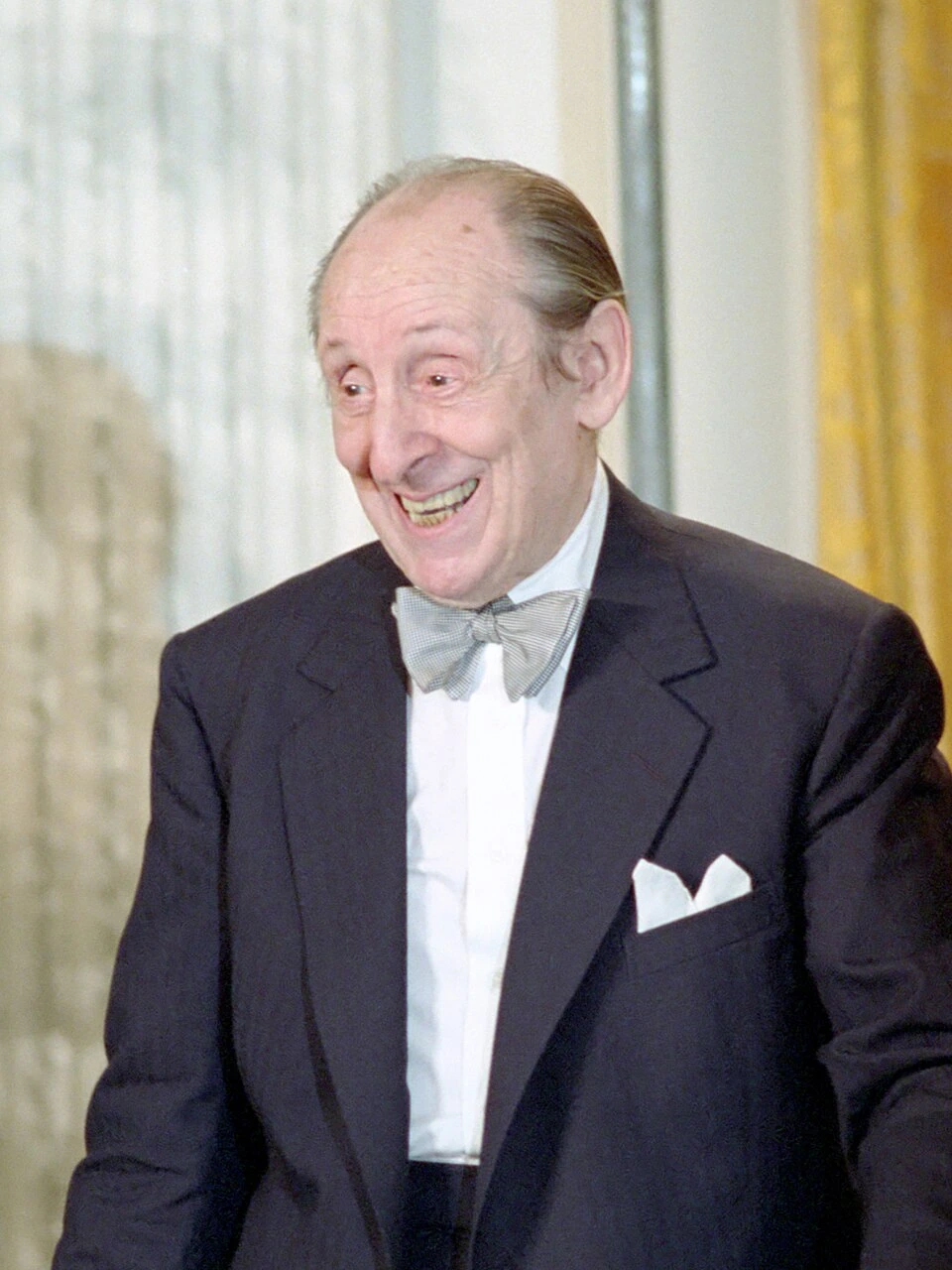
Quick answer: what is Vladimir Horowitz's net worth today?

Vladimir Horowitz died on November 5, 1989. His probated estate was valued at approximately $8 million at the time of his death, according to UPI reporting on the will filed in Manhattan Surrogate's Court. Adjusted for inflation to April 2026, that figure translates to roughly $20 to $22 million in today's dollars, before accounting for any ongoing royalty income, rights licensing, or investment growth from the estate. If you factor in the possibility that the Horowitz recording catalog continued generating licensing and royalty income over more than three decades, a reasonable estimated range for the total wealth associated with the Horowitz estate sits between $20 million and $30 million as of April 9, 2026. That range is model-based, not directly evidenced, and the full section on caveats below explains exactly why.
How Horowitz made his money
Horowitz's earning power as a concert pianist was extraordinary by any standard, and the documentary record gives us concrete numbers to work with. His 1927 to 1928 debut season in the United States started modestly, with fees averaging around $500 per performance, which was already respectable for an unknown European debutant. By the mid-1980s, at the peak of his late-career renaissance, those fees had escalated to somewhere between $100,000 and $500,000 per concert. A 1986 TIME profile explicitly reported that Horowitz was "commanding a fee of as much as half a million dollars for a single concert" and "never less than $100,000." That same piece noted he was set to receive approximately $2.5 million in TV and recording rights alone for a five-concert series. These are not net-worth figures, but they establish the scale of cash flow Horowitz was generating in the final years of his career.
Beyond concert fees, recordings were a major and lasting revenue source. Horowitz recorded for RCA Victor and later Deutsche Grammophon across several decades, building a catalog that has remained in active commercial release ever since. The Wikipedia discography for Horowitz spans multiple labels and formats, and the existence of hundreds of unreleased recordings (donated to Yale's Gilmore Music Library in 164 boxes of material) suggests the commercial catalog represents only a fraction of the full archive. Royalty income from catalog recordings, reissues, digital licensing, and streaming platforms would have continued flowing into the estate long after his death, though the exact rates are not publicly disclosed.
A 1987 Washington Post archive piece about his Vienna concert described it as commanding the highest fee ever paid to a pianist in that country, underscoring that Horowitz's earning power extended internationally and was not limited to the American market. When you add up concert fees, recording advances, TV rights, and decades of royalty income, the lifetime earnings picture is substantial, even if total lifetime earnings and net worth are two very different things.
What drove the wealth, and where the money went
Horowitz and his wife Wanda Toscanini Horowitz lived well. The couple maintained a residence in New York City for most of their American years, and property costs in Manhattan across multiple decades represent a meaningful asset class. However, specific property valuations are not publicly documented in any sources I was able to verify for this profile. Real estate would have been a component of the $8 million estate figure, alongside liquid assets, investment accounts, and the value assigned to the recording catalog.
The will itself provides the clearest picture of how assets were distributed. UPI reported that Horowitz left nearly his entire estate to Wanda, with specific bequests of $300,000 to the Juilliard School for scholarships and $200,000 to a longtime personal employee. Yale received the archival collection, including scores, correspondence, photographs, programs, and hundreds of unreleased recordings, which now constitute the Horowitz Archives at the Gilmore Music Library. A 2006 Yale endowment document references "the estate of Wanda Toscanini Horowitz" in connection with copyright interests transferred to the university, which strongly implies that royalty-generating rights eventually passed to Yale as an institutional beneficiary. This is a critical detail for understanding why the long-term value of the Horowitz estate is genuinely difficult to pin down: rights income that once accrued to Wanda appears to have shifted into endowment structures after her death.
How these estimates are actually built
No major business outlet, Forbes profile, or Bloomberg wealth tracker has published a living-person-style net worth figure for Vladimir Horowitz. That is not surprising for a classical musician who died in 1989, but it does mean that any number circulating online is either derived from the probated estate figure or generated by aggregator sites using unverified methodology. Here is how a credible estimate is actually constructed.
- Start with the probated estate: The $8 million figure from the 1989 will filing in Manhattan Surrogate's Court is the only hard, documented snapshot of Horowitz's net worth at a specific point in time. It is the anchor for any forward-looking estimate.
- Apply inflation adjustment: $8 million in late 1989 is equivalent to roughly $20 to $22 million in April 2026 using standard CPI conversion, which gives a baseline floor.
- Estimate ongoing rights income: Recording royalties and licensing fees from a catalog that has remained commercially active for 36-plus years would increase this baseline, but without disclosed royalty rates or annual statements, any figure here is modeled rather than measured.
- Account for estate transfers: Wanda Toscanini Horowitz inherited the bulk of the estate and later transferred copyright interests to Yale's endowment. This means that some portion of what might otherwise be counted as "Horowitz wealth" is now held institutionally and no longer tracked as a personal estate.
- Cross-check with documented income proxies: Fee records from the 1980s, the $2.5 million TV/recording rights deal, and the Washington Post's reporting on international fee records all provide upper-bound context for career earnings, which can inform assumptions about what was accumulated versus spent.
This kind of methodology is similar to how researchers approach other figures where direct financial disclosure is limited. Profiles of classical musicians who built careers across borders and eras, like Vladimir Ashkenazy's financial journey, face similar documentation gaps and require the same blend of archival income data and inflation-adjusted estate proxies.
How the number has shifted over time

Horowitz's wealth trajectory had several distinct phases. During his early career (roughly 1925 to 1940), he earned solidly for a touring classical pianist but was far from wealthy by modern standards. The postwar period, including his famous retirement and return cycles, involved irregular income: periods of no public performance at all, followed by high-fee comeback concerts that reset the market for pianist fees. The 1960s return, and especially the 1980s international comeback, represent the peak earning years.
After his death in 1989, the estate's value was effectively frozen as a legal document but continued to evolve economically. The ongoing commercialization of his recordings, the growth of classical music streaming, and the institutional transfer of copyright interests to Yale all shifted the composition of what "Horowitz wealth" means. The $8 million probate figure from 1989 is not the same as a 2026 valuation, and treating it as such understates both the complexity and the potential upside from decades of rights income.
Currency and inflation assumptions also matter for any reader trying to convert historical fees into modern equivalents. The $500 per-concert fee from 1927 converts to roughly $9,000 to $10,000 in 2026 dollars. The $500,000 peak concert fee from the mid-1980s converts to approximately $1.4 million today. These conversions help illustrate how dramatically Horowitz's earning power grew across his career, even before accounting for recording income.
The $8 million estate is a net figure at a single moment in time. It already reflects decades of spending on housing, travel, personal staff, professional costs, and taxes. Horowitz maintained a career spanning roughly 65 years across multiple continents and employed a significant support infrastructure. The gap between his lifetime concert and recording earnings (which, conservatively estimated, would run to tens of millions in nominal terms) and the $8 million estate is explained by that spending, plus taxes and the ordinary costs of a high-profile professional life.
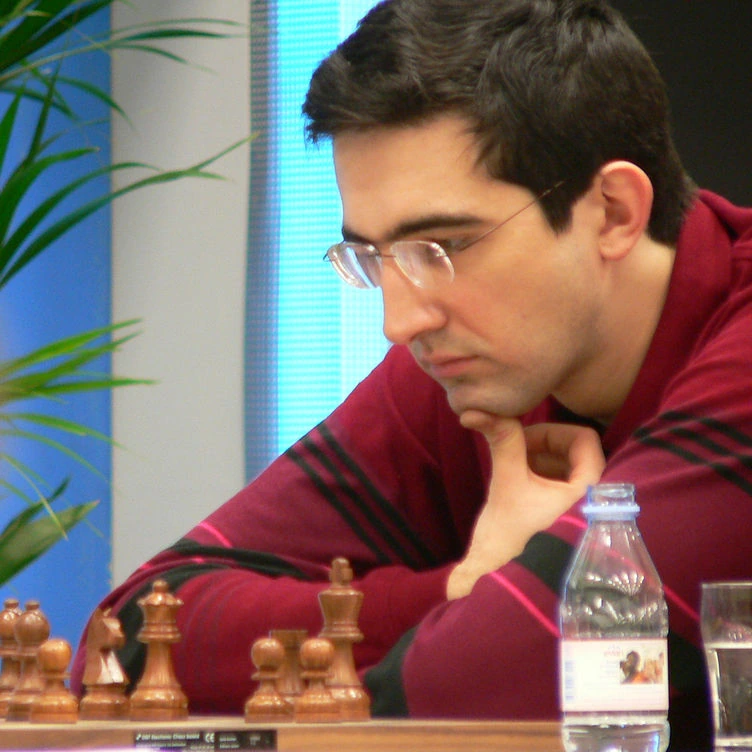
One comparison that puts this in context: Vladimir Kramnik's estimated net worth as a chess grandmaster reflects a similar dynamic where peak earning years in a niche field produce a comfortable but not extravagant accumulated wealth, because professional costs and lifestyle expenditure absorb a large share of gross income over a long career.
Accuracy caveats and myths you will run into

A few misconceptions about Horowitz's finances show up frequently, and it is worth addressing them directly.
- Lifetime earnings are not net worth: Horowitz earned very large sums across his career, but net worth is what remains after expenses, taxes, gifts, and spending. The $8 million estate is the net figure, not a reflection of gross career earnings.
- Aggregator sites often inflate or fabricate: Several celebrity net worth aggregator pages list figures for Horowitz ranging from $8 million to figures well above that with no cited methodology. These should be treated with skepticism unless they cite the probated will or a credible primary source.
- Name confusion is a real risk: Vladimir is a common given name among Eastern European public figures, and readers searching this topic may encounter financial profiles for other Vladimirs. For example, profiles covering Vladimir Gusinsky's media empire wealth or Vladimir Zhirinovsky's political finances are completely separate subjects with no connection to the pianist.
- The Yale archive is not a liquid asset: The donation of 164 boxes of materials, including hundreds of unreleased recordings, represents enormous cultural value but does not translate directly into a personal net worth figure for Horowitz or his estate.
- Copyright interests transferred to Yale are not counted in personal estate figures: Any royalty income flowing through Yale's endowment from Horowitz copyrights is an institutional holding, not a personal wealth figure attributable to the Horowitz estate in any ongoing sense.
It is also worth noting what is simply not available in the public record. No reputable outlet has published a verified, quantified "net worth today" figure for Horowitz. Britannica covers his biography in detail without touching net worth. TIME's coverage provides excellent income proxies but explicitly covers earnings, not wealth. Any figure beyond the probated $8 million is an estimate built on assumptions, including this one.
Placing Horowitz in context helps calibrate the estimates. Among Eastern European-origin public figures who built careers in Western markets during the 20th century, classical musicians generally accumulated modest wealth relative to their cultural impact. Vladimir Galkin's career earnings as an actor and Vladimir Yakunin's wealth from state enterprise leadership illustrate how differently wealth accumulates across fields: state-connected business figures from the post-Soviet era typically built far larger balance sheets than even the most commercially successful artists of Horowitz's generation.
| Wealth proxy | Value (nominal) | Notes |
|---|
| Probated estate (1989) | $8 million | Filed in Manhattan Surrogate's Court; most reliable single data point |
| Inflation-adjusted estate (2026) | ~$20–22 million | CPI conversion only; does not include rights income or investment growth |
| Estimated range with rights income (2026) | $20–30 million | Model-based; assumes ongoing royalty and licensing activity from catalog |
| Peak concert fee (mid-1980s) | $500,000 per concert | Reported by TIME (1986); not a net worth figure |
| TV/recording rights (5-concert series, 1986) | $2.5 million | Reported by TIME (1986); single contract, not annual figure |
| Estate bequests (documented) | $500,000 combined | $300K to Juilliard, $200K to personal employee |
How to verify the number using this site and credible sources
If you want to pressure-test the estimate above, here is exactly what to check. The Manhattan Surrogate's Court probate records for the Horowitz estate are a matter of public record; the UPI wire from November 9, 1989 is the most accessible summary of those filings and confirms the $8 million figure with specific bequests. Yale's Gilmore Music Library catalog documents the archival donation. The 2006 Yale endowment document referencing the estate of Wanda Toscanini Horowitz and copyright interests is the clearest trail for understanding posthumous rights transfers.
For income context, the 1986 TIME piece titled "The Prodigal Returns" is the single most useful primary source, providing both per-concert fee ranges and the $2.5 million TV/recording rights figure. The 1987 Washington Post archive piece on the Vienna concert adds international context for fee scale. Neither source is a net worth estimate, but together they establish the upper bound of what Horowitz was generating in his final productive years.
On this site, profiles of comparable figures give additional context for methodology. The approach used to build Vladimir Chernukhin's wealth profile from verified financial filings and Vladimir Korneev's documented asset base follows the same principle: start with the hardest available data point, apply transparent assumptions for anything modeled, and flag the uncertainty explicitly. The Horowitz estimate follows the same standard. The $8 million probated estate is real and documented. Everything above that number is an informed estimate, not a verified fact, and should be read accordingly.
One final note on scope: this profile covers Vladimir Horowitz the pianist, not any other public figure sharing that given name. Readers who have landed here from broader searches for Eastern European financial profiles may also find useful context in the site's coverage of other Vladimir-named figures from different fields, such as Vladimir Yakunin's estimated net worth, which reflects a very different wealth-building path through Russian state infrastructure rather than the international concert stage.