The most defensible estimate for Vladimir Plahotniuc's net worth sits somewhere between $2 billion and $3 billion, though the real figure is almost certainly unknowable with precision. The OSW Centre for Eastern Studies put resources under his control at around $2 to $2.5 billion, while local Moldovan journalists cited by openDemocracy pushed that figure as high as $3 billion. Neither number is court-validated, and given the active criminal proceedings, international sanctions, and frozen assets currently in play, a significant portion of whatever he once controlled may already be in the hands of state recovery agencies or permanently out of reach.
Vlad Plahotniuc Net Worth: Estimate, Sources, and Checks

Konstantin Volkov
15 Apr 2026
Who Vlad Plahotniuc is and why people search his wealth

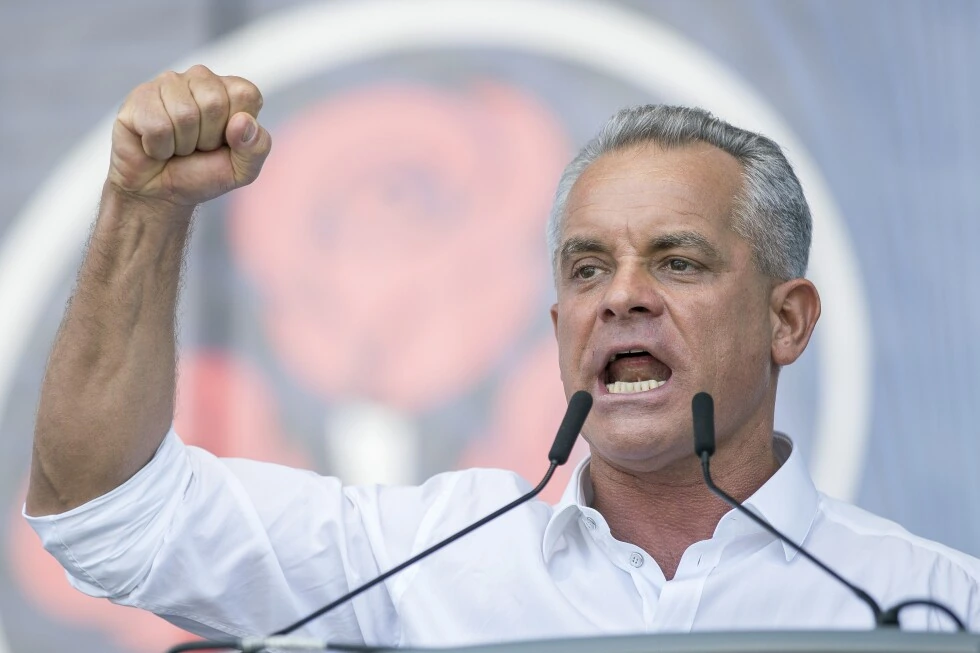
Vladimir Plahotniuc is a Moldovan oligarch and former politician who, for much of the 2010s, was widely described as the most powerful person in Moldova. He served as a member of parliament and led the Democratic Party of Moldova, but his real influence operated well beyond any official title. He built a sprawling network of media companies, real estate holdings, and business interests that gave him effective control over large parts of the Moldovan state. In June 2019, amid mounting corruption charges, he fled the country. That flight set off a chain of legal events that is still playing out in 2025 and 2026, including his extradition from Greece to Moldova to face trial over the country's largest ever financial scandal: the disappearance of roughly $1 billion from three Moldovan banks in 2014, a sum the BBC noted amounted to more than 10 percent of Moldova's GDP at the time.
People search for his net worth for a range of reasons. Researchers, journalists, and policy analysts want to understand the financial scale of his influence. Investors and compliance professionals need to map sanctioned-entity exposure. And a broader audience is simply curious about how a politician from one of Europe's poorest countries allegedly accumulated a fortune measured in billions. This site tracks that kind of wealth profile for Eastern European public figures, and Plahotniuc is one of the more consequential cases in the region.
What 'net worth' actually means and how estimates get calculated
Net worth, in its simplest form, is total assets minus total liabilities. For a private individual, that means adding up everything of value they own (real estate, business equity, cash, investments, vehicles, art, and so on) and subtracting outstanding debts. The problem is that this definition assumes you can actually identify and value all the assets. For oligarch-tier figures operating through shell companies, offshore trusts, and layered corporate structures, that is rarely possible from the outside.
For someone like Plahotniuc, estimates are typically assembled from several overlapping sources: official income and property declarations filed with parliament or state registries, investigative reporting that traces property records and corporate filings, leaked or obtained documents that connect beneficial ownership to specific assets, and court documents from seizure and confiscation proceedings that put valuations on identified assets. Each of these has gaps. Official declarations notoriously understate holdings. Corporate structures obscure beneficial ownership. And court valuations only cover what prosecutors have been able to identify and freeze, not the full picture. The OSW commentary explicitly frames its $2 to $2.5 billion estimate as resources under his control and influence, not a court-verified balance sheet. That distinction matters when you are trying to use the number for anything practical.
The net worth estimate: ranges, timeline, and what supports them

The wealth figures attributed to Plahotniuc span a wide range depending on the source and methodology. Here is how those estimates stack up.
| Source / Basis | Estimate or Range | Type of Estimate | Timeframe |
|---|---|---|---|
| OSW Centre for Eastern Studies | $2 – $2.5 billion | Resources under control/influence (not court-validated) | Peak influence period, pre-2019 |
| Local Moldovan journalists (via openDemocracy) | Up to $3 billion | Journalist estimate, not Forbes-rated | Pre-2019 peak |
| OCCRP / RISE Moldova (documented network) | Over $50 million (documented assets) | Traceable business/media network only | 2013–2014 acquisitions and onwards |
| Moldova Anti-Corruption Prosecution (seized assets) | 24+ million euros frozen | Court-identified frozen assets in bank fraud case | Ongoing as of 2025–2026 |
| Chisinau Court seizure (May 2020 decision) | 33+ million lei inside Moldova; 7.7 million euros outside Moldova (rejected for seizure) | Court decision on specific property | 2020 |
| Prosecutors (money laundering cases) | 55.4 million lei seized | Specific company equity shares in laundering cases | Announced during active proceedings |
The gap between the documented $50 million-plus in traceable assets and the $2 to $3 billion in broader estimates is not a contradiction. It reflects the difference between what investigators have formally identified and frozen versus what reporting and analysis suggests sits in harder-to-trace offshore structures, corporate vehicles, or third-party control. The $24 million-plus in assets currently frozen in the bank fraud case, as reported by Ziarul de Gardă, represents only the portion prosecutors have successfully identified and linked in active proceedings. The broader wealth estimate, when you include reported but legally unconfirmed holdings, lands in the $2 to $3 billion range. For most practical purposes, treating $2 to $2.5 billion as the working estimate (with the caveat that it represents reported control rather than verified net worth) is the most defensible position.
How he reportedly built the fortune
Media and real estate acquisitions

RISE Moldova, working from more than 1,000 obtained documents, traced Plahotniuc's connection to General Media Group, which holds Publika TV, Prime TV, Canal 2, and Canal 3. Properties linked to that group, including the media headquarters, were acquired in 2013 to 2014 through sale-and-purchase agreements tied to legal structures connected to Plahotniuc. Beyond media, OCCRP and RISE Moldova documented his connections to hotels (Codru and Nobil) and the Global Business Center in Chisinau, putting the documented portion of this network at over $50 million. These are not allegations. They are assets traced through property records and corporate documents.
Political leverage and state assets
The U.S. Treasury designated Plahotniuc under Executive Order 13818, which targets corruption and human rights abusers. The OFAC rationale specifically cited alleged misappropriation of state assets and expropriation for personal gain. The U.S. also imposed visa restrictions in January 2020 under Section 7031(c). The picture that emerges from the Treasury designation is that his wealth accumulation was not purely commercial. Control over the Moldovan state apparatus, political parties, and judiciary reportedly gave him the ability to direct asset flows in ways that are difficult to separate from the business holdings.
The $1 billion bank fraud
The most significant alleged wealth-accumulation mechanism is the $1 billion fraud involving three Moldovan banks in 2014. Moldova's Anti-Corruption Prosecution Office sent the first case against Plahotniuc in this matter to court in 2023. Prosecutors are seeking a 25-year sentence on charges of running a criminal organization, large-scale fraud, and money laundering. The Insider reported that investigators identified $39 million and €3.5 million flowing to Plahotniuc through entities connected to Ilan Shor, which provides at least a partial anchor for the sums involved in one strand of the alleged scheme. He was extradited from Greece to Moldova in 2025 to face these charges directly.
Declared income on record
His official parliamentary income declaration is worth noting, even if only to illustrate the gap between declared and estimated wealth. IPN reported that his declared earnings included over 34 million lei from Prime Management SRL, with his share ownership in that company valued at over 4 million lei. His total declared income approached 37 million lei. In the context of a $2 billion-plus estimated fortune, these declared figures cover a tiny fraction, which is typical for oligarchs operating through corporate structures rather than direct personal ownership.
Checks and caveats: sanctions, legal proceedings, and data gaps

Any net worth figure for Plahotniuc comes with substantial caveats, and it is worth working through them methodically.
First, the sanctions picture. Plahotniuc is sanctioned by the United States (OFAC, 2020), the United Kingdom (with assets reportedly frozen in the UK and overseas territories, as AP reported), and the European Union (noted in European Parliament records on EU restrictive measures for Moldova). Multiple jurisdictions have simultaneously constrained his ability to move, access, or benefit from assets. The EU Council has continued updating Moldova-related restrictive measures through at least 2024, meaning the sanctions regime is active and evolving. Sanctions do not destroy wealth on paper, but they make it functionally inaccessible through normal financial channels, which is a material constraint on any valuation.
Second, the seizure and confiscation timeline. As of reporting through early 2026, 52 assets worth over 24 million euros remain under seizure by Moldova's Agency for the Recovery of Criminal Assets in the bank fraud case, according to Ziarul de Gardă. However, seizure is not the same as confiscation. Ziarul de Gardă separately reported that court timelines and case progression meant seizures had not yet fully converted to confiscation, so the final forfeiture picture is still being determined. If prosecutors succeed in their 25-year sentencing push, full confiscation of identified assets is the likely outcome. That would permanently reduce the net worth figure.
Third, the offshore and shell company problem. His known use of layered corporate structures, offshore entities, and nominees means that a large portion of whatever wealth exists may not be traceable to him by name. The UK government's general framework for oligarch sanctions enforcement, which describes how offshore trusts, shell companies, and financial fixers are used to obscure ownership, is directly applicable here. When analysts describe Plahotniuc's resources as being under his control rather than in his name, this is what they mean. That structure makes the gap between the $50 million in documented assets and the $2 billion-plus in broader estimates entirely plausible, and it also means the true number may never be fully established.
Fourth, the disputed narrative. Plahotniuc has denied wrongdoing. The allegations described here are drawn from official sanctions decisions, court filings, and investigative journalism, but criminal proceedings are ongoing and outcomes are not final. The estimate range reflects reported and alleged circumstances, not adjudicated fact.
How to verify the number and what to do with it
If you need to use a Plahotniuc wealth estimate for research, compliance, journalism, or due diligence, here is a practical approach to cross-checking and applying the figure responsibly.
- Start with the OFAC Specially Designated Nationals list (treasury.gov/ofac) to confirm his current U.S. sanctions status and read the designation rationale directly. The press release gives specific corruption categories and legal authorities.
- Check the EU sanctions register (eur-lex.europa.eu) and the UK Office of Financial Sanctions Implementation (OFSI) register for current European restrictions and any asset freeze specifics in those jurisdictions.
- Read the RISE Moldova and OCCRP investigative reports directly. The PlahotniucLeaks series is publicly available and walks through the document trail connecting him to specific media and real estate assets. This gives you the $50 million-plus documented-network floor.
- Monitor the Moldova Anti-Corruption Prosecution Office (anticoruptie.md) for updates on the bank fraud case and sentencing. If a conviction and full confiscation order is issued, the effective net worth of accessible assets drops significantly.
- Use the OSW Commentary 208 figure ($2 to $2.5 billion) as the working upper-range anchor, but always note it as a reported control estimate rather than a verified balance sheet number.
- Watch for new reporting from Ziarul de Gardă and IPN on the status of the 52 frozen assets. When confiscation orders are finalized, those amounts will move from 'frozen' to 'forfeited,' which materially changes the asset picture.
- If you are doing compliance screening, treat all entities in the General Media Group network and any business connected to Prime Management SRL as requiring enhanced due diligence given the sanctions and litigation context.
For context, the wealth profile here is structurally similar to other figures this site tracks in the Eastern European space. If you are building a broader picture of Moldovan and regional oligarch networks, it is useful to compare profiles across the spectrum. For example, Anca Vlad's net worth profile offers a point of comparison for how business-linked wealth is estimated in the same regional context, while looking at something like Vlad Nikita's net worth breakdown illustrates the methodology differences between entertainment-sector and political-sphere wealth estimation. The estimation methodology for political oligarchs is notably messier than for business or entertainment figures, and understanding that contrast helps calibrate how much weight to give any single number.
The bottom line on Plahotniuc's wealth in 2025–2026
The best working estimate is $2 to $2.5 billion in resources reportedly under his control at his peak, with some local estimates running to $3 billion. The documented, traceable asset floor sits above $50 million based on OCCRP and RISE Moldova's work. Active seizures of identified assets total tens of millions of euros in Moldova alone. Ongoing criminal proceedings, a pending 25-year sentencing request, and multi-jurisdictional sanctions all point toward a future where the accessible portion of that wealth is substantially reduced, either through confiscation or permanent freeze. For anyone researching his financial profile, the honest answer is: the headline number is billions, the provable number is tens of millions, and the gap in between is the offshore structure that investigators have been trying to unpack for years.
The Plahotniuc case is a useful reminder of why net worth estimates for politically exposed persons require more interpretive work than standard wealth profiles. Unlike, say, Vlad Vendrow's net worth, which can be anchored in publicly reported business valuations, or Vladik Oladik's estimated earnings drawn from platform and content data, political oligarch wealth sits largely in undisclosed structures that only partially surface through leaks, court filings, and sanctions designations. The number matters as a measure of influence and as a compliance reference point, but it should always be read with an understanding of what it does and does not include.
FAQ
Why do some articles call it “net worth” when the underlying figure is really “resources under control”?
A good rule is to treat the figure as “resources under control” rather than audited net worth. If a source does not explain whether it is using court-verified seizures, beneficial-ownership tracing, or merely influence estimates, you should downgrade confidence and avoid using it as a precise balance-sheet number.
How can I tell whether an estimate reflects seized assets, confiscated assets, or something else?
Look for the specific stage in the legal process. Seizure counts assets prosecutors have frozen, confiscation or forfeiture is when ownership is legally transferred away from the defendant. A number based only on seizure will usually be higher than what remains after final forfeiture, and the article already flags that conversion can lag for years.
Should I use the billions estimate for compliance due diligence, or rely on sanctions lists instead?
If you are doing compliance-style screening, anchor on sanctions designations and the entities named in those designations, not on a headline net worth range. Net worth is an imprecise metric for exposure, while named persons and associated entities are the actionable part for risk scoring and onboarding controls.
What is the best way to verify assets when the ownership is through shell companies and nominees?
Beneficial ownership layers can break direct name-to-asset links. A practical workaround is to validate at least two independent “connective tissues,” such as (1) corporate filings showing control via directors or shareholders and (2) property records or lease agreements showing the same chain of entities.
Could Plahotniuc’s parliamentary declarations still be consistent with billions-level “control” estimates?
Yes, and the article implies one reason: declared income is often routed through companies where the person holds only partial equity, or where payments are structured to minimize personal reportable earnings. When you compare declarations to a control-based billions range, the mismatch is usually explained by corporate structures, not by simple underreporting alone.
Do “peak” estimates mean the number applies today, or is it tied to an earlier time period?
When estimates say “at his peak,” they may reflect a period before sanctions fully took effect or before more assets were identified. If your use case depends on the current situation, apply a time adjustment by focusing on what remains accessible or still under active seizure rather than a peak-era number.
How should the net worth range be updated as the Moldovan criminal case progresses?
For a politically exposed person, court outcomes can change the picture materially. If prosecutors secure confiscation and forfeiture, the “working estimate” should be revised downward. If cases are narrowed or assets are reclassified, some seized valuations may later be reduced or released.
If I must pick one number for a report, what approach is safest?
Use the estimate range as a sizing context, not a certainty level. If you need a single figure, the article suggests $2 to $2.5 billion as a working assumption with the explicit caveat that it is control-based. Document the assumption and cite the methodology category (court-identified vs control/influence) in your internal notes.
Why is the gap between “traceable” assets and the higher billion estimates not just an error margin?
A common mistake is to assume the lower bound is “what he truly had” and the upper bound is “what investigators think he had.” Instead, the lower bound often represents what is identifiable and legally actionable, while the upper bound may include assets that are plausibly connected but not fully proven in proceedings.
Do sanctions mean the wealth is gone, or is it still there but inaccessible?
Yes. Sanctions can freeze funds, but they do not automatically eliminate value, and assets can remain in jurisdictions where legal access is constrained rather than destroyed. So the “net worth” concept does not map cleanly to “money available,” and estimates should be interpreted accordingly.
Next Articles

Slavic Dancer Net Worth Estimate How It’s Calculated
Slavic Dancer net worth estimate with how it’s calculated, income sources, likely expenses, and verification tips.

Slavi Trifonov Net Worth: Estimate, Sources, and Wealth Drivers
Slavi Trifonov net worth estimate for the Bulgarian TV host, with sources, wealth drivers, and verification tips.

Vik Slavik Net Worth: Estimate, Sources, and How to Verify
Estimate of Vik Slavik net worth with range, confidence, how to verify assets, and likely income drivers plus key uncert