
The most-searched 'Vlad and Nikita' are siblings Vladislav 'Vlad' Vashketov (born February 26, 2013) and Nikita Vashketov (born June 4, 2015), the Russian-American children's YouTube duo behind the 'Vlad and Niki' brand. As of 2026, the combined brand is estimated to be worth somewhere between $30 million and $80 million, with mid-range estimates clustering around $50 million. Their parents, Sergey and Victoria Vashketova, run the operation and are the functional wealth holders behind it, since Vlad and Nikita are both minors. No verified primary financial disclosure exists, so every figure you'll see is a model-based estimate.
Vlad Nikita Net Worth: Estimates, Sources, and Parents

Konstantin Volkov
22 May 2026

Who exactly are 'Vlad and Nikita'? Getting the identity right first

Before you trust any net-worth number, you need to confirm which Vlad and which Nikita a source is actually talking about. 'Vlad' and 'Nikita' are both extremely common Eastern European names, and misattribution is a real problem in search results. The Vlad you want here is Vladislav Vashketov, born February 26, 2013. Nikita is his younger brother, Nikita Vashketov, born June 4, 2015. Their parents emigrated from Moscow, and the family is now Russia-American. The channel is officially managed under Content Media Group FZC, LLC (CMG), a corporate entity that the Children's Advertising Review Unit (CARU) identified in its investigation into the channel's advertising practices.
A common identity trap worth knowing about: 'DJ Vlad' (real name Vladislav Lyubovny) is a completely different public figure who surfaces in searches involving 'Vlad' and internet fame. If you're cross-referencing a source and it doesn't match the birthdates and family name above, you're looking at a different person. This disambiguation step matters especially when reading net-worth aggregator pages that sometimes pull generic 'Vlad' results.
Vlad's estimated net worth in 2026
Because Vlad is a minor, he doesn't have a legally independent asset portfolio in the traditional sense. Net-worth estimates attributed to 'Vlad' individually are effectively allocating a portion of the family brand's value to him. Net Worth Spot's 2026 estimate for the 'Vlad and Niki' channel uses a view-to-revenue model: it calculates ad earnings per thousand views, then layers in sponsorship, merchandise, and licensing income.
CARU (BBB National Programs) investigated the “Vlad and Niki” channel and found material-connection and disclosure issues tied to products and payments connected to the channel’s merchandising and licensing ecosystem sponsorship, merchandise, and licensing income. If you're specifically looking for Vlad's net worth, most estimates are really allocating a share of the broader family brand value to him rather than reflecting independently audited assets [Vlad net worth](/vladimir-net-worths/vlad-vendrow-net-worth). Under their framework, the channel generates an estimated $4.
7 million per month at the higher end, or roughly $70 million per year in gross revenue. That is gross revenue, not net worth, and it is a model output, not an audited figure.
If you try to assign Vlad a personal net worth from that, you'd need to account for the corporate structure (CMG owns and operates the brand), taxes across multiple jurisdictions, and how any income is held in trust for the children. Most aggregator sites skip all of that and just split the brand estimate in half between the two kids. That's a shortcut, not a calculation. A reasonable individual estimate for Vlad's attributed share of brand value sits somewhere in the $15 million to $25 million range, but this figure carries significant uncertainty and should be treated as illustrative rather than definitive.
Nikita's estimated net worth in 2026

Nikita's separate channel, branded as 'NIKI' on YouTube, adds another monetization layer. Net Worth Spot publishes a standalone 2025 estimate for the NIKI channel that puts monthly revenue between $285,000 and $4.6 million, depending on RPM assumptions and which income streams are included. The wide range reflects how sensitive these models are to ad rate inputs. Like Vlad, Nikita is a minor and any wealth attributed to him is legally managed by his parents or held in structures like trusts.
The existence of Nikita's own channel is actually useful for estimation purposes, because it gives analysts a second data point beyond the main 'Vlad and Niki' joint channel. Combining both, Nikita's attributed share of the family brand's total value is estimated in a similar range to Vlad's: roughly $15 million to $25 million when you strip out the gross revenue framing and try to think in terms of net asset value. For a quick snapshot of how those attributed figures are often summarized as Vladik Oladik net worth, see the latest model-based range discussed across sources. Again, these are estimates, not verified figures.
What we know about the parents' net worth
Sergey and Victoria Vashketova are the actual operators of the brand. They manage the content, the licensing deals, the merchandise partnerships, and the multi-language channel expansions. In practical terms, if anyone in this family has verifiable, accumulated wealth, it's the parents. The CMG corporate entity is registered under their management, and any revenue generated by the channels flows through that corporate structure before it reaches the family.
No verified primary financial disclosures exist for Sergey or Victoria Vashketov. They are not listed on public stock exchanges, they have not been subjects of official financial regulatory filings that are publicly accessible, and they have not made public statements about personal asset values. What we can infer is that as the managing operators of a brand generating tens of millions in annual revenue, their personal financial position is likely substantial. Estimates for the parents' combined wealth typically fold into the overall brand estimate of $30 million to $80 million, since the parents are the effective beneficiaries of the brand's corporate structure.
If you're specifically searching for 'Vlad and Nikita parents net worth,' the honest answer is that this figure is not separately tracked in any verified source. The parents' wealth is embedded in the brand and corporate valuations, not disclosed independently. Any site giving you a specific dollar figure for Sergey or Victoria Vashketov individually is extrapolating, not reporting.
How this wealth was built
The Vashketov family brand is a textbook example of YouTube-native wealth creation layered with brand licensing. The primary income streams break down like this:
- YouTube ad revenue: The main 'Vlad and Niki' channel has accumulated billions of views. Ad revenue is estimated using CPM/RPM rates that vary by geography and content category. Children's content RPMs tend to be lower than adult content, which is why gross view counts can be misleading without rate adjustments.
- Merchandise and licensing: The CARU investigation confirmed that the channel is tied to a product and licensing ecosystem. Branded toys, clothing, and other merchandise sold globally contribute revenue that is not captured in pure ad-rate models.
- Sponsorships and integrations: Paid brand integrations within the content itself are a significant revenue layer. CARU's disclosure-violation findings confirm this monetization pathway exists and is commercially material.
- Multi-language channel network: The family operates multiple editions of the channel across different languages and regional markets, multiplying the total addressable audience and ad inventory.
- Content Media Group FZC, LLC: The CMG corporate entity suggests the operation is structured to manage intellectual property, licensing rights, and potentially cross-border revenue optimization.
This is not a politics or oligarch wealth story in the way that profiles of figures like Vlad Plahotniuc represent post-Soviet business-political networks. The Vashketov family's wealth is entertainment and media-driven, built on content virality and the children's digital media market rather than resource extraction or political leverage. That context matters when you're interpreting wealth estimates, because the income is more transparent (tied to publicly trackable view metrics) but also more volatile than real estate or commodity-backed assets.
Why net worth figures vary so much across sources

The range from $30 million to $80 million is genuinely wide, and it's worth understanding why rather than just picking the middle number.
| Source type | What it measures | Reliability level | Common limitation |
|---|---|---|---|
| Social Blade | Estimated channel earnings based on view analytics | Moderate (model-based) | Doesn't include merch, licensing, or sponsorships; treats all views as monetized equally |
| Net Worth Spot / aggregator sites | Ad revenue model plus assumed ancillary income multipliers | Low to moderate | RPM assumptions vary widely; often doesn't account for corporate structure or taxes |
| Brand valuation estimates (press/blog) | Applies revenue multiples to assumed annual income | Low | No primary data; often circular (sites cite each other) |
| CARU / regulatory filings | Confirms monetization pathways exist (not dollar amounts) | High (primary) | Doesn't quantify dollar values; only confirms commercial relationships |
| Corporate registry (CMG) | Confirms legal entity structure | High (primary) | Entity details are available but financial statements are not public |
The core problem is that no primary financial disclosure exists. Net Worth Spot's methodology is transparent enough to show its view-to-revenue math, which is useful, but it explicitly acknowledges the estimate can swing from $4.7 million per month down to a fraction of that depending on RPM inputs. Social Blade is even more limited: it generates estimated earnings from channel analytics but does not produce a net-worth figure and is not designed to. Sites that take Social Blade's earnings estimate and then present it as a net-worth figure are adding an unverified extrapolation step.
How to check and interpret these figures yourself
If you want to do your own due diligence rather than just accepting a number, here's a practical workflow:
- Confirm identity first: Verify the source explicitly names Vladislav Vashketov (born February 26, 2013) and Nikita Vashketov (born June 4, 2015). If the page just says 'Vlad' or 'Nikita' without those specifics, cross-check before trusting the figure.
- Check whether the estimate is brand-level or individual: Most credible estimates cover the 'Vlad and Niki' brand as a whole. If a source claims to have Vlad's personal net worth separately, ask how they isolated it from the family corporate structure.
- Identify the revenue model being used: Look for whether ad revenue, sponsorships, merchandise, and licensing are all included. A number that only captures YouTube ad revenue will be significantly lower than one that includes the full monetization stack.
- Check when the estimate was last updated: YouTube channel performance changes. An estimate from 2023 may be meaningfully different from a 2026 one as view trends shift. Net Worth Spot and Social Blade both update periodically, so look for date stamps.
- Apply a skepticism discount to any figure without a cited methodology: If a site quotes '$50 million' with no explanation of how they got there, treat it as a rough order of magnitude, not a precise figure.
- Remember that gross revenue is not net worth: Even if the channel genuinely earns $70 million per year, corporate expenses, taxes, management fees, and reinvestment into content production mean the net figure that accumulates as personal wealth is substantially lower.
- Look for regulatory or corporate records as anchor points: The CARU finding and the CMG entity registration are the closest things to primary-source confirmation of the brand's commercial scale. Use those as anchors when evaluating secondary estimates.
One practical reality to keep in mind: because Vlad and Nikita are minors, any assets legally held for them would typically be in custodial accounts or trusts managed by Sergey and Victoria. That means that even if the brand generates substantial wealth, the children's 'net worth' in a legally meaningful sense won't be fully accessible or independently verifiable until they reach adulthood. The parents' financial picture and the children's attributed wealth are, right now, essentially the same pool of assets managed under a single family-and-corporate structure.
For context within the broader Eastern European public figure space this site tracks, the Vashketov family's wealth profile is unusual in that it's media-native rather than rooted in business-political networks or resource industries. It's more comparable to entertainment-driven wealth than to the oligarch or political wealth profiles you'd see for figures like Vlad Plahotniuc. That distinction matters when you're evaluating what kind of transparency to expect: entertainment-based wealth leaves more public data traces (channel analytics, regulatory advertising reviews) but fewer formal financial disclosures than listed companies or politically connected wealth networks.
FAQ
When a site says “Vlad net worth,” how can I tell if it means Vladislav Vashketov or a different Vlad?
Check for at least two matching identifiers: the child’s full name or family name (Vashketov), and one of the specific birthdates (Feb 26, 2013 for Vladislav). If the source only says “Vlad” with no birthdate or family name, treat it as a likely misattribution risk, especially if the page mixes unrelated “DJ Vlad” style results.
Why do estimates often confuse gross revenue with net worth?
Most models start from view-to-revenue or earnings estimates and then stop short of calculating liabilities, costs, and taxes. Net worth would require subtracting production costs, agency fees, royalties, and corporate expenses, plus modeling how money is retained versus distributed. If the page does not explain deductions and instead quotes monthly “earnings,” it is usually reporting revenue, not net asset value.
Is it realistic to think Vlad has a personal fortune the way an adult would?
For minors, “personal net worth” is usually an allocation concept, not an independently owned asset portfolio. Assets, if any, are commonly held in custodial accounts, trusts, or through the parents’ corporate structure, meaning the legally controllable wealth is not separately verifiable as “Vlad’s” until adulthood.
What does the CMG (Content Media Group FZC, LLC) detail change about net-worth calculations?
A corporate operator means channel income typically flows through a company before reaching the family. Any net-worth figure that ignores the corporate layer is likely oversimplifying, because taxes and retained earnings can significantly change how much becomes distributable value versus staying inside the business.
How should I treat wide ranges like “$15 million to $25 million attributed to Vlad”?
Treat them as sensitivity intervals, not precise valuations. The range is usually driven by ad RPM assumptions, sponsorship inclusion rules, and whether merchandise or licensing is counted consistently. If two sources do not describe what income streams they included, their ranges are not directly comparable.
Does Nikita’s separate “NIKI” channel make the overall estimate more reliable?
It can help as a secondary data point, but only if the model clearly separates income streams and uses consistent assumptions across both channels. If a site totals “NIKI” and “Vlad and Niki” but does not address overlap, double-counting is possible (for example, shared brand deals or cross-promotional merchandise).
Why don’t some sites provide a specific “parents net worth” number?
Because there is no verified, primary disclosure for Sergey or Victoria in the way you would expect from publicly filed financial statements. Any exact dollar figure is effectively modeled, often by backing into corporate valuations from earnings estimates, and then guessing distributions and personal ownership. Without disclosures, you generally get embedded brand estimates rather than separately validated parent wealth.
If Social Blade shows estimated earnings, can I convert that into net worth?
Not directly. Social Blade earnings are typically gross estimates from analytics and do not reflect costs, taxes, or liabilities. To get closer to a net-worth-style view, you would need additional inputs like operating margins, depreciation/production costs, royalty expenses, and what portion of earnings is reinvested versus distributed.
What due-diligence checklist should I use before trusting a “vlad nikita net worth” figure?
First, confirm identity using name plus the correct birthdates and family name. Second, verify whether the number is labeled “revenue,” “earnings,” or “net worth,” and check if deductions are explained. Third, look for consistency in included income streams (ads, sponsorships, merchandise, licensing). If the methodology is vague or assumes a simple split between the two kids, treat the result as illustrative.
Could the children’s wealth estimates change significantly over time?
Yes, because ad rates (RPM), sponsorship demand, and platform ranking volatility can move earnings materially. Since models depend heavily on view-to-revenue assumptions, a single-year view slump or RPM adjustment can shrink the estimate even if the channel remains large.
Next Articles

ANCA Vlad Net Worth 2026: Estimate, Sources, and Breakdown
Verified identity first, then an ANCA Vlad net worth range with a best 2026 estimate, methods, and asset breakdown.
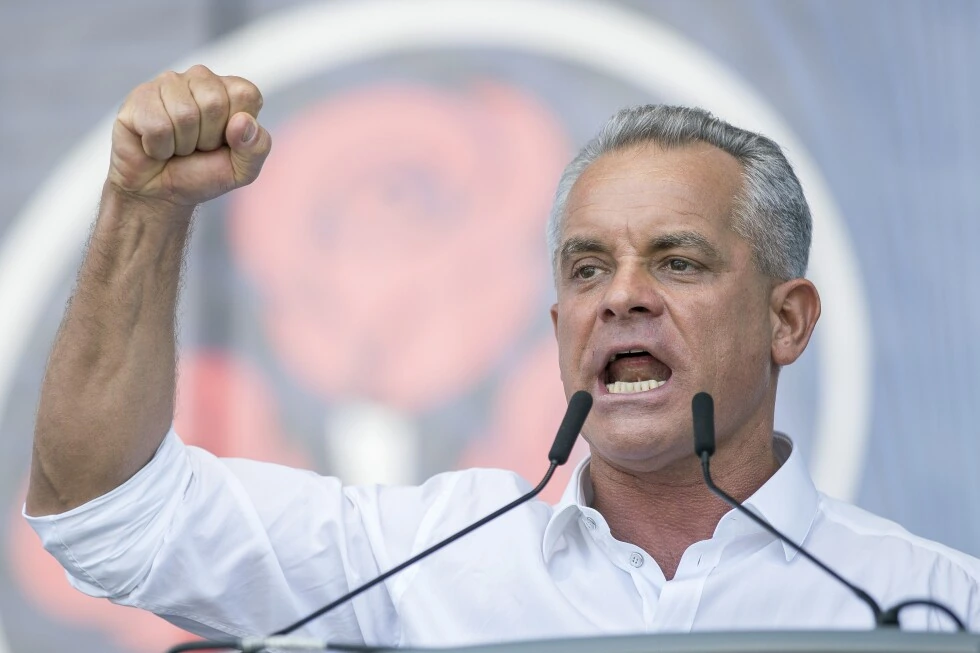
Vlad Plahotniuc Net Worth: Estimate, Sources, and Checks
Vlad Plahotniuc net worth estimate with methods, sources, and caveats on disputed assets and legal impacts.

Slavic Dancer Net Worth Estimate How It’s Calculated
Slavic Dancer net worth estimate with how it’s calculated, income sources, likely expenses, and verification tips.