Vladimir Potanin's net worth sits at approximately $29.7 billion as of March 2026, based on Forbes reporting, making him one of the wealthiest individuals in Russia and among the top tier of oligarchs tracked globally. A separate estimate from Grizzly Bulls pegged him at $27.1 billion as of March 8, 2026. The gap between those two figures is not a sign that one source is wrong, it reflects genuinely different methodological choices, update timings, and assumptions about how to value assets that are partially obscured by sanctions and private-company complexity. If you want the practical answer: Potanin is reliably in the $27–30 billion range as of early 2026, with Norilsk Nickel as the dominant driver of that figure.
Vladimir Potanin Net Worth in Billion: Estimate, How It’s Valued

Konstantin Volkov
5 Apr 2026
The current net worth estimate, in plain terms

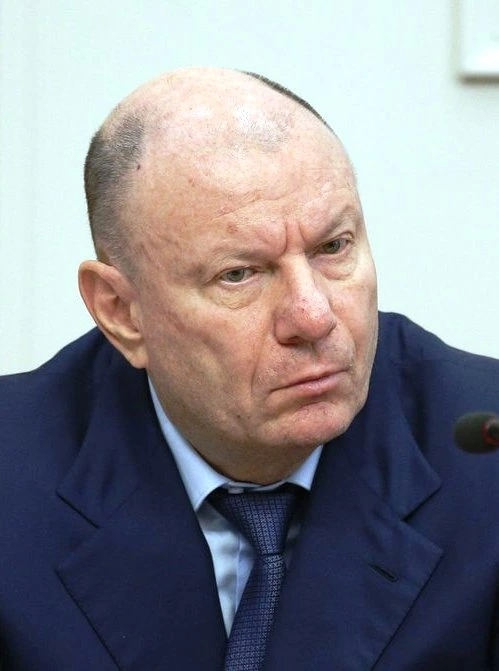
Forbes listed Potanin's real-time net worth at $29.7 billion, with the profile last updated March 10, 2026. Grizzly Bulls, which updates its billionaire index daily at the close of U.S. stock market trading, showed $27.1 billion as of March 8, 2026. Bloomberg's Billionaires Index also tracks Potanin, typically landing in a comparable range. The roughly $2.6 billion spread between the Forbes and Grizzly Bulls numbers at that moment is meaningful but not unusual for oligarchs whose holdings include both publicly traded stakes and large privately held positions that are harder to price in real time.
For context, figures like these put Potanin in similar territory to other major post-Soviet industrialists. If you are looking to compare across the region, profiles such as the one covering Vladimir Lisin's net worth show how Russian metals-and-industry billionaires cluster in overlapping valuation ranges, even when their specific business drivers differ significantly.
How these estimates are actually calculated
The short version: trackers combine the market value of publicly traded stakes with estimated values for private holdings, then subtract known liabilities. The long version involves a lot of judgment calls, and that is where the numbers start to diverge.
Public stakes: the more reliable part

For Potanin's stake in Norilsk Nickel, which is publicly traded, Bloomberg's methodology is explicit: stakes in publicly traded companies are valued using the share's most recent closing price. That means Potanin's roughly 37% holding through Interros (as of December 31, 2024, per the Norilsk Nickel company website) gets priced daily based on wherever Nornickel's stock closes. When the stock moves, his net worth moves with it, which is why these trackers can show different figures even days apart.
Private assets: where the estimates get complicated
For closely held companies and private assets, which in Potanin's case include Rosbank and his Rosa Khutor stake, trackers use different approaches. Forbes has described its general methodology as applying price-to-earnings or price-to-revenues multiples from comparable public companies to estimate the value of privately held businesses. Bloomberg states that the specific valuation methodology for each closely held company is documented in the net worth analysis section of each profile, using publicly disclosed or derived information when direct documentation is unavailable. Grizzly Bulls uses a proprietary algorithm updated daily but does not publicly disclose granular inputs like specific ownership percentages, FX conversion rates, or private-asset formulas.
Forbes also notes that a comprehensive net worth estimate accounts for all asset types: stakes in public and private companies, real estate, art, yachts, planes, and other tangible assets. In practice, for a figure like Potanin, some of those categories are impossible to value precisely from the outside. Bloomberg applies one additional modeling discipline worth knowing: if shares are pledged as loan collateral, the value of those pledged shares (or the loan amount) is removed from the net worth calculation. That kind of adjustment can make a material difference for oligarchs with complex financing structures.
Why the numbers differ across trackers
- Different update frequencies: Forbes updates periodically, Bloomberg and Grizzly Bulls aim for daily recalculation
- Different assumptions about private-company multiples and how to value stakes in entities like Rosbank
- Different treatments of sanctioned or illiquid assets — some trackers discount, some carry at full book value
- Currency conversion timing: Nornickel trades in rubles, and RUB/USD rates add another variable
- Different decisions about whether to include or exclude pledged shares or encumbered assets
What actually built Potanin's fortune
The foundation of Potanin's wealth is his stake in Norilsk Nickel, the world's largest producer of nickel and palladium. Forbes describes him as owning just over a third of the company, and Bloomberg confirms that Interros, his holding vehicle, controlled 37% of Norilsk Nickel stock as of late 2024. That single position accounts for the vast majority of his estimated net worth. Nornickel's valuation fluctuates with global commodity prices, nickel, palladium, copper, and platinum, so Potanin's paper wealth is meaningfully tied to industrial metals markets, not just Russian domestic conditions.
Beyond Nornickel, Forbes identifies two other significant categories of wealth. First, his stake in Rosa Khutor, the ski resort developed in connection with the 2014 Sochi Winter Olympics. Second, his banking investments, most notably the acquisition of Rosbank in spring 2022 and the purchase of a 35% stake in Tinkoff Bank from Oleg Tinkov, also in spring 2022. These additions meaningfully expanded his financial-sector exposure at a moment when many Western entities were exiting Russia.
It is worth noting how different wealth-building paths look across figures in this region. Someone like Vladimir Kim, whose fortune came through Kazakhstan's copper industry, followed a broadly similar privatization-era trajectory, but the specific commodities, political contexts, and corporate structures vary enough that direct comparisons require care.
Timeline: how Potanin got here
| Year / Period | Event | Wealth Significance |
|---|---|---|
| 1990–1993 | Founded Interros and ONEXIM Bank during post-Soviet economic transition | Established the financial infrastructure for future acquisitions |
| 1995 | Acquired Norilsk Nickel stake through loans-for-shares privatization program | Core wealth driver; the position he still holds today at ~37% |
| ~2007–2014 | Developed Rosa Khutor ski resort for the 2014 Sochi Winter Olympics | Added significant real-asset and tourism-sector holdings |
| April 2022 | Interros purchased Rosbank from Société Générale as Western banks exited Russia | Expanded banking holdings; Rosbank later sanctioned by the U.S. |
| April–May 2022 | Bought 35% stake in Tinkoff Bank from Oleg Tinkov following Tinkov's public statements on Ukraine | Added major fintech/banking exposure at distressed-sale conditions |
| December 2022 | U.S. Treasury sanctioned Potanin and Rosbank | Restricted Western access to his assets; added valuation uncertainty |
| March 2026 | Net worth estimated at $27.1B–$29.7B across major trackers | Reflects continued Nornickel dominance and post-sanctions recalibration |
Breaking down what's in the estimate
A credible net worth profile for Potanin needs to account for several distinct asset buckets. The largest and most transparent is the Norilsk Nickel stake, which can be valued with reasonable confidence based on Nornickel's market capitalization and the confirmed 37% Interros holding. The remaining assets, banking interests, Rosa Khutor, and other Interros holdings, require estimation, and that is where analyst judgment varies most.
- Norilsk Nickel (~37% via Interros): publicly traded, priced daily, primary wealth driver
- Rosbank: acquired April 2022, U.S.-sanctioned December 2022; valuation complicated by sanctions-related restrictions
- 35% stake in Tinkoff Bank: acquired from Oleg Tinkov in spring 2022 through Interros
- Rosa Khutor: ski resort and hospitality assets tied to the 2014 Sochi Olympics infrastructure
- Other Interros holdings: various industrial and financial assets within the broader conglomerate
- Physical/personal assets: real estate, art, and other tangibles (factored into comprehensive Forbes-style estimates)
The banking acquisitions from 2022 are a particularly interesting case. Potanin moved aggressively into financial assets at a moment of maximum uncertainty, buying when others were selling. Whether those positions have retained or grown their value since is genuinely unclear from outside the Interros structure, which is part of why tracker estimates diverge most sharply on that portion of his portfolio.
Sanctions, legal context, and what they do to the numbers

In December 2022, the U.S. Treasury Department sanctioned both Potanin personally and Rosbank. This did not eliminate his wealth on paper, but it created real complications for how that wealth is reported, accessed, and valued. Sanctioned assets face restrictions on dollar-denominated transactions and Western counterparty dealings, which can make them effectively illiquid in global markets even if they carry significant book value. For trackers, this presents a genuine methodological problem: do you carry a sanctioned bank at its estimated operating value, or apply a discount for the fact that a Western buyer effectively cannot purchase it?
Forbes and Bloomberg both continue to include Potanin's holdings in their estimates, but the sanctioned status of Rosbank and Potanin himself introduces acknowledged uncertainty. Bloomberg's practice of removing pledged or encumbered share value from net worth calculations is one example of how trackers try to account for assets that are technically owned but practically restricted. The honest answer is that no external tracker can fully model the real liquidity position of a sanctioned oligarch's private holdings.
This is not unique to Potanin. Other politically exposed figures from the former Soviet sphere face similar reporting challenges. The profile of Vladimir Kara-Murza illustrates a different dimension of this dynamic, how political risk and legal exposure shape the financial narratives of prominent Russians in very different ways depending on their relationship with the Kremlin.
From a pure reporting standpoint, sanctions also affect data availability. Russian companies have reduced their public disclosure of beneficial ownership and financial detail since 2022, making it harder for Bloomberg, Forbes, or any third party to verify whether the Interros stake in Nornickel has been restructured, pledged, or otherwise encumbered. The 37% figure confirmed as of December 31, 2024, is the most recent publicly verifiable data point, but the situation is dynamic.
How to think about these figures going forward
The most reliable anchor in any Potanin net worth estimate is the Nornickel stake. That position is publicly traded, the ownership percentage is on record, and the commodity markets that drive Nornickel's value are themselves transparent and liquid. Everything else, the banking holdings, Rosa Khutor, broader Interros assets, involves more estimation and more uncertainty. When you see Forbes at $29.7 billion and Grizzly Bulls at $27.1 billion in the same week of March 2026, the gap almost certainly reflects different assumptions about those secondary and tertiary holdings, not a fundamental disagreement about Nornickel's value.
For readers who follow Russian billionaire wealth as a category, Potanin's profile is a useful benchmark precisely because it combines the most transparent type of asset (a large-cap publicly traded mining company) with some of the least transparent (sanctioned banking stakes, private resort holdings, Kremlin-adjacent business structures). Figures like Vladimir Korzinin or Vladimir Konstantinov represent different points on that transparency spectrum, which is part of what makes comparing Eastern European wealth profiles a more nuanced exercise than simply looking at Western billionaire rankings.
The practical takeaway: treat the $27–30 billion range as a credible working estimate for early 2026, anchor it primarily to Nornickel, and apply skepticism to the precision of any single figure. As Nornickel's share price moves, as Russian disclosure norms evolve, and as sanctions conditions change, that range will shift. Checking Forbes and Bloomberg directly for their most current real-time figures remains the best approach for anyone who needs the number updated to today's date.
FAQ
If different websites show different Vladimir Potanin net worth numbers, which part should I trust the most?
Use the same “as-of” date and currency basis as the tracker, then treat the Norilsk Nickel stake valuation as the anchor. The $27–30 billion working range is mainly driven by Nornickel’s share price and Interros’ stated percentage, so the fastest way to sanity-check any new figure is to look for movement consistent with Nornickel’s market changes, not supposed revaluations of private assets.
Does Potanin net worth reflect cash he can spend, or just paper value?
A reported net worth number is typically a paper valuation (assets valued at market prices for public holdings plus modeled estimates for private holdings) minus liabilities. It does not mean Potanin has that much cash available or that the assets could be sold quickly at the same book value, especially for sanctioned or encumbered positions where liquidity and access are constrained.
What methodological differences most commonly explain a large gap between net worth estimates?
Focus on whether the figure includes encumbered or pledged shares adjustments and how the model handles sanctioned assets. If a tracker reduces value for pledged shares, or applies a discount or uncertainty penalty for restricted assets, the net worth can diverge even when the public-stake portion is identical.
Why does Vladimir Potanin net worth change from day to day even without major news?
Net worth estimates can move on small daily changes because the publicly traded portion is priced using the most recent share close. For Potanin, the Norilsk Nickel stake is the dominant driver, so daily stock moves can shift the estimate even if no underlying ownership percentage changes.
How do trackers estimate the value of Potanin’s private holdings when details are limited?
For private or less transparent assets, trackers usually rely on valuation multiples or comparable-company assumptions, then update with whatever public signals are available. This is where the uncertainty is highest, so you should expect wider error bars once estimates move away from the Nornickel anchor into banking, resorts, or other Interros-controlled holdings.
How do sanctions on Potanin and Rosbank affect the reliability of net worth estimates?
Yes, sanctions can change practical liquidity and access, which may not be fully reflected in “headline” valuations. Some models attempt to account for restrictions by adjusting for pledged/encumbered value or by applying additional uncertainty, but no public tracker can perfectly model what a restricted counterparty would pay in an actual sale.
How can I tell whether the Nornickel ownership data in a net worth estimate is still current?
Look for the latest verifiable ownership percentage for Interros’ Nornickel stake. If disclosure is stale or ownership has been restructured or pledged since the last confirmed date, the Nornickel anchor can become less certain, even though Nornickel’s market price itself remains observable.
Why do two sites that both claim “real-time” sometimes disagree by billions within the same week?
To interpret “real-time” values correctly, check whether the tracker updates using U.S. market closes, local market sessions, or a separate valuation timestamp. A difference of one or more trading days can produce multi-billion differences simply from share-price movement plus differing cut-off times.
Can liabilities or debt assumptions be a bigger issue than asset valuation for Potanin’s net worth?
Net worth estimates may not be directly comparable across sources if one is using a different liability set (for example, debt associated with holding vehicles) or different assumptions about encumbrances. Even if assets are similar, the “minus liabilities” step can shift the final number.
Is it possible to know Potanin’s net worth with high certainty, or should I always treat it as a range?
No external tracker can confirm the exact liquidity or sale price of sanctioned or privately held assets. Treat the final number as a modeled estimate, and if you need an actionable range, rely on the stable anchor (the publicly traded stake) and treat the rest as an uncertainty band.
Next Articles
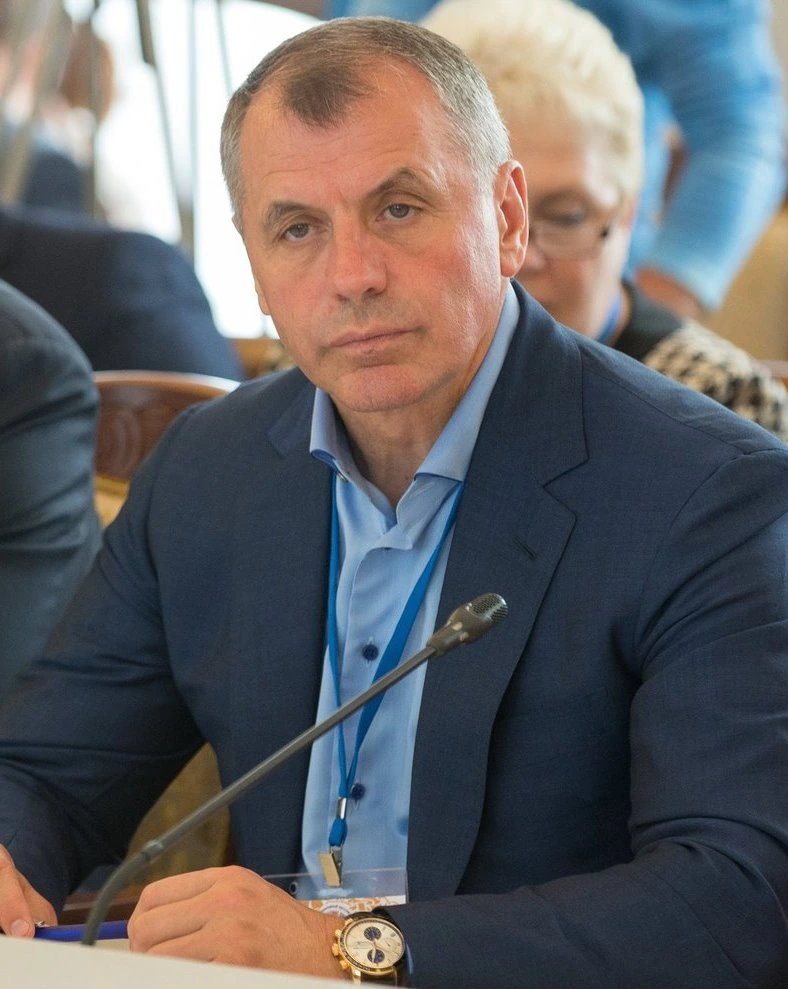
Vladimir Konstantinov Net Worth: Estimate and Sources
Estimated Vladimir Konstantinov net worth with identity checks, source-based method, income, assets, risks, and updates.

Slavic Dancer Net Worth Estimate How It’s Calculated
Slavic Dancer net worth estimate with how it’s calculated, income sources, likely expenses, and verification tips.

Slavi Trifonov Net Worth: Estimate, Sources, and Wealth Drivers
Slavi Trifonov net worth estimate for the Bulgarian TV host, with sources, wealth drivers, and verification tips.