If you searched for Vladimir Konstantinov net worth, there are a few people this name could point to. The most likely subject, given the political and Eastern European focus of this site, is blank" rel="noopener noreferrer">Vladimir Andreyevich Konstantinov (born 19 November 1956), the Chairman of the State Council of the Republic of Crimea since 17 March 2014. There is also Vladimir Nikolaevich Konstantinov (born 19 March 1967), the Russian former NHL defenseman who played for the Detroit Red Wings. This article focuses primarily on the Crimean politician, who is the more prominent Eastern European public figure in the context of wealth tracking, while briefly addressing the hockey player for clarity.
Vladimir Konstantinov Net Worth: Estimate and Sources

Konstantin Volkov
2 Apr 2026
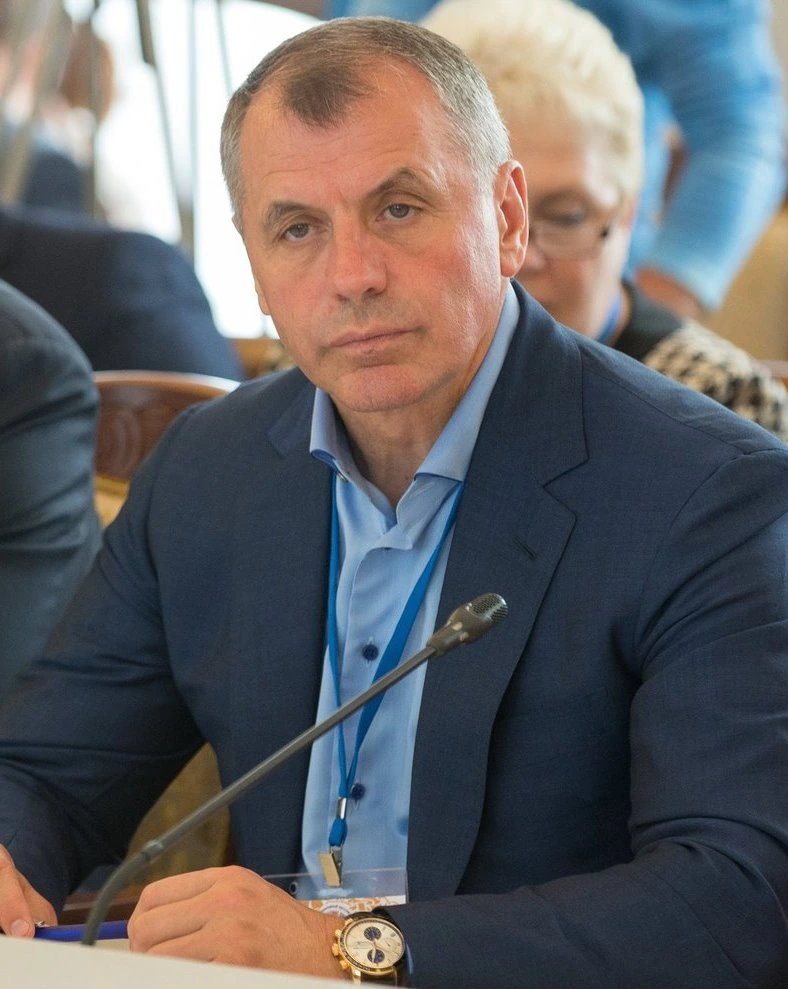
Who Vladimir Konstantinov is
Vladimir Andreyevich Konstantinov is a Russian and Crimean politician best known internationally for his role as speaker of Crimea's Supreme Council in the lead-up to the March 16, 2014 referendum on Crimea's annexation by Russia. On 17 March 2014, he became Chairman of the State Council of the Republic of Crimea, the position he still holds as of April 2026. EU sanctions documents describe him as having played a central role in the political decisions that precipitated the referendum, making him one of the most recognizable political figures to emerge from the Crimea crisis.
The other well-known Vladimir Konstantinov, the hockey player (patronymic: Nikolaevich), had a celebrated career as a Detroit Red Wings defenseman from 1991 to 1997. His NHL career ended tragically after a limousine accident in June 1997, just days after the Red Wings won the Stanley Cup. He is a sports legend in Russian hockey circles but is not a significant subject for Eastern European political wealth analysis.
The net worth estimate, and how it's derived
Here is the honest answer: no authoritative, publicly verified net worth figure exists for Vladimir Andreyevich Konstantinov. He does not appear on Forbes Russia billionaire lists, which are compiled using share prices, exchange rates, and asset valuations against known debt (the same methodology Forbes applies globally). He has not been the subject of major investigative financial reporting in the way that oligarchs like Vladimir Lisin have been. The absence of a headline figure is itself meaningful data.
Based on what can be reasonably inferred from his career profile, public role, and the regional political economy of Crimea, a defensible estimated range for his personal net worth is approximately $1 million to $10 million USD. This is a wide range by design, because the underlying data is sparse. The lower bound reflects the typical accumulated assets of a long-serving regional Russian politician (real estate, savings, pension entitlements, and local business interests). The upper bound reflects the possibility of undisclosed business stakes or property holdings consistent with senior political figures in post-Soviet regions who have held power since before 2014.
This estimate is not comparable to the wealth profiles of sanctioned oligarchs or major businessmen. Konstantinov is a political administrator, not a billionaire entrepreneur. Readers looking for mega-wealth figures should calibrate expectations accordingly.
Income sources and how wealth likely accumulated

Konstantinov's income pathways follow the pattern typical of senior regional politicians in the Russian Federation. His primary documented income source is his state salary as Chairman of the State Council of Crimea. Russian regional parliamentary speakers receive official salaries that, while significantly higher than average Russian wages, are not wealth-generating at scale. In 2024, senior regional legislative chairs in Russia typically earn in the range of 200,000 to 400,000 rubles per month (roughly $2,200 to $4,400 USD at current exchange rates), plus allowances.
Before 2014, Konstantinov was an established figure in Crimean politics and business. Politicians in Ukrainian Crimea during the 2000s and early 2010s frequently accumulated wealth through regional business connections, property, and influence over local commercial decisions. These pre-annexation years are the most plausible period during which he would have built any meaningful personal asset base, though the specifics are not publicly documented.
There are no verified reports of significant private business ownership, shareholdings in major Russian companies, or offshore structures attributable to him in open-source records. This distinguishes him sharply from figures like Vladimir Potanin, whose wealth is rooted in large industrial holdings and is tracked in detail by financial media.
Assets and lifestyle indicators
No major asset disclosures for Konstantinov are available in international open-source databases. Russian politicians are required to file annual income and property declarations with state authorities, but these declarations are not always publicly accessible, and since Crimea's annexation, data from Crimean officials has become even less transparent to outside observers. No real estate, vehicle fleet, yacht, or investment portfolio data has surfaced in Western investigative journalism or leaked document databases (such as the Panama Papers or FinCEN Files) under his name.
Lifestyle indicators from public appearances and official functions are consistent with a senior regional official rather than a wealthy oligarch. He operates within the institutional structures of Crimean governance, and his public profile is almost entirely political rather than commercial or social. There are no reports of luxury property abroad, high-profile art purchases, or the kind of conspicuous spending that typically flags significant hidden wealth.
Sanctions and how they affect the wealth picture

Vladimir Andreyevich Konstantinov is a designated sanctioned individual under multiple international regimes. In a sanctions action published in December 2014, U. S. Treasury’s OFAC designated Vladimir Andreyevich Konstantinov in connection with the Crimea and Ukraine sovereignty context [a designated sanctioned individual under multiple international regimes](https://home.
treasury. gov/news/press-releases/jl2326). Agence Europe reports that the EU decided to freeze assets and issue visa bans for Crimeans, including Vladimir Andreevich Konstantinov.
He appears in EU sanctions listings (citing his role as speaker of Crimea's Supreme Council in decisions related to the 16 March 2014 referendum), Swiss SECO sanctions tied to the situation in Ukraine, Bermuda Monetary Authority financial sanctions updates (appearing in both the Ukraine-related 2020 update and the Russia-related 2024 update), and in OFAC's Russia-related designations stream, with relevant updates documented as recently as September 2022.
What sanctions mean practically for his wealth: any assets held in Western jurisdictions or in institutions subject to these regimes are frozen or blocked. He cannot freely move money through Western banking systems. This does not mean his wealth is reduced in absolute terms, but it does mean that whatever he holds is effectively locked within Russia and Crimea-adjacent financial systems. For anyone trying to estimate his real net worth, the sanctions landscape means that offshore or Western-held assets are unlikely to exist (or, if they did, would have been seized or frozen well before now).
It is also worth noting that sanctions designations are not evidence of hidden wealth. They reflect political and policy determinations about his role in the annexation, not findings about personal enrichment. The two questions, how sanctioned he is and how wealthy he is, are legally and factually distinct.
How his wealth compares to other Eastern European figures
To put the estimated range in context, Konstantinov's wealth profile sits at the lower end of the spectrum tracked on this site. He is a regional political official, not a business oligarch, and the difference is substantial.
| Figure | Primary Role | Estimated Net Worth |
|---|---|---|
| Vladimir Andreyevich Konstantinov | Crimea State Council Chairman (politician) | $1M – $10M (estimated, unverified) |
| Vladimir Potanin | Oligarch, Norilsk Nickel | $20B+ (Forbes-tracked) |
| Vladimir Lisin | Industrialist, NLMK steel group | $18B+ (Forbes-tracked) |
| Vladimir Kim | Kazakhmys / mining executive | $3B+ (estimated) |
| Vladimir Kara-Murza | Opposition politician / activist | Not wealth-focused profile |
The comparison makes clear that Konstantinov belongs to a category of politically significant but not oligarch-wealthy figures. His prominence comes from institutional power, not from financial holdings. This is a useful distinction for readers who may conflate political influence with personal wealth, particularly in the post-Soviet context where the two often, but not always, go together. For a deeper look at how significant Russian business wealth is built and tracked, the profile of Vladimir Korzinin offers a useful contrast in accumulation pathways.
How to verify this estimate and what would change it
The most reliable way to check or update any estimate for Konstantinov is to monitor a specific set of sources and event types. Here is what to watch for:
- Russian state asset declaration databases: Russian officials file annual property and income declarations. If Crimean State Council declarations become accessible through Russian government portals or investigative leaks, they would be the most direct evidence.
- OFAC, EU, and UK sanctions list updates: The official sanctions registers (OFAC's SDN list, the EU's consolidated sanctions list, the UK OFSI register) are updated regularly. New asset freeze notices or designations for associated individuals can indicate previously unknown financial connections.
- Investigative journalism outputs: Organizations like OCCRP (Organized Crime and Corruption Reporting Project) and iStories have a track record of exposing undisclosed Russian official wealth. A future investigation naming Konstantinov would be significant.
- Leaked document databases: The Pandora Papers, Panama Papers, and FinCEN Files are searchable. A future leak covering Crimean officials could surface new data.
- Court and legal proceedings: Asset forfeiture cases in EU or UK jurisdictions sometimes produce documentation of previously unknown holdings. If any action names Konstantinov, follow the court filings.
- Property registry searches in Crimea and Russia: Local property registries, while harder to access since 2014, are the ground-level evidence for real estate holdings.
When evaluating conflicting claims about his net worth, apply a basic credibility filter: is the source citing a specific asset, transaction, or filing? Or is it a round-number estimate with no documented basis? Unsourced wealth claims for sanctioned politicians circulate frequently online and should be treated with skepticism. The $1M to $10M range used in this article is deliberately conservative precisely because the underlying evidence base is thin. If credible investigative reporting produces verified asset data, that range should be revised immediately.
The bottom line: Vladimir Andreyevich Konstantinov is a heavily sanctioned, politically powerful figure whose personal financial profile remains largely opaque. His estimated net worth reflects the limits of what open-source research can confirm, not a conclusion that he has nothing. Political power in post-Soviet systems rarely exists without some accumulated financial buffer, but the specific scale of his remains unverified.
FAQ
Which Vladimir Konstantinov is this net worth estimate about, the Crimean politician or the NHL player?
The estimate in the article is for Vladimir Andreyevich Konstantinov, the Crimean politician. The NHL player (Vladimir Nikolaevich Konstantinov) is a different person, and his career and accident are not the kind of publicly documented finance trail that supports a comparable net worth range.
Why isn’t there a specific verified net worth number for Vladimir Andreyevich Konstantinov?
Because there is no widely accessible, asset-by-asset disclosure that can be independently verified by mainstream finance methodologies. Even though Russian officials file annual income and property declarations, those documents are often not publicly reachable, especially after Crimea’s annexation, which breaks the evidence chain needed for a single-number net worth.
What is the biggest source of uncertainty in the $1 million to $10 million range?
Whether any meaningful portion of assets was accumulated through pre-2014 regional business ties that are not traceable in open-source records. Without documented property purchases, company stakes, or financial account details tied to him, the upper bound remains speculative rather than confirmed.
Do sanctions prove that his wealth is high or low?
No. Sanctions generally show legal and political designation status, not verified personal enrichment. An individual can be heavily sanctioned and still have relatively modest personal assets, or the reverse, and the sanctions themselves do not replace missing asset documentation.
If Western assets are frozen, does that mean his net worth estimate should be lower now?
Not automatically. Freezing or blocking affects liquidity and access, not the existence of assets. If assets are held within Russia or in non-Western systems, sanctions can still leave the real economic value in place, even if it becomes harder for outsiders to measure.
Could he have wealth held under relatives or business partners, and would that change the estimate?
It could. Many officials can have assets indirectly through spouses, adult family members, or nominees. If such ownership patterns were documented, the estimate might move upward, but the article notes that there are no clear open-source indicators of identifiable shareholdings or offshore structures tied to him.
How do I respond to viral online claims that quote a much higher net worth for him?
Check whether the claim names a specific asset (property address, company stake, filing) or relies on a round-number figure without documentation. For sanctioned political figures, unsupported estimates frequently circulate, and the article’s credibility filter is to prioritize filings and verifiable transactions over anonymous aggregation sites.
Is the range comparable to sanctioned oligarchs like major industrial businessmen?
No. The article explicitly distinguishes politically important administrators from billionaire-scale entrepreneurs. Even if both categories are sanctioned, their typical income mechanics differ, salaries and allowances do not usually scale like industrial equity, and that is why the likely net worth band is much lower for most administrators.
What practical signals should be monitored to update his net worth estimate?
Look for any newly published or leaked asset disclosures, confirmed real estate transfers tied to him or close associates, changes in official income and property filing summaries that become accessible, and credible investigative reporting that names specific holdings. Without new asset-level evidence, the estimate is unlikely to tighten from a wide range.
Does his official salary tell us most of what we can know about his wealth?
It tells you about an income floor and helps assess plausibility, but it usually does not explain the full stock of assets. For a long-serving official, salary plus pre-office or pre-2014 accumulation could both matter, yet the article notes that the meaningful accumulation period is not publicly documented in a way that allows a precise calculation.
Next Articles

Slavic Dancer Net Worth Estimate How It’s Calculated
Slavic Dancer net worth estimate with how it’s calculated, income sources, likely expenses, and verification tips.

Slavi Trifonov Net Worth: Estimate, Sources, and Wealth Drivers
Slavi Trifonov net worth estimate for the Bulgarian TV host, with sources, wealth drivers, and verification tips.
Vik Slavik Net Worth: Estimate, Sources, and How to Verify
Estimate of Vik Slavik net worth with range, confidence, how to verify assets, and likely income drivers plus key uncert