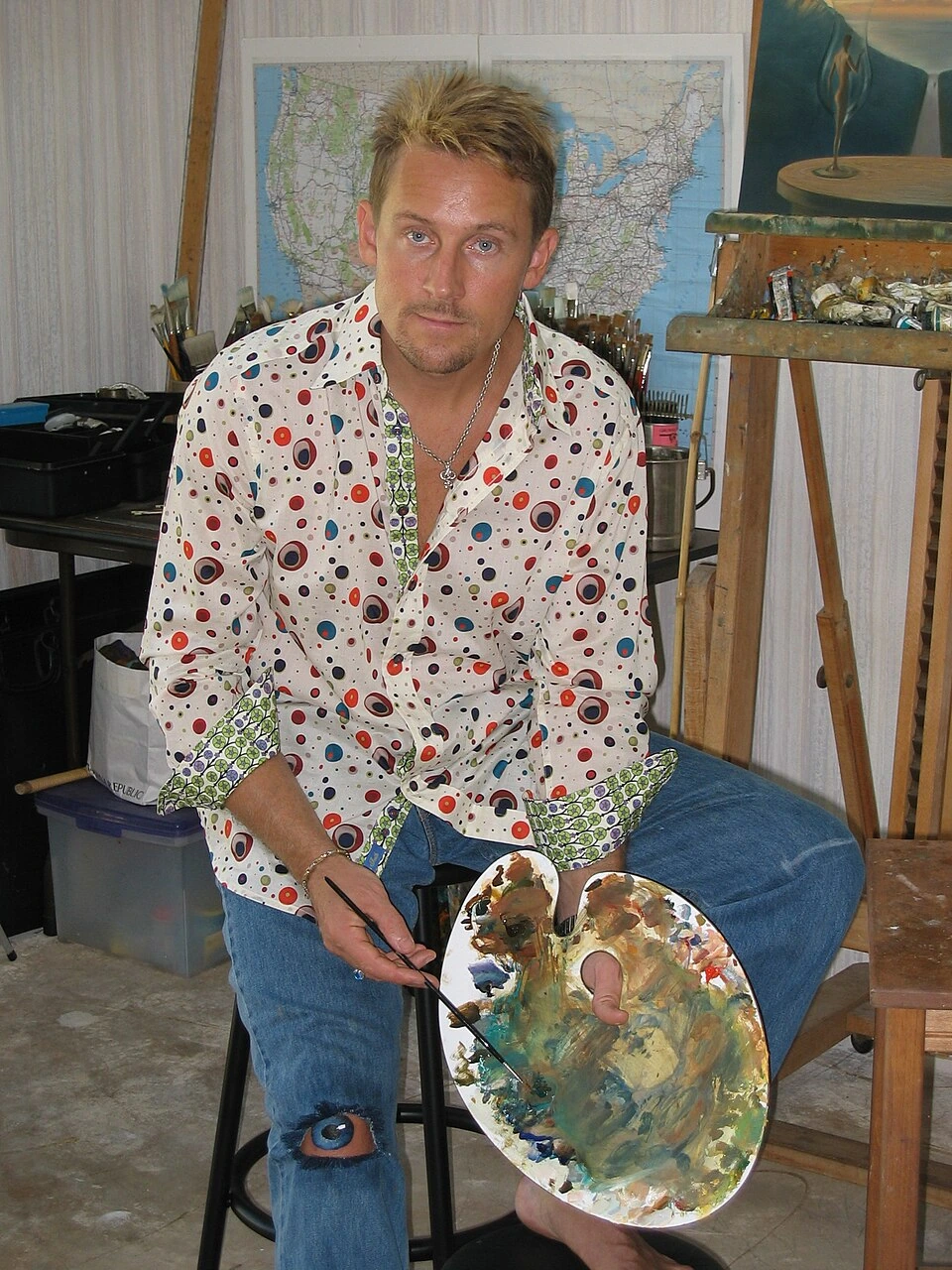
In 2001, Kush and his father Oleg painted the walls of a new gallery space in Lahaina, Hawaii, and that project effectively launched Kush Fine Art as a formal business. Since then, the operation has grown to include multiple gallery locations, a jewelry line called Wearable Art ("Metaphorical Jewelry" inspired directly by his paintings), limited-edition print programs, art books, and regular appearances at major art fairs including Art Wynwood Miami and Context Art Miami. If you are searching for a different Vladimir Kush, perhaps a politician or businessman from Russia or Ukraine, this is not your person. The artist Kush has a clear, verifiable public footprint through gallery records, auction databases, and press coverage going back decades.
What "net worth" actually means for a private artist like Kush
Net worth, in the simplest sense, is total assets minus total liabilities. For a public company executive or a politician, you can sometimes get close to that number through filings, disclosed equity stakes, and property records. For a private artist who runs a privately held gallery business, it works differently. Vladimir Kush has never filed a public financial disclosure, his gallery is not publicly traded, and there are no mandatory earnings reports. What you are working with instead is a set of public signals: auction results, gallery pricing, known revenue streams, and the overall scale of business activity. From those signals, analysts and researchers build an estimate range, not a single precise number. That distinction matters a lot and it is one reason why you will see wildly different figures published online.
The estimate also needs to account for business structure. Kush Fine Art is both an artistic practice and a commercial operation. The galleries generate revenue from original painting sales, limited-edition print programs, sculpture, jewelry, books, and art fair booth sales. Some of that revenue flows to the artist as income; some of it covers overhead, staff, and production costs. The personal net worth of the artist is therefore not the same as the gross revenue of his gallery business, and conflating the two is a common mistake in celebrity wealth reporting.
Where Kush's money comes from
Original painting sales

Original oil paintings are the top of the value hierarchy in Kush's catalog. These are one-of-a-kind works, typically oil on board or oil on canvas, sold directly through the gallery or at art fairs. Gallery pricing for original works by established artists at this level of brand recognition typically ranges from the low tens of thousands to well over $100,000 per piece, though Kush's exact gallery prices for originals are not publicly disclosed in a catalog format. The gallery's participation in events like Art Wynwood Miami (2023) and Context Art Miami (2023) confirms that originals are actively offered and sold in high-visibility commercial settings.
Limited-edition prints and giclées
The limited-edition print program is the highest-volume revenue stream and probably the most traceable one. Kush Fine Art sells giclée-on-canvas prints in numbered editions, and those works circulate in the secondary auction market. Public auction data gives us real price anchors: a framed giclée titled "Arrival of the Flower Ship and Daisy Games" (editioned 189/325 and 286/325) sold at Bonhams Los Angeles in July 2025 for $2,048 including buyer's premium, which MutualArt recorded as a record auction price for the artist. Other realized prices in the auction database range from $63 on the low end to that $2,048 record. blank" rel="noopener noreferrer">Leonard Auction sold an "Always Together" giclée on canvas for $850, and Invaluable listed "Laser Tune-Up" with a pre-sale estimate of $300 to $500. These secondary-market figures are typically below original issue price, so the gallery's direct sales of new editions likely command higher prices per unit.
Jewelry, merchandise, and publications
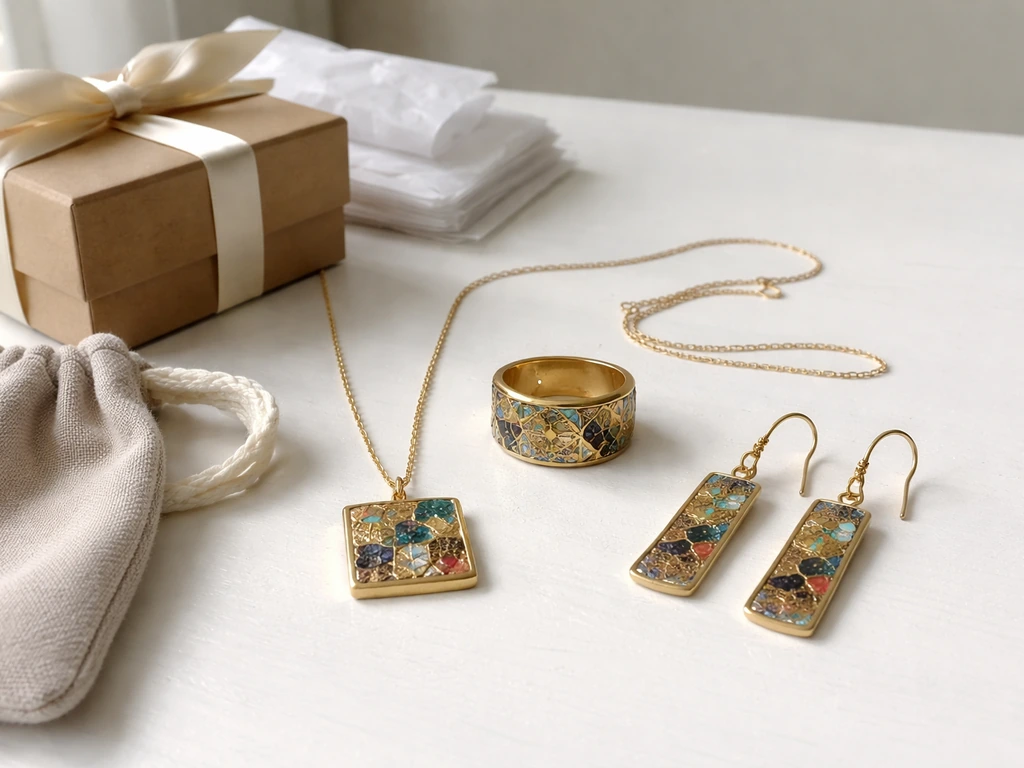
The Wearable Art line, branded as Metaphorical Jewelry, extends the Kush visual language into wearable products inspired by his paintings. This is a licensing and merchandise income stream that does not depend on one-off art sales. The gallery at The Shops at Wailea in Maui sells paintings, limited editions, sculpture, art books, and jewelry under one roof, indicating a diversified retail model rather than a pure fine-art gallery. Published books, including "Metaphorical Journey" and "Artist Proof" (2015), add another modest but real revenue layer. These product lines collectively smooth out the income volatility that purely original-art-dependent artists face.
Art fair participation at events like Art Wynwood and Context Art Miami generates direct sales revenue and brand exposure that supports gallery pricing power. Press releases for new paintings, such as the 2023 announcement for "The Life in the Mirror of Metaphor" and the 2024 release of the painting "Mother," show a consistent marketing cadence that sustains collector interest. There is no publicly documented licensing deal or media production credit of significant scale in the available record, but the brand's social media presence and gallery infrastructure suggest that licensing for reproductions and digital products is a plausible and likely ongoing income channel.
The net worth estimate: a range, not a single number
Based on aggregated public signals, the most credible estimate for Vladimir Kush's personal net worth as of 2026 sits in the range of approximately $5 million to $10 million. The $5 million floor reflects the Modern Luxury publication's reported figure of $5 to $7.6 million, which is the most frequently cited range in credible media coverage. The upper end of our range extends slightly above that to account for continued gallery growth, the jewelry and merchandise line, and the multi-location gallery business model that has been operating for over two decades. This is a reasonable, evidence-grounded range for a successful niche fine-art brand with a loyal collector base, multiple revenue streams, and consistent art-fair participation.
One figure you will encounter is a claimed net worth of over $1 billion from a user-edited site (VIPFAQ), which states approximately $1,011,568,665 for 2026. That number has no verifiable methodology behind it and is almost certainly a data entry error or fabrication. No credible auction record, gallery disclosure, or financial reporting supports a billion-dollar valuation for this artist. Treat it as noise. The $5 to $10 million range, by contrast, is consistent with an artist of Kush's profile: commercially successful, owner of a multi-location gallery business, with a recognizable brand but without the mega-auction results or institutional museum presence that would drive values into the tens or hundreds of millions.
How the estimate is built
Researchers estimating wealth for private artists typically start by anchoring on known revenue signals and then apply reasonable multipliers. For Kush, the methodology looks roughly like this: auction price history establishes a floor on secondary-market demand; gallery pricing for originals (extrapolated from comparable artists at similar market tiers) suggests primary-market revenue per sale; edition sizes and print volume data suggest annual print revenue; the jewelry and merchandise lines contribute a recurring retail income stream. You then estimate cumulative earnings over the artist's active commercial career (roughly 25 years at scale), subtract probable lifestyle and business overhead, and land on an asset accumulation range. It is imprecise, but it is grounded in real data rather than speculation.
Evidence you can check yourself

You do not have to take anyone's word for it. Here are the specific public signals worth examining directly:
- Bonhams auction records: The July 2025 sale of "Arrival of the Flower Ship and Daisy Games" at $2,048 is publicly listed on the Bonhams website with full lot details including edition numbers (189/325 and 286/325) and framing dimensions.
- MutualArt database: Lists 92 Vladimir Kush works at auction with realized prices ranging from $63 to $2,048, giving you a full secondary-market price history.
- Leonard Auction: The "Always Together" giclée sold for $850 hammer price and is publicly catalogued.
- Invaluable: The "Laser Tune-Up" listing with a $300 to $500 pre-sale estimate is searchable in their archive.
- Kush Fine Art's own website: The limited-edition print catalog, jewelry line, and publications pages are publicly accessible and confirm product breadth.
- Art fair press releases: Newswire's 2023 announcement for Art Wynwood Miami and the Context Art Miami 2023 exhibitor release confirm active commercial participation in named events.
- Modern Luxury's profile: The $5 to $7.6 million figure is the most cited credible range and can be traced back to this publication.
If you want to go deeper, Bidsquare and similar online auction aggregators occasionally list Kush works in estate sales and secondary-channel auctions, described with metadata like "Russian O/C" (oil on canvas), which can give you additional price data points beyond the major auction houses.
Why this estimate will change over time
Art market wealth is genuinely volatile in ways that stock portfolios are not. A single headline auction result can reset the entire perception of an artist's market tier. If a Kush original were to sell at a major auction house (Christie's, Sotheby's, or Phillips) for $500,000 or more, the implied value of his entire catalog, and therefore his net worth, would shift meaningfully upward. Conversely, if collector demand softens or the gallery locations close, the asset base contracts. The current auction record of $2,048 for a secondary-market giclée is modest, and the absence of major original-painting auction results at top-tier houses is itself a data point: it keeps the upper bound of the estimate conservative.
Other factors that move the number include: new product line launches (the jewelry business could scale significantly), art fair sales volumes in any given year, any licensing deals that might be announced publicly, and broader macroeconomic conditions affecting discretionary art spending. The multi-revenue model, with originals, prints, jewelry, books, and fair sales running in parallel, provides more stability than a purely painting-dependent practice, but it also means the net worth is tied to operational business performance rather than purely to asset appreciation.
Myths, rumors, and what to ignore
The billion-dollar figure is the most egregious myth in circulation. As noted above, user-generated content sites sometimes produce these numbers through automated or crowd-sourced entries with no methodology. There is zero evidence in any auction database, gallery record, or financial filing to support a $1 billion valuation for Vladimir Kush. If you encounter that figure, the safest response is to discard it entirely and cross-reference against Bonhams, MutualArt, or Leonard Auction instead.
A second myth worth addressing is the idea that print sales at auction reflect the artist's primary income. They do not. Secondary-market auction results for giclées in the $63 to $2,048 range reflect resale prices, often in estate or liquidation contexts, not the gallery's direct issue pricing. Original paintings and freshly issued limited editions from the gallery itself sell at substantially higher prices. Conflating secondary-market auction results with primary-market gallery revenue significantly understates the artist's income.
There is also occasional confusion between Vladimir Kush the artist and other public figures with similar names, including other Eastern European personalities tracked across various wealth-profile resources. For example, readers sometimes conflate search results with unrelated figures, so it helps to confirm you are looking at the Maui-based gallery owner born in 1965 who trained at the Surikov Institute. The biography is specific enough to eliminate confusion once you have those anchors.
How Kush compares to other Eastern European artists in the wealth-profile space
To put Kush's estimated range in context, it is worth noting that wealth profiles for Eastern European public figures vary enormously by domain. Among other Vladimirs tracked in this space, for instance, Vladimir Mashkov's net worth reflects the economics of a film and theater career rather than a visual art business, making direct comparisons tricky but instructive. Artists operating at Kush's tier, with a strong regional gallery brand and a dedicated collector base but without blue-chip auction representation, typically land in the $5 to $15 million range when all assets and business equity are considered.
Fitness personalities and influencers from the same post-Soviet cultural sphere, like Vladimir Shmondenko's net worth profile, illustrate how diversified content and product revenue can complement a personal brand in ways structurally similar to Kush's model of painting plus merchandise. Meanwhile, broadcast and media figures such as Vladimir Pozner's net worth demonstrate that name recognition and longevity in a public-facing role are the primary wealth drivers in that domain, just as they are for Kush in the art world.
Athletes from the region occupy yet another tier: Vladimir Kliatchko's net worth, built through a boxing career and the associated endorsements and promotions, reflects prize money and brand deals rather than asset appreciation. And screen actors like Vladimir Kulich, whose career spans Hollywood productions, show how talent income and residuals accumulate over time in ways that are similarly hard to pin down without public filings. The common thread across all these profiles is that private-individual wealth estimates are ranges, not precise numbers, and the methodology matters as much as the headline figure.
A quick comparison: credible vs. non-credible net worth sources
| Source Type | Example | Reliability | Why |
|---|
| Major auction house records | Bonhams July 2025 sale ($2,048) | High | Verified transaction with public lot details and realized price |
| Auction aggregator databases | MutualArt (92 lots, $63–$2,048 range) | High | Aggregates actual sale data across multiple auction houses |
| Regional auction records | Leonard Auction ($850 for 'Always Together') | High | Specific realized price with lot documentation |
| Credible media with stated methodology | Modern Luxury ($5–$7.6 million range) | Moderate | Reported figure but methodology not fully disclosed |
| User-edited content sites | VIPFAQ ($1,011,568,665) | Very low | No verifiable methodology; likely automated or fabricated entry |
| Gallery websites (pricing signals) | Kush Fine Art print catalog, jewelry line | Moderate-High | Confirms product range and business scope but not revenue figures |
The bottom line on Vladimir Kush's net worth
The most defensible estimate for Vladimir Kush's net worth in 2026 is $5 million to $10 million, with the lower end anchored by credible media reporting and the upper end reflecting the full scope of a multi-revenue gallery business that has been operating for over 25 years. He is a genuinely commercially successful fine artist with a recognizable brand, a jewelry line, a print program, multiple gallery locations, and consistent art-fair participation. He is not a billionaire, and he is not a marginal figure. He sits comfortably in the tier of successful niche-market artists who have built durable businesses around their work. The auction record confirms real secondary-market demand; the gallery infrastructure confirms real primary-market activity. That is the honest picture, and it is one you can largely verify yourself through the public sources listed above.
If you want to track whether that estimate moves, watch for two things: major original-painting sales appearing at top-tier auction houses, and any public announcements about gallery expansions or new licensing deals. Either of those signals would be a meaningful reason to revise the upper bound upward. For now, $5 to $10 million is where the evidence points, and that is the number worth holding onto. Figures like those attached to Vladimir Novakovski's net worth in the business sphere, or entertainment-adjacent cases like Vladimir Mencia's net worth, show just how much the wealth range varies depending on the industry and the transparency of available data. The same principle applies here: without public filings, auction results and business activity are the best evidence we have, and for Kush, that evidence points to a real but modestly scaled fortune built on art rather than capital markets. Researchers tracking adjacent Eastern European cultural figures, like Vladi Chaoulov's net worth, face the same methodological constraints when public financial disclosure is absent.