Who Vladimir Kliatchko is (and why people confuse him with Vitali)
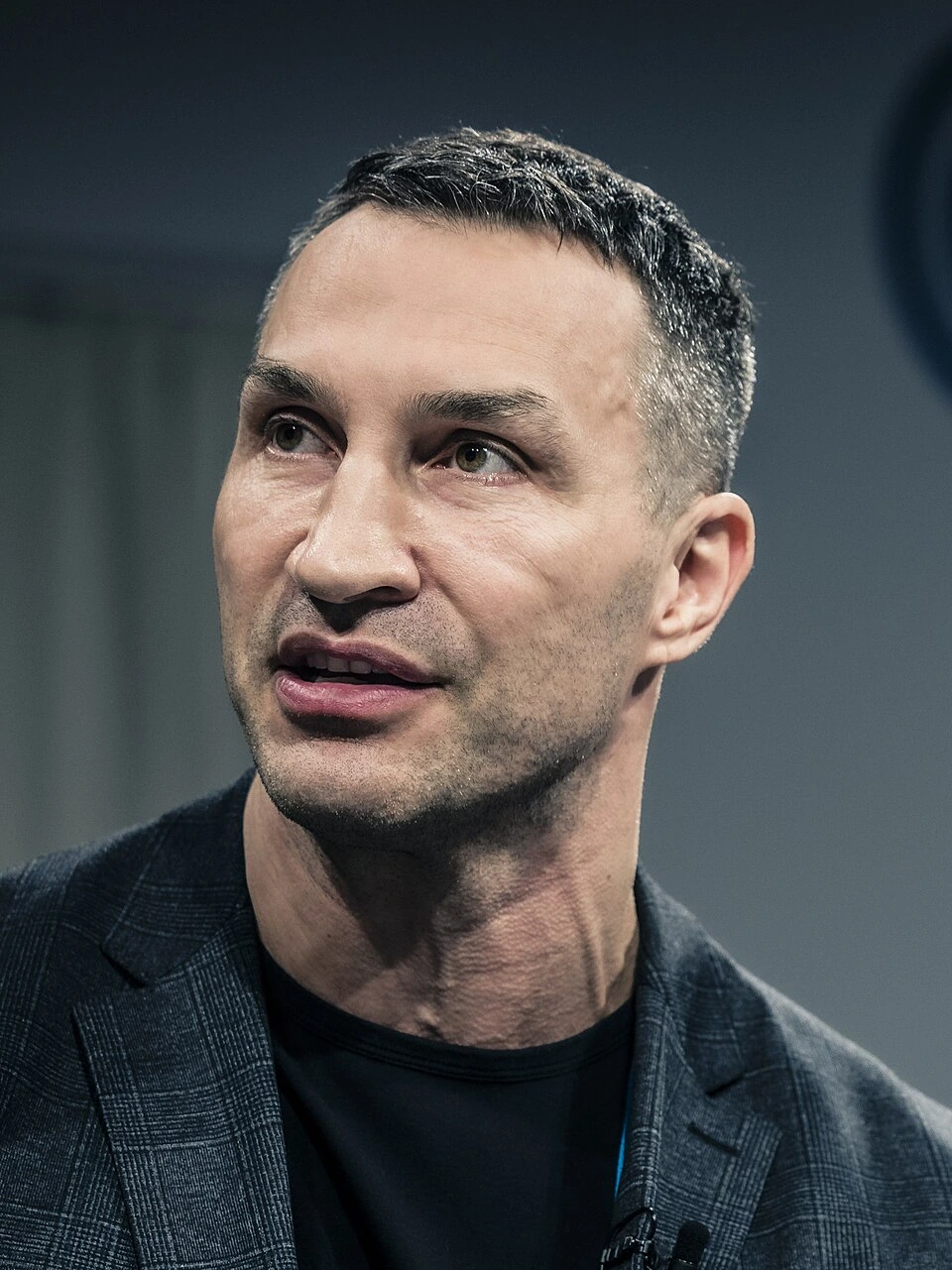
Wladimir Kliatchko (born March 25, 1976, in Semipalatinsk, Soviet Kazakhstan) is a Ukrainian former professional heavyweight boxer and entrepreneur. He held the IBF, IBO, WBO, WBA (Super), and The Ring heavyweight titles across two lengthy championship reigns, making him one of the most dominant heavyweights of the 2000s and 2010s. He announced his retirement from boxing on August 3, 2017, after a career that spanned roughly two decades.
The confusion with Vitali Kliatchko is constant and completely understandable. Both brothers are Ukrainian, both were heavyweight world champions, both have names that non-Ukrainian audiences often blur together, and both share business entities. Vitali is the older brother (born 1971) and went on to become Mayor of Kyiv, which keeps him in political headlines. Wladimir is the younger brother, the one who stayed in boxing longer, and the one whose financial profile is driven primarily by sports earnings and the entrepreneurial activity that followed retirement. When you see searches for "Vladimir Kliatchko net worth," they almost always mean Wladimir, the boxer turned business figure, not Vitali the politician. This article focuses entirely on Wladimir.
For comparison with other prominent public figures from the Eastern European and former Soviet sphere, it helps to see Wladimir alongside peers like Vladimir Pozner, whose wealth profile sits in an entirely different category built on media rather than sport.
Income sources that build his wealth
Boxing career earnings
This is the foundation of his wealth, and the numbers are substantial. Forbes placed Wladimir on its World's 100 Highest-Paid Athletes list multiple times, with annual earnings figures of $28 million (2012 cycle), $24 million (2013), $28 million (2014), $21.5 million (2015), and $21.5 million (2017). Those are earnings in a 12-month window, not lifetime totals, and they cover salaries, prize money, appearance fees, licensing, and endorsements combined. Add those figures across just those five reported years and you already reach roughly $123 million in gross earnings before taxes, management fees, and expenses.
Individual fight purses confirm the scale. The David Haye unification fight (Hamburg, July 2, 2011) was framed publicly as a roughly £50 million event with a 50/50 revenue split, suggesting Wladimir's side of that fight alone was in the tens of millions. The Anthony Joshua fight at Wembley on April 29, 2017, generated approximately $13 million in guaranteed purse money according to pre-fight salary disclosures, with Joshua reportedly taking around £15 million from the outcome, which sets a floor for inferring Klitschko's guaranteed take from the biggest fight of his final active year.
His title run ending with the Tyson Fury loss in November 2015 didn't stop the earnings machine immediately. The rematch cycle, the Joshua fight, and his eventual retirement announcement in August 2017 kept him commercially relevant and generating income well past his final fight.
Endorsements and brand partnerships
The Klitschko brothers built serious corporate endorsement relationships at their peak. Sports Business Journal documented deals with Hugo Boss and Mercedes-Benz among the headline brands, and those types of partnerships at the heavyweight boxing level during the mid-2000s to mid-2010s were worth millions annually. The brothers' promotion company, K2 Promotions, and later the Klitschko Management Group GmbH (KMG), a Hamburg-based marketing and promotions agency, gave them structural leverage to negotiate and manage these deals as business entities rather than purely as individual athlete contracts. That corporate structure matters because it means endorsement revenue flowed through entities they controlled, keeping more of it after fees.
Speaking fees and consulting
Since retirement, Wladimir has built a parallel income stream as an international keynote speaker and business consultant. He is represented by Chartwell Speakers and positioned around his proprietary "FACE the Challenge" performance methodology, which he developed and now licenses through Klitschko Ventures. Chartwell Speakers lists Wladimir Klitschko as having founded Klitschko Ventures in 2016 and as developing and teaching the “FACE the Challenge” challenge-management approach through his consulting and speaking work FACE the Challenge performance methodology. Top-tier corporate keynote speakers in his profile range typically command $100,000 to $200,000 per engagement, and with the geopolitical relevance of Ukraine post-2022, his speaking calendar has arguably grown rather than shrunk.
Business ventures and investments

Wladimir's post-boxing entrepreneurial activity is better documented than most athletes his age, and it points to a deliberate strategy of converting boxing income into diversified business assets.
The centerpiece is Klitschko Ventures, which he founded in 2016. The company operates as a vehicle for business advisory services, venture investment, and the commercialization of the FACE the Challenge method. Secondary sources describe it as having a venture capital and business advisory mandate, though no public portfolio disclosures are available. What is confirmed is that the methodology is being actively sold and licensed to corporate clients, which provides recurring revenue rather than one-time income.
On the hospitality side, Wladimir is publicly associated with 11 Mirrors, a design hotel in Kyiv that opened in 2012. Klitschko.com’s 11 Mirrors company page says the design hotel opened in June 2012 and ties the property to Wladimir Klitschko’s requirements and inspiration 11 Mirrors opened in June 2012. The hotel's own materials describe him as the inspiration behind the property. A Klitschko Ventures press release from 2021 links his entrepreneurial identity to the hotel project directly. What isn't publicly verified is the exact ownership structure or his equity percentage, so it's a known asset association but not a quantifiable line item.
The K2 Promotions boxing promotion company, co-founded with Vitali, managed major heavyweight fights over more than a decade and would have generated significant promotion revenue beyond just Wladimir's fighter purses. Combined with the Klitschko Brothers Fund's philanthropic work, these structures show a figure who planned his financial life beyond the ring seriously. For context on how other Ukrainian-origin public figures have built their wealth outside of sport, the profile of Vladi Chaoulov offers an interesting parallel in terms of business-first wealth accumulation.
One important note for anyone trying to assess his investment returns: his business activity and real estate associations are primarily centered in Ukraine, a country that has experienced severe economic disruption since February 2022. The Kyiv hotel, any Ukrainian real estate holdings, and any Ukraine-linked business revenues would have been materially affected. This is a real downside risk to the $90 million estimate that most sources don't adjust for.
Assets and liabilities: what we can and can't verify
Being honest about what's confirmed versus inferred is the only responsible way to present a figure like this. Here's where things stand:
| Asset / Liability Category | Verification Status | Notes |
|---|
| Boxing purse earnings (peak years) | Partially verified | Forbes annual list figures, some press-disclosed purse amounts for major fights |
| Hugo Boss and Mercedes endorsements | Reported by Sports Business Journal | Deal values not publicly disclosed |
| Klitschko Ventures (founded 2016) | Confirmed (company website, Chartwell) | Revenue, valuation, and portfolio not publicly disclosed |
| 11 Mirrors Hotel, Kyiv | Associated/confirmed | Ownership stake and equity value not publicly disclosed |
| K2 Promotions | Confirmed entity | Revenue history and current status not fully auditable |
| KMG (Hamburg marketing agency) | Confirmed entity (German business registry context) | Financial details private |
| Real estate holdings | Unverified | No public property records confirmed in available sources |
| Tax liabilities, management fees | Unknown | Significant deduction from gross earnings likely; Germany/Ukraine/Switzerland tax exposure possible |
| Ukraine-based asset values post-2022 | Uncertain | War-related economic disruption a material risk factor |
The honest read: we have strong evidence for very high gross earnings across his career (comfortably over $100 million in career income), credible evidence of diversified post-retirement business activity, and moderate uncertainty about how much of that has been retained after taxes, fees, lifestyle expenses, and any war-related asset impairment. The $80 million to $100 million range reflects that uncertainty band.
Why estimates vary and how to sanity-check the number

Net worth estimates for athletes like Wladimir Kliatchko vary significantly across sources because no source has access to his actual balance sheet. Celebrity Net Worth publishes $90 million. Forbes published annual earnings figures, not net worth totals. Wikipedia aggregates earnings data without making a net worth claim. Each source uses a different methodology, and none of them are auditable.
Here's how to sanity-check the $90 million figure yourself. Start from career earnings: Forbes documented at least $123 million in gross earnings across five reported years alone, and his career spanned many more active years. Subtract a reasonable assumption for boxing management fees (typically 20-33%), taxes (he trained and fought primarily out of Germany, so German income tax rates apply to much of this), and living expenses over a 20-year career. You'd reasonably expect $50 million to $80 million in retained wealth from boxing alone. Add post-retirement business income and any asset appreciation, and $90 million is a plausible, if slightly optimistic, single-figure estimate. If his Ukraine-linked assets have declined materially since 2022, the real current figure could be closer to the lower end of the $70-90 million range.
For perspective on how Eastern European athletes in comparable positions accumulate and retain wealth, it's worth looking at how figures like Vladimir Shmondenko and Vladimir Novakovski have built their financial profiles through sport and related channels. The structural patterns are similar even when the scale differs dramatically.
Also worth noting: the wide variance in public estimates is not unique to Kliatchko. Even well-documented figures in the Eastern European public sphere show significant spread across aggregator sites. Vladimir Mashkov, the well-known Russian actor, is a good example of someone whose wealth estimates differ substantially by source despite a long and documented career. The lesson is to treat any single figure as the center of a range, not a precise answer.
Context matters when you're trying to understand what $80-100 million actually means in this space. Among Ukrainian and Russian public figures tracked in the Eastern European wealth sphere, Kliatchko sits comfortably in the upper-middle tier. He is not in the oligarch class (which starts in the hundreds of millions to billions), but he is well above most entertainers and even most elite athletes from the region.
For comparison, Vladimir Kush, the internationally recognized Russian-born artist, operates in a category where wealth is built through art market appreciation rather than sports contracts, illustrating how differently wealth accumulates depending on career type. Meanwhile, actors like Vladimir Kulich and comedians like Vladimir Mencia occupy significantly lower wealth tiers, making Kliatchko's position as a globally dominant heavyweight champion during peak pay-per-view boxing years genuinely exceptional in this regional context.
How to confirm and update the net worth over time
There is no single definitive source you can bookmark and check annually for a verified Kliatchko net worth update. What you can do is monitor the right signals across multiple channels to build a more current picture.
- Watch Klitschko Ventures' own communications: The company publishes press releases and maintains an active web presence. Any major new investment, licensing deal, or corporate partnership would likely be announced through those channels.
- Track Forbes earnings coverage: If Wladimir takes on a high-profile speaking or brand ambassador role that generates significant income, Forbes or Sports Business Journal are the outlets most likely to quantify it.
- Monitor Ukrainian business registries and property records: Ukraine has public business registries (the Unified State Register of Legal Entities) where companies he is associated with may file updates. Post-war reconstruction may also create new investment disclosures.
- Follow the 11 Mirrors Hotel: Hotel openings, expansions, or reported sales would signal real estate activity and give a data point on the Kyiv hospitality investment.
- Check German corporate records: KMG and related entities may have filings in German commercial registries (Handelsregister) that provide revenue or structural updates.
- Use Celebrity Net Worth and similar sites as a starting point only: These aggregators update periodically and are useful for a quick baseline, but always cross-reference against primary earnings data before treating the figure as current.
The practical reality is that Wladimir Kliatchko's financial profile will be shaped in the coming years by two big variables: how his Ukrainian-based assets recover or are restructured in the post-war environment, and how successfully Klitschko Ventures scales its consulting and licensing business internationally. Both of those stories are still unfolding, which means the $80-100 million estimate deserves to be revisited at least annually as new information surfaces.