Which Alexander Vinokurov Are We Talking About?

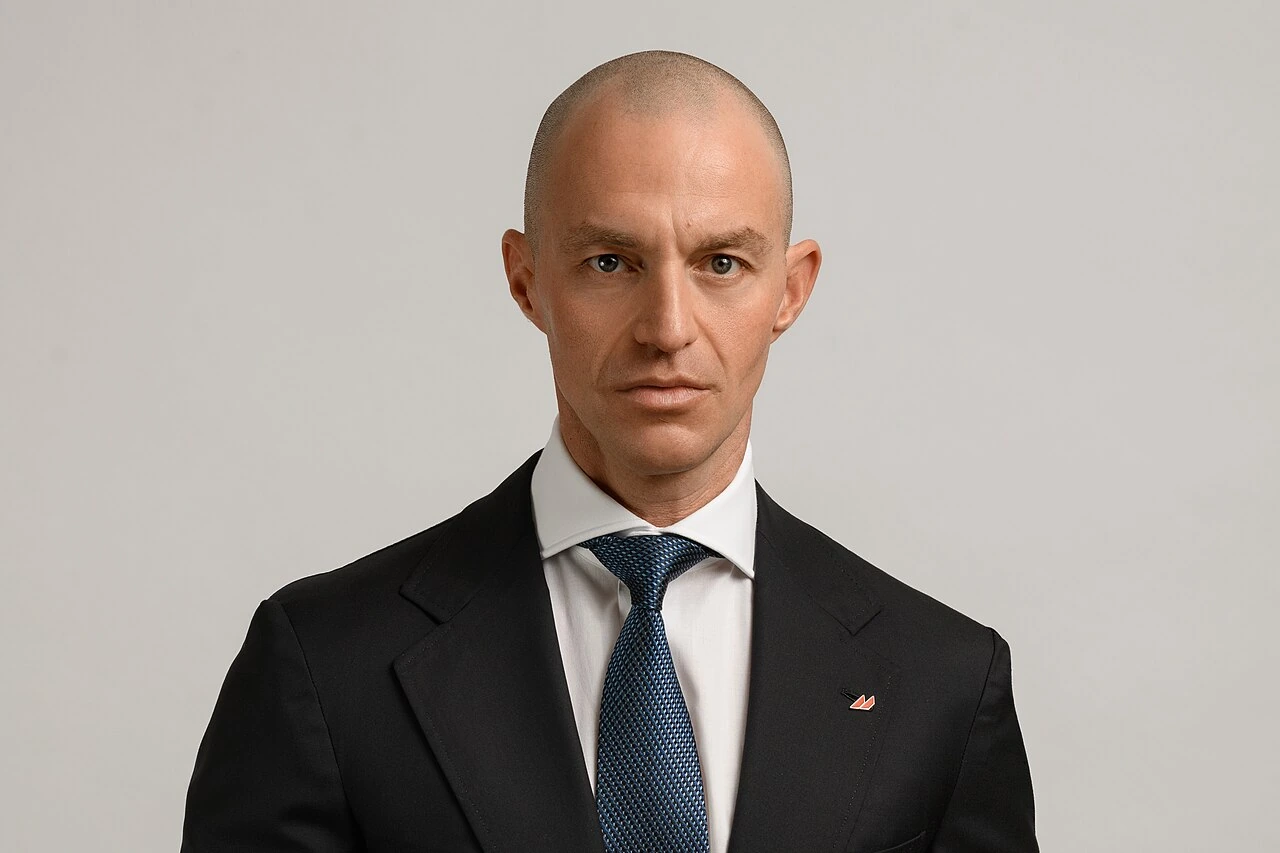
Before getting to any number, this needs to be settled clearly: at least three distinct public figures share the name Alexander Vinokurov (or its close variant, Vinokourov), and mixing them up produces completely wrong wealth estimates. The first is Alexander Semenovich Vinokurov, born October 12, 1982, in Moscow, a Russian businessman and investor best known as the managing partner and president of Marathon Group. The second is a Soviet-era politician of the same name, a historical figure with no bearing on a modern wealth profile. The third is Alexander Vinokourov (note the different English transliteration), a Kazakh cycling legend now serving as general manager of a UCI WorldTeam. This article is focused exclusively on the businessman: Alexander Semenovich Vinokurov (DOB 12.10.1982), the Marathon Group figure, who has been listed in both EU and Ukrainian government sanctions databases. That governmental documentation makes him the most publicly verifiable Alexander Vinokurov relevant to a wealth profile on a site tracking Eastern European business and financial figures.
The Net Worth Estimate: A Direct Number First
Based on publicly available information about his stakes in Marathon Group and its portfolio companies, including a significant board-level relationship with Magnit, one of Russia's largest retail chains by revenue, the most defensible estimate for Alexander Semenovich Vinokurov's net worth sits in the range of $500 million to $1.5 billion USD. The midpoint estimate most commonly referenced in financial monitoring circles is approximately $800 million to $1 billion. These figures should be treated as estimates with meaningful uncertainty bands, not as verified balance-sheet numbers. Private holdings, offshore structures, and the post-2022 sanctions environment all create genuine information gaps that push the range wider than it would be for a publicly traded company executive in a more transparent jurisdiction.
How His Wealth Likely Built Up Over Time

Vinokurov's financial story tracks closely with a pattern common among post-Soviet business figures who built wealth through strategic investment and consolidation rather than a single founding event. His career can be loosely broken into phases that help explain where the money came from.
Vinokurov's background before Marathon Group's founding is not extensively documented in public records. What is established is that he moved in investment and financial circles tied to major Russian business networks. Like many figures of his generation who emerged as significant investors in the 2010s, the foundational capital likely came from early-stage involvement in financial services, private equity, or resource-adjacent businesses during Russia's post-2008 recovery period, when asset values were depressed and those with access to capital could acquire positions at favorable prices.
Marathon Group and the Magnit Connection (2017 to Present)

Marathon Group was founded in 2017 and quickly became the vehicle through which Vinokurov's most significant publicly documented investments were made. The group's most notable holding is a stake in Magnit, Russia's second-largest food retailer by store count and one of the country's most valuable publicly traded companies. Magnit had a market capitalization in the tens of billions of dollars during peak years, meaning even a minority stake translates into hundreds of millions in paper wealth. Marathon Group also reportedly holds positions across other sectors, though the full portfolio remains opaque. The Magnit stake is the single most important data point for any net worth estimate and anchors the lower end of the range above.
Post-2022 Sanctions and Asset Complexity
Vinokurov was listed in EU sanctions following Russia's 2022 invasion of Ukraine, with blank" rel="noopener noreferrer">Ukraine's own sanctions database separately confirming his identity and roles. Sanctions listings are particularly useful for wealth profiling because they tend to include verified biographical details and describe the subject's economic significance. The listings confirmed his role as managing partner and president of Marathon Group and referenced board-related involvement with Magnit. The blank" rel="noopener noreferrer">EUR-Lex entry CELEX: 32023R0806 is an Official Journal listing that includes Alexander Semenovich VINOKUROV with identification details and role descriptors. From a wealth perspective, sanctions complicate asset liquidity rather than eliminate underlying value. Holdings that cannot easily be sold or transferred may still carry substantial book value, though realizable value may be substantially discounted.
Breaking Down the Wealth Components
Because Vinokurov operates through a private investment group rather than as a directly listed company executive, the breakdown of his net worth requires more estimation than usual. Here is how the components are most reasonably categorized based on available information.
| Wealth Component | Estimated Contribution | Confidence Level | Notes |
|---|
| Magnit stake (via Marathon Group) | $400M – $900M | Moderate | Depends on stake size and current Magnit valuation; subject to sanctions-related liquidity discounts |
| Other Marathon Group portfolio holdings | $50M – $200M | Low | Portfolio composition not fully public; figure is speculative |
| Real estate and tangible assets | $20M – $100M | Low | Typical for Russian businessmen of this profile; no verified property records publicly available |
| Cash, liquid financial assets | Unquantified | Very Low | Offshore or domestic accounts not publicly disclosed |
| Liabilities (estimated) | Unknown | Very Low | No public debt disclosures; typical leverage structures assumed |
The Magnit stake is by far the largest and most verifiable component. Marathon Group's involvement with Magnit has been documented in regulatory and news sources, and Magnit's public market data provides a reference point for valuation even when the exact percentage held by Marathon is not fully confirmed. The other categories carry much lower confidence and are included to give a complete picture of what a full net worth calculation would need to account for.
How This Estimate Was Built: The Methodology

Net worth estimates for private figures like Vinokurov rely on triangulating several data types rather than reading a single verified source. Here is exactly what goes into this estimate and where the gaps are.
- Governmental sanctions records: EU Official Journal (2024) and Ukraine's GUR database both confirm identity, date of birth, and business roles. These are the highest-confidence inputs because they are produced by regulatory bodies with legal accountability.
- Corporate filings and ownership records: Where Marathon Group's holdings are registered in jurisdictions that require public filings, ownership percentages can sometimes be traced. Russian corporate registries (EGRUL) and any filings in EU-adjacent jurisdictions provide partial data.
- Public market reference points: Magnit's Moscow Exchange listing provides a live market cap. Applying known or estimated stake percentages to this figure gives a floor estimate for that component of wealth.
- Comparative benchmarking: Other Russian investment group founders with similar profiles and documented holdings provide a sanity check on the overall range. Figures like Alexander Govor (another Russian businessman tracked in this space) offer useful comparison points for understanding how investment-group wealth typically scales.
- Currency and time adjustments: All figures are expressed in USD as of early-to-mid 2026. The Russian ruble's significant depreciation since 2022 affects the USD-equivalent value of ruble-denominated assets. Where assets are held domestically in Russia, the figure may be materially lower in USD terms than pre-2022 estimates suggested. This is explicitly factored into the lower end of the range.
One important distinction worth spelling out: reported earnings and net worth are not the same thing. If Magnit paid dividends and Marathon Group received a share, those cash flows add to wealth over time but do not equal net worth in themselves. Net worth is the cumulative result of all assets minus all liabilities at a given point in time. Earnings are a flow; net worth is a stock. Many readers conflate the two, which is why estimates sourced from "annual income" figures can look very different from estimates built from asset valuations.
Why Estimates Differ and What Could Change the Number
You will find different figures across different sources, and there are legitimate reasons for that variation. Understanding them helps you read any estimate more critically. If you are comparing this range to other investor profiles, you may also want to review alexander godunov net worth as a related benchmark for how estimates get assembled.
Why Numbers Vary
- Stake size uncertainty: Marathon Group's exact percentage ownership of Magnit is not consistently disclosed in public sources. A difference of even a few percentage points translates to hundreds of millions of dollars at Magnit's scale.
- Ruble/dollar timing: Estimates compiled before February 2022 used a much stronger ruble exchange rate. Post-sanctions estimates using current exchange rates produce significantly lower USD figures for the same ruble-denominated assets.
- Sanctions liquidity discount: Assets that are frozen or unsellable under sanctions regimes are often discounted by analysts, sometimes by 30 to 60 percent, because their realizable value is lower than book value.
- Private asset opacity: Without a public disclosure requirement, any real estate, private equity stakes, or cash holdings outside regulated markets simply cannot be verified. Different analysts make different assumptions.
- Name and identity confusion: Some aggregator sites may blend data from Alexander Vinokourov (the cyclist) or the historical politician, producing figures that are irrelevant to the businessman.
What Could Move the Estimate Up or Down
- Changes to Magnit's market valuation: A significant rise or fall in Magnit's share price directly affects the core component of this estimate.
- Disclosure of additional Marathon Group stakes: If new investments or divestments become public, the portfolio value changes accordingly.
- Sanctions modifications: Partial lifting, tightening, or asset-freeze updates would affect both liquidity and the discount applied to holdings.
- Legal proceedings or asset seizures: Court-ordered freezes in EU or other jurisdictions could reduce net worth or make assets inaccessible.
- Currency movements: The ruble-to-dollar rate remains volatile; a sustained ruble recovery would increase the USD-equivalent estimate, while further depreciation would reduce it.
- New business roles or exits: Any confirmed sale of a major stake or acquisition of a new one would require recalibrating the estimate.
How to Verify This Yourself and Read the Results
If you want to go beyond this estimate and check the underlying claims directly, here are the most useful places to look and what to expect from each.
- EU Sanctions Register (Official Journal of the European Union): Search for 'Vinokurov Alexander Semenovich' in the EU's official sanctions database. The entry will confirm his DOB (12.10.1982), his roles, and the legal basis for listing. This is the highest-confidence identity confirmation available in a freely accessible public source.
- Ukraine's Sanctions Database (GUR / Ministry of Justice): Ukraine maintains its own separately compiled sanctions list. The entry for VINOKUROV Alexander Semenovich confirms managing partner and president roles at Marathon Group, providing independent corroboration of the EU record.
- Magnit Investor Relations (ir.magnit.com): Magnit is a publicly traded company. Its investor relations page discloses major shareholders, annual reports, and dividend records. This is the best source for understanding the asset that drives most of the estimate.
- Russian Federal Tax Service Corporate Registry (EGRUL): The Russian corporate registry (available at egrul.nalog.ru) lists company founders and directors by name. Searching Marathon Group entities may surface ownership-adjacent information, though completeness varies.
- Financial news databases (Reuters, Bloomberg, Kommersant): Searches for Marathon Group and Magnit in reputable business news archives will surface transaction-level reporting that can help confirm or refine stake-size estimates.
- OCCRP Aleph and similar investigative databases: The Organized Crime and Corruption Reporting Project maintains a searchable database of leaked and public documents. It is one of the best tools for finding cross-border ownership chains and offshore connections related to post-Soviet business figures.
When you interpret what you find, keep a few things in mind. A sanctions listing confirms identity and economic significance but does not itself disclose wealth. A corporate registry listing confirms roles but not the value of those roles. Share price data gives you a market cap, not a confirmed ownership percentage. The estimate in this article is built by combining these partial signals, and you should treat any single source as one input among several rather than a definitive answer. The same methodological humility applies to any other wealth profile you read, including those for figures like Alexander Govor, whose business dealings in Russia also involve multiple layers of private and public ownership structures. If you are specifically comparing Alexander Govor net worth, the same approach to sources and uncertainty bands applies figures like Alexander Govor.
Finally, be cautious of net worth figures that appear on aggregator sites without sourcing. If you are specifically searching for alex volkanovski net worth, look for the same kind of sourcing and uncertainty bands described here. Many of those figures are copied from older estimates, do not account for post-2022 sanctions effects, or conflate Alexander Vinokurov with the cyclist Alexander Vinokourov. The estimate on this page is built from governmental confirmation records and public market data, and it will be updated as new verified information becomes available. That is the most honest approach to a figure whose full financial picture remains partially obscured by the structure of private Russian investment groups. For more context on how Alexander Vinokurov’s wealth figures are presented across the web, see our full guide to Alexander Putin net worth. If you are specifically looking for alex volkanovski net worth style summary figures, this article’s range and method are the closest fit to how such numbers are typically assembled.