
Alexander Godunov's net worth at the time of his death in May 1995 is most commonly estimated at somewhere between $2 million and $10 million, depending on the source. That wide range tells you something important right away: the figures are reconstructed, not documented. There are no probate filings or publicly verified estate records widely circulating, so what you're reading on most net worth pages is an educated guess built from career history, known contracts, and property ownership. Here's what the evidence actually supports and how to weigh it.
Alexander Godunov Net Worth: Estimate, Sources, Timeline

Konstantin Volkov
4 Apr 2026
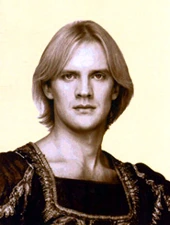
Who Alexander Godunov was and why people search his wealth

blank" rel="noopener noreferrer">Alexander Borisovich Godunov was born on November 28, 1949, on Sakhalin Island in the Soviet Union (now Russia), though some sources place his early years in Riga. He trained as a classical ballet dancer and rose to become one of the principal dancers at the Bolshoi Ballet in Moscow, considered one of the most prestigious dance companies in the world.
In August 1979, during the Bolshoi's engagement in New York City, Godunov defected to the United States, triggering an internationally watched diplomatic standoff. His wife, Ludmilla Vlasova (they had married in 1971), was aboard a Soviet aircraft at JFK Airport; the U. S. government held the plane for three days before ultimately allowing it to depart.
Vlasova returned to the Soviet Union. The marriage was formally dissolved in 1982.
After defecting, Godunov built a second career as a Hollywood film actor. He is best remembered today for his role as Karl, the blond villain in the 1988 action blockbuster Die Hard. He also appeared in Witness (1985) alongside Harrison Ford, which was among his first major film roles. He died on May 18, 1995, in Los Angeles (with some sources citing West Hollywood specifically), at the age of 45.
TIME reported that police said Alexander Godunov’s death would be listed as “natural causes” when he died at age 45 (May 1995) at the age of 45. The cause of death was ruled complications from alcoholism. People search for his net worth largely because of his Die Hard fame, an enduring curiosity about Soviet defectors who made it in Hollywood, and the tragic nature of his early death.
What different sources say about his net worth
Two figures dominate the conversation online. One cluster of sources puts Godunov's net worth at approximately $2 million. Another source claims it was closer to $10 million at the time of his death, while simultaneously citing an estate value of just $1 million, which creates an internal contradiction that should give any reader pause. Neither figure comes with primary financial documentation like probate court filings, tax records, or audited estate inventories. For relevant civil or probate matters, Los Angeles Superior Court guidance notes that probate documents can be accessed through Case Document Images rather than relying on blank" rel="noopener noreferrer">probate court filings alone.
| Source Type | Estimated Net Worth | Supporting Evidence Cited | Reliability Note |
|---|---|---|---|
| Celebrity net worth aggregator | $2 million | Acting career, Die Hard role, West Hollywood condo (Zillow referenced indirectly) | No primary financial documents shown |
| Entertainment profile site | $10 million at death | Career earnings claim; estate cited at $1 million separately | Internal contradiction; no probate records cited |
| This analysis (career-based reconstruction) | $2–4 million (probable range) | Film contracts, post-defection acting career length, known property ownership | Estimated; acknowledges uncertainty |
The $10 million figure is almost certainly inflated. It would require Godunov to have earned and retained extraordinary sums from a film career that, while notable, was not that of a top-billed star. The $2 million figure is more defensible given what we know about mid-tier Hollywood actor earnings in the late 1980s and early 1990s, though it may still be a rough approximation. A range of $2 to $4 million is the most defensible estimate based on available career evidence.
How Godunov made his money: ballet, Hollywood, and what each actually paid

The Bolshoi years and early U.S. dance career
Godunov's Bolshoi Ballet career, while making him famous in the Soviet Union, would not have generated significant personal wealth by Western standards. Soviet-era performers were state employees with salaries set by the government. Any accumulated savings from his pre-defection career were effectively left behind when he chose to stay in the U.S. in 1979. After defecting, he danced briefly with American Ballet Theatre (ABT) in New York, but his ABT tenure was rocky and relatively short. By the early 1980s, his focus had shifted to film and television work in Los Angeles.
Film roles and acting income

Godunov's most financially significant acting work came in the second half of the 1980s. His role in Witness (1985) put him on the Hollywood map as a character actor capable of carrying supporting roles in major studio productions. Die Hard (1988) was almost certainly his highest-profile credit and likely his most lucrative single project, though Karl was a supporting villain role, not a lead.
Supporting actors in major studio films in the late 1980s typically earned between $150,000 and $500,000 depending on billing and negotiation, though top supporting players with agents and track records could exceed that. His additional credits included The Zone (1995) and a number of television appearances. A 1991 Los Angeles Times profile documented his ongoing efforts to secure screen opportunities through that period, suggesting his career momentum had slowed by the early 1990s.
Other income streams and financial context
Beyond acting fees, there are a few additional income channels that could plausibly have contributed to Godunov's net worth, though documentation is thin. Public appearances and dance-related engagements following his defection likely generated honoraria and speaker fees during his peak notoriety in the early 1980s. His story attracted significant media attention, and defectors of his profile sometimes received book deals, interview fees, or television documentary payments. There is no confirmed record of major endorsements or business ventures in his case.
One concrete asset mentioned in some sources is a condominium in West Hollywood. Los Angeles real estate, even in the early-to-mid 1990s, represented meaningful asset value, and a West Hollywood property at that time could have been worth in the range of $200,000 to $500,000 depending on size and location. This is broadly consistent with the $1 million estate figure cited by one source, if you factor in the property plus liquid savings and personal property, though that estate figure itself is unverified. For comparison, consider how other figures from Eastern European entertainment backgrounds have navigated the shift from state-sponsored careers to Western markets: the financial trajectory is rarely linear, and late-career earnings often taper significantly, much as they did for Godunov in his final years.
What net worth estimates usually miss

Net worth calculators and profile pages are almost always working from incomplete information, and Godunov's case is a good illustration of why. Here are the most common gaps:
- Liabilities are rarely included: mortgages, personal loans, and unpaid taxes can significantly reduce real net worth below the headline asset figure
- Private holdings are invisible: without estate filings or financial disclosures, any cash savings, investment accounts, or personal property outside of known real estate is simply guessed
- Income does not equal wealth: earning $500,000 on a film does not mean $500,000 was retained; agents typically take 10–15%, managers another 15%, and taxes at the federal and California state level in the late 1980s were substantial
- Health and lifestyle costs are not modeled: Godunov's well-documented struggle with alcoholism in his later years would have generated medical expenses and potentially affected his ability to work and earn in the early 1990s
- Exchange rate and Soviet-era assets: any residual Soviet-era assets or rights were effectively worthless after defection; his wealth accumulation effectively started from zero in 1979
These gaps matter when you're comparing Godunov's estimated wealth to other public figures. Someone like Alexander Vinokurov, who operated in post-Soviet business environments with different disclosure norms, would have an entirely different set of estimation challenges. The methodology for reconstructing wealth for a Hollywood actor of the late 1980s is actually more tractable than for many contemporary Eastern European figures, but the data gaps are still real.
A timeline of Godunov's wealth through his career
- Pre-1979 (Soviet era): Bolshoi Ballet career, state salary, no transferable personal wealth; effectively a financial starting point of zero upon defection
- 1979–1982 (post-defection, New York): American Ballet Theatre contract, media attention, appearance fees; modest accumulation during a period of high public profile but uncertain career footing
- 1982–1985 (Los Angeles transition): Shift to film acting, early screen tests and minor roles; income likely inconsistent; L.A. relocation costs are a factor
- 1985–1988 (career peak): Witness and Die Hard represent peak earning years; this is almost certainly when the bulk of his wealth was accumulated
- 1989–1992 (mid-career plateau): Continued acting work but declining profile per the 1991 LA Times account; income likely declining from peak
- 1993–1995 (final years): Limited major credits, health deterioration; wealth likely stable or declining due to medical costs and reduced work; death at 45 in May 1995
This timeline makes clear that Godunov's wealth window was relatively narrow, concentrated in a four-to-six year stretch of active Hollywood work. He did not have decades of compounding investment returns or a diversified business portfolio. That context strongly supports the lower end of net worth estimates rather than the $10 million figure.
How to interpret net worth figures responsibly and verify updates
Godunov passed away in 1995, so there will be no new earning disclosures or updated financial statements. But that does not mean the existing estimates are fixed facts. Here is how to approach any net worth figure you find for him, or for comparable public figures:
- Look for probate records: estate documents filed in Los Angeles County after a death are public records and would be the most authoritative source of asset values; most net worth sites do not cite these
- Cross-reference with known salary data: industry trade publications like Variety and The Hollywood Reporter occasionally publish salary ranges for studio films; matching those ranges against Godunov's known credits gives a grounded income estimate
- Treat celebrity net worth aggregator sites with caution: sites that publish a single clean number without sourcing methodology are usually recycling other sites' estimates
- Check for estate disputes or legal proceedings: court records can surface asset valuations that don't appear in profiles
- Consider career trajectory, not just peak: a figure's wealth at peak earnings is not the same as wealth at death; always factor in the intervening years
For living figures with ongoing financial activity, verification is more dynamic. Profiles like Alexander Putin's net worth or that of Alexander Govor require tracking business filings, ownership changes, and regulatory disclosures over time. Godunov's case is simpler in that regard: the record is closed. The best you can do is triangulate from the career evidence, and that triangulation points to a net worth in the $2 to $4 million range at the time of his death.
It is also worth keeping perspective on scale. Godunov was a genuinely accomplished performer across two demanding disciplines, and his financial story reflects the realities of a mid-tier Hollywood career in the 1980s rather than the wealth of a franchise star or a major business operator. For contrast, consider how athletes with sustained elite careers like Alex Volkanovski build wealth through a combination of fight purses, sponsorships, and media deals over many years: Godunov's earning window was shorter and less diversified. His legacy is primarily artistic, and the net worth figures reflect that reality.
The bottom line: the most defensible estimate for Alexander Godunov's net worth is $2 to $4 million at the time of his death in 1995, with $2 million being the figure most commonly cited and most consistent with his career trajectory. The $10 million figure cited by at least one source is almost certainly an overestimate and should be treated skeptically without supporting documentation. If you need the number for research or reference, use the lower range and note clearly that it is an estimate based on career reconstruction rather than verified estate records.
FAQ
Why do net worth sites disagree so much for Alexander Godunov, especially between $2 million and $10 million?
Because most estimates rely on indirect reconstruction (career earnings, typical supporting-actor pay ranges, and a few asset guesses) rather than court-confirmed estate inventories. If a site uses a single headline number without stating whether it includes or excludes property, liquid cash, and personal belongings, the estimate can swing dramatically.
Does the “$1 million estate value” claim make sense alongside a “$10 million net worth” figure?
Not usually. An “estate value” is often a snapshot subject to liabilities and may omit assets held outside probate or through trusts. If a source calls the amount both an estate and a net worth without clarifying what’s included, it can be internally inconsistent and should be treated as unreliable.
What would be the most important missing documentation to verify Godunov’s net worth?
Probate filings, a full asset and debt inventory (including real estate sale records, bank balances, and any claims from creditors), and reliable documentation of ownership of property. Without those, any high-end figure is essentially a guess.
How much could his West Hollywood condominium realistically change the estimate?
It depends on whether it was fully owned, its condition, and whether it was mortgaged. Even a modest condo can materially affect totals, but without sale price, outstanding liens, and whether it was included in probate, you cannot translate “condo mentioned in sources” into a precise net worth.
Did defecting in 1979 likely wipe out any early savings from his Soviet career?
It often did. Soviet-era employment was state-controlled with limited personal wealth accumulation by Western standards. Many defectors effectively left behind whatever assets were not portable, so pre-1979 money would not reliably carry into the U.S. balance sheet.
Could he have made much more money than a typical supporting actor because of Die Hard fame?
Fame can raise earning potential, but Karl was a supporting role, not a franchise lead. Also, sudden public attention does not automatically translate into proportional pay or long-term residual income, especially for actors without extensive contract documentation or high-billing negotiations.
Do residuals from film and TV work meaningfully affect net worth estimates for someone who died in 1995?
They could add income, but residual systems are specific to contracts and union rules, and the amounts are difficult to estimate without paperwork. Many calculators ignore residual uncertainty, which tends to push estimates toward round-number guesses rather than verifiable totals.
Why is an estimate based on “a four to six year window” of work often considered more credible here?
Because if most financially significant credits cluster in a short span, there is less time for compounding investments, business growth, and diversified income. That pattern naturally supports a narrower net worth range, rather than a high number that would require sustained high savings or major later earnings.
What’s the easiest way to sanity-check any Alexander Godunov net worth figure you see online?
Check whether the figure is consistent with mid-to-late 1980s supporting-actor pay scales, whether it explains inclusion of real estate versus only cash, and whether it provides a mechanism for how a large number could be accumulated and retained by his age and the timeline of work.
If I just need a single “safe” number for research, what should I use?
Use the lower range (around $2 to $4 million) and avoid the high-end figure unless the source specifies documented assets, liabilities, and property sale values. Treat any $10 million figure as a claim that requires supporting documentation you likely do not have.
Next Articles

Alex Volkanovski Net Worth: Estimated Earnings Breakdown
Estimated Alex Volkanovski net worth with income breakdown, factors affecting MMA earnings, and why estimates vary

Slavic Dancer Net Worth Estimate How It’s Calculated
Slavic Dancer net worth estimate with how it’s calculated, income sources, likely expenses, and verification tips.

Slavi Trifonov Net Worth: Estimate, Sources, and Wealth Drivers
Slavi Trifonov net worth estimate for the Bulgarian TV host, with sources, wealth drivers, and verification tips.