Who is Vasil Bozhkov? A quick note on the name
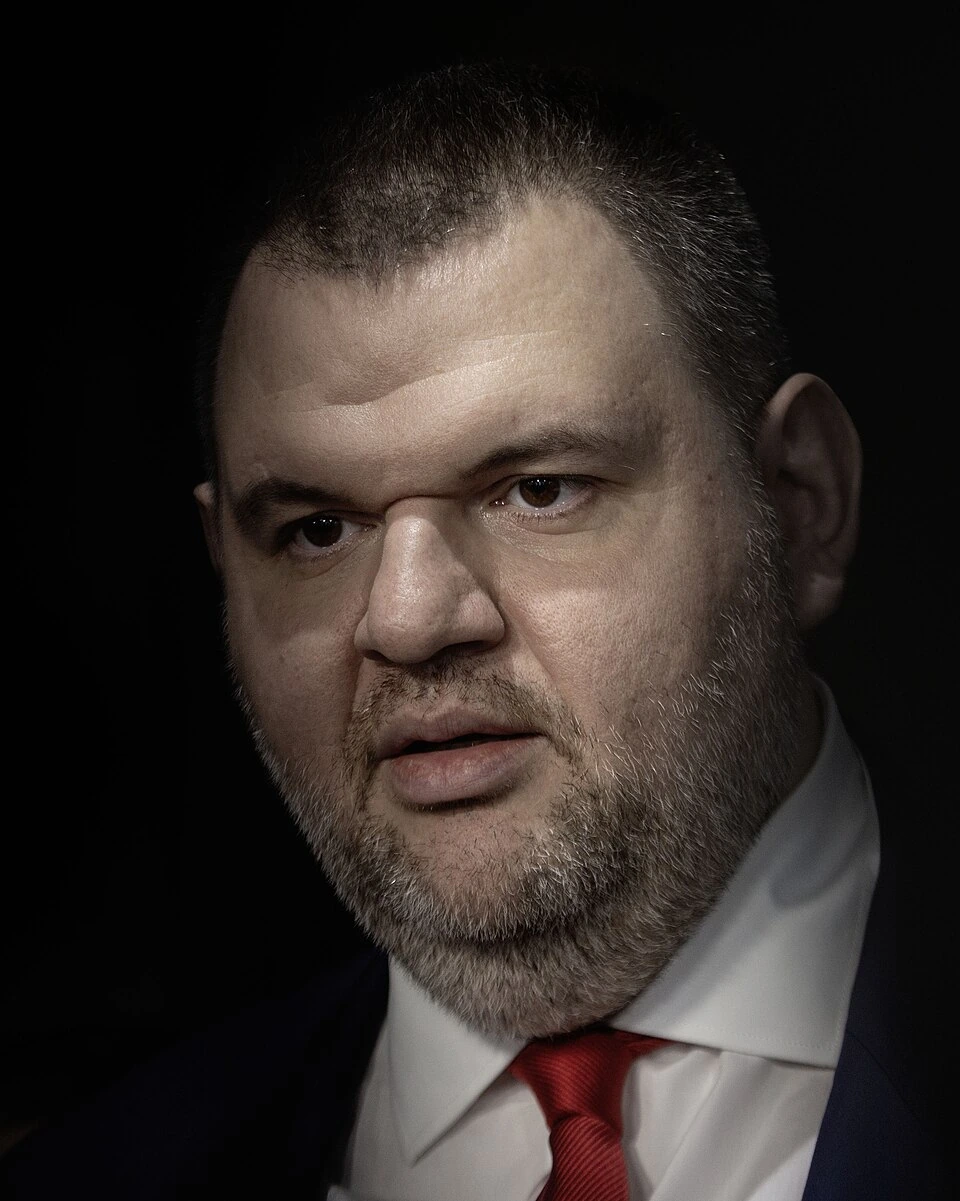
Vasil Krumov Bozhkov is a Bulgarian businessman, politician, and former gambling mogul who was once considered the richest person in Bulgaria. If you have seen the spelling 'Vassil Bojkov' or 'Vasily Bojkov' in English-language news, those are the same person. The 'Bojkov' spelling appears frequently in Western European and international press because Bulgarian names transliterated through German or French often swap the 'zh' for a 'j'. The Cyrillic original is ВАСИЛ БОЖКОВ. For the purposes of this article, we use 'Vasil Bozhkov' as the primary spelling, but any cross-referencing you do across news archives and official documents should account for both variants.
His estimated net worth as of April 2026
The most defensible range for Vasil Bozhkov's net worth sits between approximately 500 million euros and 1 billion euros, with the upper bound anchored by a Bulgarian Prosecutor's Office preliminary estimate that pegged his seized property and assets at around 1 billion euros.
The lower end reflects the fact that a significant portion of that asset base is currently frozen, contested in court, or subject to ongoing legal proceedings, which means its realizable value to Bozhkov personally is heavily constrained right now. Bulgarian official sources have historically described his fortune in broader terms as between 1 and 3 billion Bulgarian leva, which converts to roughly 500 million to 1. 5 billion euros at current exchange rates.
That range is consistent with the prosecutorial estimate and with his long dominance of Bulgaria's gambling sector.
It is important to be direct about what these numbers represent: these are estimates based on seized or identified assets, business valuations, and property records, not a verified audited figure. No major real-time tracker like the Bloomberg Billionaires Index currently maintains a live public profile for Bozhkov. Forbes' annual billionaires universe, which timestamps its estimates as of March 1 each year, has not included him in recent published rankings. That absence does not mean his wealth is below those thresholds, but rather that the opacity of his holdings, his fugitive and then extradited legal status, and the layers of offshore structures make a clean, market-based valuation difficult to produce with confidence.
How net worth estimates are calculated for someone like Bozhkov

For a straightforward listed company founder, net worth calculation is relatively clean: you take their equity stake, multiply by the share price, add known cash and property, subtract known liabilities, and you have a working figure. Bloomberg's methodology does exactly this and updates it daily as markets move. Bozhkov's wealth picture is more complex because his holdings are predominantly private, spread across dozens of Bulgarian and offshore companies, and documented mainly through court filings, seizure orders, and investigative reporting rather than public disclosures.
Here is what researchers and journalists typically count when building an estimate for figures like him. Court documents from the Sofia City Prosecution Office reference distraint imposed on 30 companies, including entities like Agro Capital 2009 EOOD. The anti-corruption body CACIAF has placed property in France under seizure. Investigative outlet Bivol has documented luxury property and aircraft acquired through offshore structures, including a yacht seizure claim and aircraft valuations.
The National Revenue Agency at one point had seizures on company shares worth 49. 6 million leva (about 25. 3 million euros), which were later partially lifted with bail set at 0. 5 million leva.
Each of these data points, added together and cross-referenced, is how analysts arrive at a working picture of total asset value.
What drives the estimate up or down over time
Bozhkov's net worth figure is genuinely dynamic right now, and several ongoing developments can move it in either direction. Understanding these factors helps you interpret any number you read. Vasily Stepanov net worth figures are often discussed alongside other profiles, but source quality and the date of valuation matter just as much. If you are comparing estimates across Bulgarian figures, you can also look at Vassil Terziev net worth and how its sourcing affects the final number. If you are comparing net worth estimates across profiles, you can also look at Vasilevskiy net worth and how its sources line up with the valuation date.
- Legal rulings and seizure status: Bulgarian administrative courts have repeatedly reviewed seizures on his assets. In one instance, a court overturned seizures on New Games (his gambling company) while he was in Dubai, which technically restored those assets to the counted base. A reversal of that ruling would remove them again. Every such decision shifts the accessible asset total.
- Extradition and criminal proceedings: Bozhkov was extradited by the UAE after initially fleeing there in January 2020. The BTA news agency confirmed this, citing the Sofia City Prosecution Office. Active criminal proceedings involving tax fraud, attempted bribery, and organized crime allegations can result in further asset confiscation if convictions follow.
- Tax liability: Bulgarian courts have cited unpaid taxes of approximately half a billion leva, which translates to around 250 million euros, stemming from his gambling operations. If that liability is enforced, it directly reduces net assets.
- Sanctions exposure: OFAC's Global Magnitsky sanctions list includes an entry for BOZHKOV, Vasil, with linked entities including ADLER BG AD. Sanctions designations constrain access to international financial systems, affect asset liquidity, and can complicate the transfer or sale of holdings, all of which affects how trackers model the recoverable value of his wealth.
- Offshore structure outcomes: Bivol's reporting identifies luxury assets acquired through offshore companies. If those structures are unwound by courts or regulators, the assets become countable in official proceedings but may also become permanently inaccessible to Bozhkov.
Where his money came from
Bozhkov built his fortune during the post-communist transition period in Bulgaria, which is a pattern familiar across Eastern European oligarch wealth stories. In 1993, amid the broader chaos of post-Soviet economic liberalization, he co-founded a gambling and casino company. Bulgaria's regulatory environment at the time was loosely structured, and early movers in gambling, real estate, and energy could accumulate market share with relatively little competition or oversight. By the 2000s and 2010s, Bozhkov had established dominance over Bulgaria's gaming sector that Radio Free Europe described plainly as controlling the business since the early 1990s.
Beyond gambling, the asset picture that emerges from court documents and investigative reporting includes real estate in Bulgaria and France, aircraft, marine assets, and stakes in agribusiness entities. The offshore company structures documented by Bivol suggest deliberate legal insulation of high-value assets, which is a standard feature of oligarch wealth management across the former Soviet sphere. The political dimension matters here too: Bozhkov later entered Bulgarian politics, and the intersection of regulatory influence, political connections, and business dominance is a consistent feature of wealth accumulation in this region that our site tracks across many profiles.
How to check sources and judge the credibility of any estimate you find

Comparing net worth figures for Eastern European business figures requires more critical reading than checking a Bloomberg profile for a listed company executive. Here is a practical framework for evaluating what you read.
| Source type | What it tells you | How reliable is it? | What to watch for |
|---|
| Prosecutor's Office / court documents | Minimum identified asset values based on seizure orders | High for asset existence; imprecise on market value | Preliminary vs. final valuations can differ significantly |
| Investigative outlets (Bivol, RFE/RL) | Offshore structures, undisclosed assets, context | Good for leads; verify against official documents | Some figures may be estimates or quoted from parties with interests |
| Government news agencies (BTA, BNR) | Official milestones: extradition, bail decisions, court outcomes | High for factual events; not valuation-focused | Rarely calculate total net worth directly |
| OFAC / sanctions databases | Designated entities and linked companies | Authoritative for sanctions status | Does not provide asset valuations |
| Forbes / Bloomberg | Market-based dynamic estimates for publicly traceable wealth | High for listed-company founders | May not cover opaque private holders like Bozhkov |
When a new figure circulates, ask three questions: what is the source document, what assets are included in the count, and what is the date? You can apply the same source-checking approach when reviewing the latest reporting on Vasilevskiy net worth. blank" rel="noopener noreferrer">The prosecutorial estimate of approximately 1 billion euros refers to identified seized or seizure-eligible assets at a specific point in proceedings. That is different from a comprehensive net worth figure that would also include liquid assets abroad, unidentified offshore holdings, or the current market value of businesses not yet named in proceedings. Treating these as equivalent leads to the wide variance you see across sources.
How this compares with other Eastern European wealth profiles
Bozhkov's profile shares structural features with other Eastern European figures covered on this site. The combination of post-communist business origins, gambling or gaming sector dominance, offshore asset insulation, and legal confrontations with reformist prosecutors is a pattern that repeats across the region. Readers who follow profiles of other prominent Eastern European businessmen and athletes, including similarly named figures tracked elsewhere on this site, will notice that the methodology for estimating wealth is consistent: identify anchored asset values from official documents, adjust for legal constraints, and flag uncertainty where offshore structures obscure the full picture.

For the most current updates on Bozhkov's net worth, the most reliable approach is to monitor three categories of source in parallel. First, track the Sofia City Prosecution Office press releases and Bulgarian court dockets, because each ruling on seized assets is effectively a revision to the known asset base.
BTA reports that Bulgaria’s Sofia City Prosecution Office told BTA that Vassil (Vasil) Bojkov was extradited by the United Arab Emirates and did not return voluntarily, including statements from the defence lawyer the Sofia City Prosecution Office. Second, follow BTA (Bulgarian news agency) and Radio Bulgaria (BNR) for official milestone reporting, including any new seizure orders, bail changes, or criminal case outcomes.
Third, check investigative outlets including Bivol for offshore structure disclosures that official sources may lag behind.
When you see a new figure quoted in a headline, check whether it reflects a court-ordered valuation, a journalist's synthesis of multiple documents, or a preliminary prosecutorial estimate. The Bulgarian lev figures are the originals; any euro conversion depends on the exchange rate at the time of writing, so always verify the conversion if precision matters to you. As of April 2026, the 500 million to 1 billion euro range remains the most evidence-supported estimate, with the trajectory of his criminal case being the single biggest variable that could shift that figure materially in either direction over the next 12 months.
If you are relying on this figure for journalistic, research, or financial analysis purposes, treat it as a floor estimate of identified assets rather than a ceiling on total wealth. The offshore layer, by definition, is only partially visible, and even experienced investigators acknowledge uncertainty about the full scope. That transparency about uncertainty is a feature of responsible wealth reporting for figures like Bozhkov, not a limitation to be papered over with false precision.