
Pavel Kubina's estimated net worth as of May 31, 2026 sits in the range of $3 million to $6 million, with $4 to $5 million being the most defensible middle estimate. That figure reflects a former NHL defenseman who earned well over $37 million in career salary across 14 professional seasons, but who retired in 2013 and has had more than a decade of post-playing life with no verified large-scale business empire or public financial disclosures to indicate substantially higher wealth. The career earnings number is real; the net worth number is considerably lower, and the difference matters.
Pavel Kubiňa Net Worth 2026 Estimate and Wealth Sources

Konstantin Volkov
31 May 2026

Who Pavel Kubina actually is (and the name confusion you need to clear up first)

The Pavel Kubina most people are searching for is the Czech former professional ice hockey defenseman born April 15, 1977, in Čeladná, Czechoslovakia. He played in the NHL from 1998 to 2012 for the Tampa Bay Lightning, Toronto Maple Leafs, Atlanta Thrashers, and Philadelphia Flyers. He won the Stanley Cup with Tampa Bay in the 2003-04 season and represented the Czech national team. He announced his retirement in 2013. That is the person this article covers.
The name creates real confusion for anyone trying to verify wealth claims. "Pavel Kubina" (and the diacritic variant "Kubiňa") appears across several unrelated individuals in Czech and Slovak records. Czech business registries list at least one separate individual, an "Ing. Pavel Kubina" with IČO 18057845 and a Hlučín address, who has no known connection to hockey. There is also a "Pavel Kuběna" (born April 1, 1988), a different former Czech hockey player sometimes conflated with the more famous Kubina in search results. Before trusting any net worth figure you find online, confirm the identity anchor: DOB April 15, 1977, NHL defenseman, Tampa Bay Lightning Stanley Cup winner. If those details do not appear on the same page, the estimate may refer to a different person entirely.
The net worth estimate in plain numbers
Publicly available net worth estimates for Pavel Kubina range from $1 million on the low end (NetWorthList) to $5 million on the higher end (Celebrity Birthdays, with a December 2023 update timestamp). A third data point, HockeyZonePlus, reports a figure of approximately $37.189 million labeled as "NHL Fortune," but that is a career salary aggregation, not a net worth calculation. These three numbers are measuring different things, which explains the apparent gap.
| Source | Figure Reported | What It Actually Measures |
|---|---|---|
| NetWorthList | $1 million | Estimated post-career net worth (low-end, methodology opaque) |
| Celebrity Birthdays | $5 million | Estimated net worth, last updated December 2023 |
| HockeyZonePlus | $37.189 million | Career NHL salary earnings total, not a net worth figure |
| This site's working estimate | $3–6 million | Informed range based on career earnings, tax/spending adjustments, and retirement timeline |
The $3 to $6 million range is reasonable precisely because it acknowledges both the real salary history and the reality that high earners in professional sports often spend significantly during and after their careers, face substantial tax obligations in multiple jurisdictions, and do not always convert salary into lasting invested assets. Without confirmed property records, business filings, or financial disclosures from Kubina himself, any figure tighter than that range is false precision.
How net worth estimates like this are built (and why they disagree)

Net worth, at its most basic, is assets minus liabilities. For a private individual like a retired hockey player, nobody outside his accountant actually knows that number. What analysts and aggregator sites do instead is use career earnings as a starting proxy, then apply discount assumptions for taxes, lifestyle spending, agent fees, and investment returns. The problem is that every site makes different assumptions, and almost none of them publish those assumptions transparently.
Here is the core issue with the three Kubina figures: the $37 million figure is gross career salary before Czech and North American taxes, agent commissions (typically 3-5% of NHL contracts), and any other deductions. An NHL player earning $37 million gross over 14 years, accounting for marginal tax rates in the US and Canada depending on where games were played, plus agent fees, could realistically net roughly half that figure or less. Then lifestyle costs, real estate purchases, family expenses, and potential business losses over a decade of retirement further reduce the stack. Arriving at $3 to $6 million in net assets is therefore not a pessimistic outcome; it is a statistically common one for athletes at this earning level.
- Career gross earnings are not net worth. Tax and spending are real, large deductions.
- Sites that list flat estimates without methodology are essentially guessing, often rounding from a single reference.
- The $1 million figure likely applies a heavy lifestyle discount and no assumed investment portfolio.
- The $5 million figure is closer to what you would get assuming some smart savings and modest investment returns.
- Without a verified asset list, any figure between $1 million and $10 million is defensible.
Where the money came from: career earnings breakdown
Kubina's wealth is almost entirely rooted in his NHL salary history. Two contracts in particular are well documented. In July 2006, the Toronto Maple Leafs signed him to a four-year, $20 million deal. In July 2010, he returned to Tampa Bay Lightning on a two-year contract worth $7.7 million, approximately $3.85 million per year. Combined with his earlier Lightning contracts (he was part of the 2004 Stanley Cup championship roster) and his later stints with Atlanta and Philadelphia, the career total tracked by HockeyZonePlus reaches roughly $37.2 million in gross NHL salary.
Outside of NHL earnings, there is no publicly verified evidence of major business ventures, equity stakes in companies, or significant entrepreneurial income. Like many Czech and Slovak athletes of his generation, Kubina likely returned to Central Europe post-retirement, but no major Czech business registry filings under his name have been confirmed to connect to the hockey player specifically. His wealth profile is therefore primarily a sports-salary story, not a business-empire story.
Endorsements and auxiliary income
During his playing years, Kubina would have earned some income from equipment sponsorships and minor endorsement arrangements, standard for NHL players of his caliber. These are not major wealth contributors at his tier compared to marquee forwards or goalies with large market visibility. Endorsement income for a journeyman defenseman, even a Stanley Cup winner, is typically modest relative to salary.
Assets and financial signals worth tracking

Because Kubina is a private individual who has not made headlines for major real estate deals, business launches, or public investments since retirement, the observable financial signals are limited. That said, there are practical places to look if you want to build a more current picture. For insolvency-related legal events, you can check the Czech Insolvency Registry run by Justice.cz to verify whether an identified person or entity has any relevant filings.
- Czech and Slovak business registries: Search the ARES system (Administrativní Registr Ekonomických Subjektů) for any business registration under Pavel Kubina, being careful to filter by matching date of birth to avoid conflating with the Ing. Pavel Kubina (IČO 18057845) in Hlučín.
- Czech insolvency registry (Justice.cz): Any insolvency proceeding filed against an individual named Pavel Kubina would appear here. Cross-reference personal identifiers before drawing conclusions.
- Property transfer records in the Czech Republic and Slovakia: Regional cadastre databases (Katastr nemovitostí in the Czech Republic) can show real estate holdings by name, though matching requires precise personal data.
- NHL Players' Association or hockey alumni networks: These sometimes surface post-career business activity for former players.
- Czech and Slovak sports media: Regional outlets occasionally profile retired athletes' post-career business or coaching roles, which can surface verifiable income streams.
Real estate is typically the most visible asset class for retired athletes in Central Europe. If Kubina owns property in the Czech Republic (particularly in the Ostrava region near his birthplace), that could represent a significant portion of net worth that no Western net worth site would capture. The absence of this data in English-language sources does not mean the assets do not exist.
What could move the number up or down from here
Kubina has been retired for over a decade. The factors most likely to shift his net worth estimate in either direction from 2026 onward are investment performance, any new professional or business activity, and potential legal or financial events that become publicly documented.
| Factor | Direction | Likelihood |
|---|---|---|
| Successful business venture or coaching contract | Upward | Moderate, common for NHL alumni |
| Real estate appreciation in Czech Republic | Upward | Moderate, Czech property market has been active |
| Poor investment decisions or business losses | Downward | Low to moderate, no current signals |
| Legal or insolvency proceedings | Downward | Low, no confirmed records as of May 2026 |
| Updated public disclosure or media profile | Clarifying (either direction) | Low, private individual |
The biggest risk to the current estimate being wrong in either direction is simply the lack of information. Athletes who quietly invest well and hold real estate can accumulate significantly more than their salary history would suggest after a decade of compound growth. Conversely, athletes who faced legal disputes, poor business partnerships, or costly divorces can end up far below what career earnings alone would predict. Without current disclosures, the estimate stays in a range rather than a precise figure.
For comparison, other Eastern European hockey and sports figures tracked in this space (such as Pavel Nedved, whose career and business profile differs substantially as a former Juventus executive) show that post-career roles can dramatically extend or reshape a wealth profile. For context, you can compare how Pavel Nedved net worth is influenced by his long post-playing executive career. Kubina's profile, as far as can be verified, does not yet show that kind of post-career amplification.
Sources to trust and how to check for updates
Here is how to tier the reliability of what you will find online when you search for Pavel Kubina's net worth.
- Wikipedia (contract figures, career timeline): High reliability for confirmed contract amounts and career facts. The $20 million Toronto contract and $7.7 million Tampa return contract are cited there and are the most concrete wealth anchors available. Use these as your baseline.
- Official Czech registries (ARES, Justice.cz, Katastr nemovitostí): Primary sources for any business registration, insolvency filing, or property record. These are government databases and carry the highest evidentiary weight for Czech-based assets.
- HockeyZonePlus and StatMuse: Reliable for salary and career statistics. Treat their "fortune" or total earnings figure as gross career income, not net worth.
- Celebrity net worth aggregator sites (NetWorthList, Celebrity Birthdays, etc.): Treat these as rough estimates only. They rarely disclose methodology and frequently copy from each other. Useful for getting a ballpark, not a verified figure.
- Czech and Slovak sports journalism: Regional sources like iSport.cz or Hokej.cz may publish interviews or profiles with verifiable details about post-career activities. These are underused by English-language researchers but can surface real data.
To verify whether any estimate you find is still current, check the update timestamp on the source, then cross-reference the career facts (DOB, teams, Stanley Cup) to confirm you are reading about the right person. If a site claims a net worth without listing any of those identity anchors, it may have attributed figures to a different Pavel Kubina entirely. You may also see this figure summarized as Pavel Volya net worth, but identity details should be verified before accepting any number Pavel Kubina's net worth. That is not a theoretical risk: the Czech business registry genuinely contains other people with the same name, and at least one wealth-site methodology involves scraping and merging records without manual verification.
The bottom line for May 2026 is that Pavel Kubina, the former NHL defenseman and Stanley Cup winner, has an estimated net worth of $3 to $6 million. That range is grounded in a verified career earnings history of over $37 million gross, adjusted for the real-world financial realities of a retired professional athlete who has been out of the spotlight for over a decade. Celebrity Birthdays, using an analysis that references Wikipedia, Forbes, and Business Insider, lists an estimated net worth of $5 million (last updated December 11, 2023) blank" rel="noopener noreferrer">Pavel Kubina. The number could be higher if he has invested shrewdly or built quiet business assets in the Czech Republic. It could be lower if the opposite is true. Until a public disclosure or major financial event surfaces, $4 to $5 million is the most defensible center point.
FAQ
Is the 2026 “pavel kubina net worth” number a real valuation or just an updated estimate?
No. Most sites that rank “pavel kubina net worth” are converting older guesses from taxes and lifestyle assumptions, not reporting a new audit. If the update timestamp is months or years old, treat the number as a carryover estimate, not a 2026 measurement.
How can I confirm I am looking at the correct Pavel Kubina when net worth sites disagree?
The most common mix-up is with someone sharing the same name and similar Central European spelling, or even with an entirely different hockey player. Use the identity anchor (born April 15, 1977, NHL defenseman, Tampa Bay Lightning Stanley Cup winner) on the same page as the number before trusting it.
What red flags mean a “pavel kubina net worth” claim is probably unreliable?
If an article lists only a net worth figure but does not connect it to verified career facts (DOB, NHL teams, Stanley Cup year), it is a higher-risk figure. A safer approach is to prefer estimates that at least reference the NHL career timeline and do not claim the number came from personal financial disclosures.
Why can someone with over $37 million in career salary still be estimated at only a few million in net worth?
Because the article’s range is based on gross NHL salary being discounted for taxes, agent fees, and spending, a lower “net worth” does not necessarily mean he lost money. It can simply reflect that athletes often convert part of salary into lifestyle, debt payments, and non-liquid assets that are hard to value later.
What specific events would most likely change Pavel Kubina’s net worth estimate going forward?
Look for signs of major new professional activity after retirement, such as publicly documented executive roles, coaching-related business ventures, or company ownership registered under the correct identity. Without that kind of evidence, post-2013 wealth changes typically cannot be measured precisely, so ranges tend to stay wide.
What are the biggest ways Pavel Kubina’s net worth estimate could be overstated or understated?
Divorce, costly lawsuits, or failed business partnerships can reduce assets faster than normal “salary to net worth” math predicts. These events are usually not captured in English-language net worth scrapes, which is why estimates can be high if they assume a stable post-career life.
How do agent commissions and contract structure affect net worth estimates for former NHL players like Kubina?
Agent fees are usually taken out of contract earnings, but the exact impact depends on the agent contract terms and timing. Even if two players earned similar gross amounts, differing fee structures can shift the plausible net worth range by a meaningful margin.
Could Pavel Kubina’s net worth be higher due to property in the Czech Republic that English sources miss?
Yes, a Czech or Central Europe property portfolio can be invisible to English net worth aggregators. If you find local listings or registry-confirmed ownership tied to the correct individual, that can support a higher end of the range without contradicting the “no public disclosures” premise.
What’s the difference between a “career salary fortune” number and “net worth” for Pavel Kubina?
Be cautious if a site labels a figure with “fortune” or “NHL Fortune.” Those labels can mean career salary totals, not net worth. Net worth is assets minus liabilities, so salary aggregation generally overstates the true wealth position.
Why do some results for Pavel Kubina also show Pavel Volya net worth, and how should I handle that?
If a site also claims “pavel volya net worth” or “pavel kubina net worth” from a combined dataset, treat it as a potential identity-matching problem. The safest method is to verify the person identity anchors on the same page as the claimed number.
Next Articles
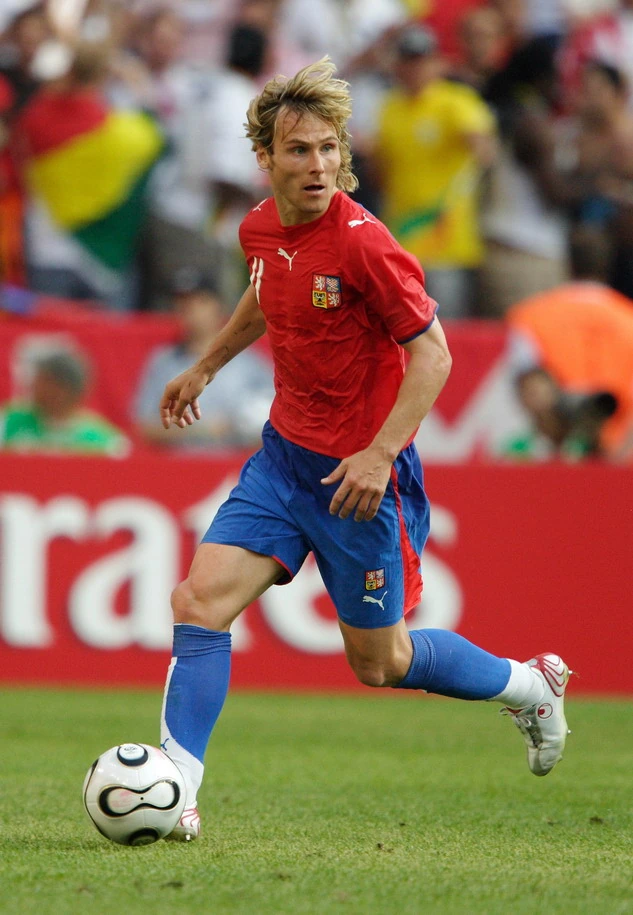
Pavel Nedvěd Net Worth: Estimate, Sources, and Wealth Breakdown
Pavel Nedvěd net worth estimate with range, asset breakdown, income sources, and how to verify credible claims.

Pavel Mamaev Net Worth 2026: Estimate, Sources, and Breakdown
Pavel Mamaev net worth 2026 estimate with earnings, endorsements, costs, career-stage timeline and how to verify reliabl

Petr Pavel Net Worth: Estimated Range, Sources, Method
Petr Pavel net worth estimate range, how it’s calculated from public disclosures, and how to verify or update it.