As of April 16, 2026, Forbes pegs Leonid Boguslavsky's real-time net worth at $6 billion, making him one of the wealthiest venture capital investors to emerge from the former Soviet sphere. A Reddit WallStreetBets thread around September 19, 2019 also references Datadog’s IPO timing and related details. That figure is anchored primarily to his equity positions through RTP Global, with a publicly visible stake in Datadog (DDOG) serving as one of the key valuation drivers. The number moves with markets, so by the time you read this it may be slightly higher or lower, but $6B is the most credible and current single-point estimate available from a major financial tracking outlet.
Leonid Boguslavsky Net Worth: Best-Supported Estimate and Sources

Konstantin Volkov
1 May 2026
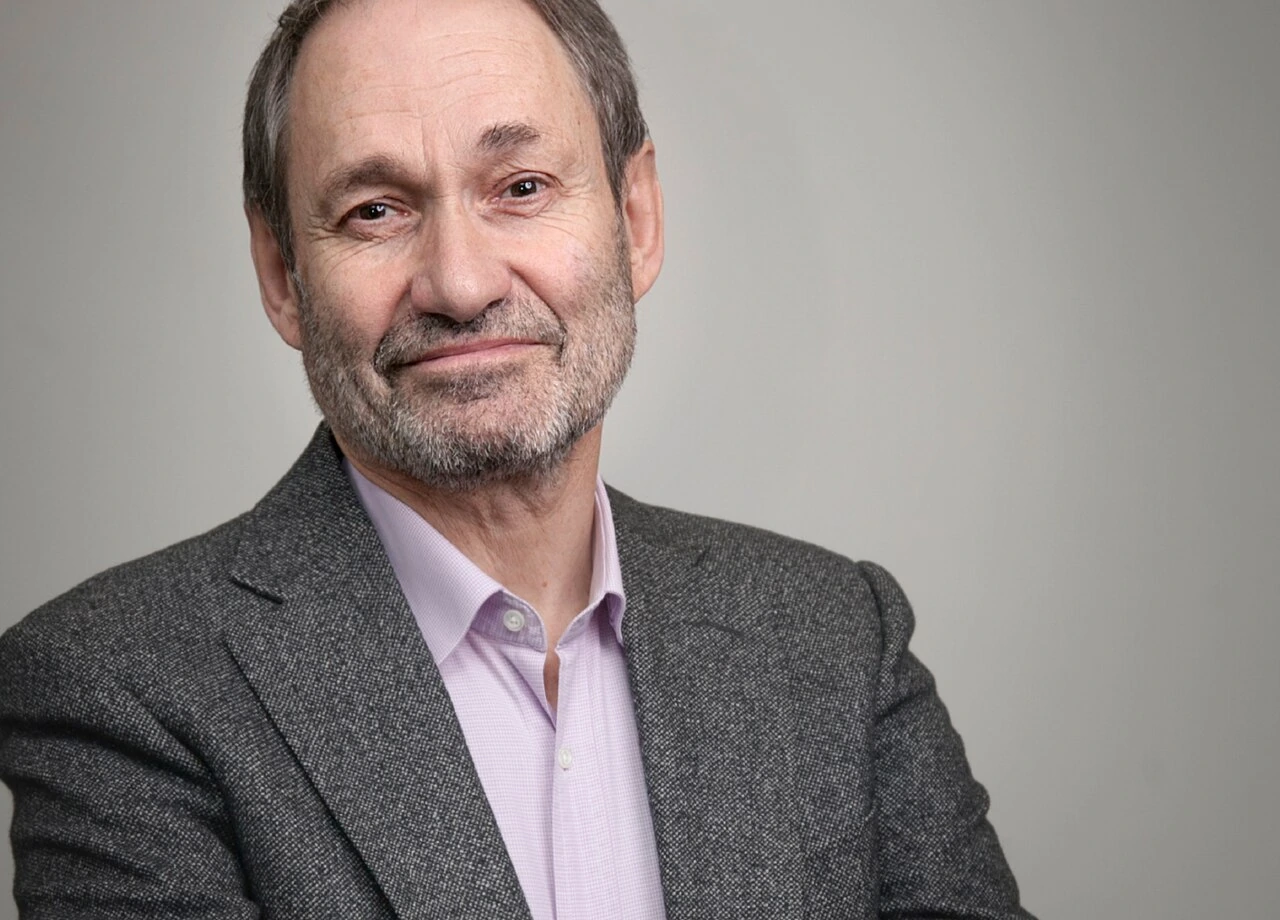
Who Leonid Boguslavsky is

Leonid Borisovich Boguslavsky (Леонид Борисович Богуславский) was born June 17, 1951, in the USSR. He is a Canadian entrepreneur, scientist, and venture capital investor, best known today as the founder of RTP Global, one of the most active early-stage VC firms operating across Russia, Europe, the US, and emerging markets. He moved to Canada in the early 1990s and later became a Canadian citizen, also serving as a visiting professor of computer science at the University of Toronto. His background spans technology, management consulting, and private equity, which is a fairly unusual combination that shaped the way he built wealth across multiple decades.
One thing worth noting before diving deeper: there are transliteration variants of his name in circulation, including Boguslavskiy and Богуславский, and "Leonid" is a common given name shared by several other notable Eastern European public figures. If you have landed here after searching for someone in entertainment or sports, this is a different person.
Boguslavsky is a tech-and-venture-capital figure, not to be confused with, say, Leonid Yakubovich (the Russian television host) or Leonid Afremov (the painter), who have their own separate wealth profiles. Leonid Yakubovich is a different public figure, and his net worth estimates come from his own career in Russian television rather than from the RTP Global profile described above. If you meant Leonid Afremov instead, his painter-focused career and assets drive a separate Leonid Afremov net worth profile.
How net worth estimates are actually built for someone like Boguslavsky
Net worth estimates for private investors and VC fund managers are harder to pin down than for, say, a CEO of a public company. Forbes uses a two-track approach. For publicly traded holdings, they price the stake at market value with a 15-minute delay during NYSE trading hours. For privately held companies or fund interests, they apply revenue and profit multiples benchmarked against comparable public companies, which introduces assumptions. Bloomberg's Billionaires Index works similarly, noting explicitly that valuation methodology for closely held assets is described in each profile's net worth analysis section and that assumptions are inevitable when ownership structures are not directly observable.
What this means practically: the $6B figure you see for Boguslavsky is not a bank-account balance. It is a calculated estimate blending observable market data (his Datadog stake, for instance, can be cross-referenced against public disclosures) with estimates of his broader RTP Global fund positions. Neither Forbes nor Bloomberg can access a private balance sheet, so portions of the estimate carry uncertainty. That is not a reason to dismiss the figure, but it is a reason to treat any single number as a range rather than an exact point.
Boguslavsky's estimated net worth and what supports it

The headline number is $6 billion, as reported by Forbes with a "Real Time Net Worth as of 4/16/26" label and a last-update timestamp of March 10, 2026. Forbes categorizes his source of wealth as venture capital, self-made. The profile explicitly lists a stake in Datadog among his holdings, which is significant because Datadog is a publicly traded US company (NASDAQ: DDOG), meaning that portion of his wealth is directly tied to a verifiable market price rather than an estimated multiple.
The broader picture is that RTP Global's portfolio includes multiple companies across different stages and geographies. RTP Global’s official About Us page describes its investment approach, including committing deeply and sometimes holding investments for as long as 20 years, which helps explain the long time horizon behind its portfolio-building blank" rel="noopener noreferrer">RTP Global’s long-term investment approach. Not all of those positions are publicly priced, so Forbes applies its standard private-company estimation methodology to the rest. The Datadog stake is the clearest anchor point available to an outside observer, but it is almost certainly not the only significant holding. blank" rel="noopener noreferrer">RTP Global's third fund, launched in 2020 with $650 million in capital, would contain additional positions that feed into the overall wealth estimate.
Career timeline: where the money actually came from
Boguslavsky's path to billionaire status is multi-chapter. Here is a practical timeline of the wealth-building events that matter most:
- Pre-1990s USSR: Scientific and academic career; relatively little wealth accumulation under the Soviet system.
- Early 1990s: Moves to Canada; entrepreneurial activity begins in the post-Soviet transition period, including founding or building LVS, a technology consulting firm in Russia.
- Late 1996: Sells LVS to PricewaterhouseCoopers (PwC), a liquidity event that provided early capital. Becomes Managing Partner at PwC overseeing management consulting in Russia starting in early 1997.
- December 1999: Meets with investment bankers Charles Ryan (UFG), Michael Calvey (Baring Vostok), and David Mixer (Rex Capital) to plan an internet investment vehicle, setting the stage for what becomes ru-Net.
- 2000: Co-founds ru-Net Holdings Limited with approximately $20 million in startup capital. This is the foundational vehicle for his VC empire.
- Early 2000s–2010s: ru-Net makes a pivotal investment in Yandex, Russia's dominant search engine. The eventual exit from that position is widely described as generating outsized returns and represents a major wealth-creation event.
- 2018 (October): ru-Net is rebranded as RTP Global, reflecting an expanded global mandate beyond Russia.
- 2019: Datadog IPO on NASDAQ. RTP Global's early-stage position in Datadog, which was seeded when the company was a Series A/B startup, converts into a publicly tradable, highly valued stake.
- 2020: RTP Global launches its third fund with $650 million, deepening Boguslavsky's exposure to early-stage global technology companies.
- 2026: Forbes tracks a $6B net worth, primarily reflecting the aggregate value of RTP Global's portfolio, with Datadog as the most visible public anchor.
The pattern here is consistent with how several post-Soviet tech investors built enormous wealth: early positioning in Russian internet infrastructure (Yandex was a once-in-a-generation bet), disciplined reinvestment into global early-stage tech, and then compounding through Western public-market liquidity events. Boguslavsky's scientific background and consulting experience likely gave him an edge in evaluating technology companies at a time when most Russian capital was chasing natural resources.
Assets, holdings, and business interests that define the wealth scale

To understand the full picture, here are the categories of holdings that any serious analysis of Boguslavsky's net worth needs to account for:
- Datadog (DDOG) stake: The most visible and directly verifiable component. As a publicly traded company, any disclosed ownership position can be cross-referenced against SEC filings or 13F reports if the holding meets disclosure thresholds.
- RTP Global fund interests: As founder, Boguslavsky holds GP (general partner) interests and likely co-investment positions across all three RTP Global funds. The value of these depends on the underlying portfolio companies, most of which are private.
- RTP Global portfolio companies: The firm describes itself as a global early-stage investor. Portfolio companies span cloud infrastructure, fintech, SaaS, and consumer tech across Europe, the US, Southeast Asia, and emerging markets. Valuations here are estimated using comparable multiples.
- Historical Yandex position: Exit proceeds from Yandex, likely realized over a period of years, would have contributed significant liquidity. These funds have presumably been recycled into subsequent fund activity.
- Canadian and international personal assets: Real estate and personal investment vehicles are plausible components of total net worth but are not publicly documented in the sources reviewed here.
- Carried interest and management fees from RTP Global funds: A VC founder's economic interest is not limited to fund stakes; management fees and carry on successful exits are ongoing income streams.
Why the estimate can shift, and what to watch for
The $6B figure is a snapshot, not a permanent label. Several factors can move it materially in either direction:
| Factor | Direction of impact | Notes |
|---|---|---|
| Datadog stock price movement | Up or down, directly | Forbes updates publicly traded holdings on a 15-minute delay during NYSE hours; a major swing in DDOG shifts the headline number fast |
| RTP Global portfolio company IPOs or acquisitions | Upward on successful exits | Private holdings become publicly priced at exit, often revealing values higher than prior estimates |
| RTP Global portfolio write-downs | Downward | VC portfolios carry some positions that underperform; periodic mark-downs reduce estimated wealth |
| New fund launches or capital calls | Neutral to upward long-term | Fresh capital deployment means new positions but also new carried-interest potential |
| Ownership restructures or transfers | Variable | Reorganizing stakes through holding entities can obscure or clarify beneficial ownership |
| Sanctions, legal proceedings, or geopolitical events | Potentially downward | Given his Soviet-origin profile and Russian investment history, any sanctions exposure or legal developments would affect asset accessibility and valuation |
| Forbes/Bloomberg methodology revisions | Variable | Both outlets periodically update how they treat VC interests and private company multiples |
The geopolitical dimension is worth flagging specifically. Boguslavsky operates as a Canadian citizen with a global fund, but his wealth origin involves Russian internet assets and his early career was rooted in post-Soviet Russia. In the current environment, any investor with significant historical Russia exposure requires scrutiny of sanctions status and asset accessibility. As of the research available here, there is no public indication that Boguslavsky is subject to sanctions, but this is a factor any analyst should verify before treating the net worth figure as fully liquid and accessible.
How to verify and challenge the $6B figure yourself
If you want to go beyond the headline number and stress-test it, here is a practical process:
- Start with the Forbes profile directly. Check the 'as of' date and the 'last updated' timestamp. If those are stale by several months and Datadog has moved significantly, the figure may already be out of date. Forbes lists the Datadog connection explicitly, so you can pull the current DDOG stock price and estimate directional impact.
- Pull SEC filings for Datadog (EDGAR). Search for 13F filings or Schedule 13D/G disclosures that reference RTP Global or Boguslavsky by name. If the stake meets the 5% or $100M threshold, a public filing will exist. This is the most direct verification step available.
- Check Bloomberg Billionaires Index. Bloomberg tracks billionaires independently with its own methodology. If both Forbes and Bloomberg are in rough agreement on the order of magnitude, that is a meaningful signal of robustness. Significant divergence would warrant scrutiny of the underlying assumptions each outlet is using.
- Review RTP Global's own published materials. The firm's team page and any press releases about fund sizes and portfolio exits give you the wealth-origin narrative directly from the source. Cross-check that against what the net worth trackers are saying.
- Assess source quality critically. Low-quality net worth sites often copy Forbes or Bloomberg without updating the figure or noting the 'as of' date. If a site shows a precise number with no timestamp and no methodology explanation, treat it as a repost of someone else's estimate, not independent research.
- Look for contradictions. If a secondary profile claims a very different number (say, $1B or $15B) without a clear explanation, investigate which assets they are including or excluding. VC wealth is particularly prone to large swings based on whether unrealized fund positions are included at cost, at fair value, or at projected exit value.
- Factor in the private/public split. A rough mental model: any portion of the $6B tied to Datadog is market-priced and relatively reliable. The portion tied to private RTP Global portfolio companies is an estimate. The higher the share of private holdings, the wider the error bar on the total figure.
The broader lesson here applies across Eastern European wealth profiles. The most credible figures come from outlets with explicit, published methodologies (Forbes and Bloomberg being the two primary ones), and even those carry assumptions for private holdings. For someone like Boguslavsky, whose wealth is built through a VC platform with a mix of public and private positions, $6B is the best single-point estimate available, but a working range of roughly $5B to $7B is a more honest representation of what the evidence actually supports given the inherent uncertainty in private portfolio valuations.
FAQ
Is Leonid Boguslavsky’s net worth the same as his liquid assets?
Because a large portion of VC wealth sits in private fund interests and privately held portfolio companies, the $6B figure is a valuation estimate, not a readily spendable cash amount. A practical check is to look for how much of the estimate is tied to publicly traded stakes (like Datadog) versus private holdings, since only the public portion moves at clear market prices.
Why do different websites show different Leonid Boguslavsky net worth numbers?
Small timing differences can create noticeable gaps between trackers. If you are comparing numbers across sites, align the “as of” date and update label, and remember public-market pricing uses trading-day timing (and sometimes delays), while private holdings use periodic recalculations based on multiples or last-known financials.
How can I be sure I’m looking at the right Leonid Boguslavsky?
Search results often surface similarly named individuals, so confirm identity by combining spelling variants (Boguslavsky, Boguslavskiy, Богуславский) with the identifying anchor, RTP Global, and the venture capital focus. Entertainment or sports pages may pull a different “Leonid” entirely, leading to a mismatched net worth profile.
How can I estimate the number myself using public market data?
If you want to stress-test the estimate, treat the total as a range and verify the public anchor stake(s) used in the model. For example, if a Datadog stake is listed, cross-check the reported ownership level against Datadog’s current share price, then evaluate what percentage of the total wealth estimate could realistically come from that public portion.
Does RTP Global’s fund size automatically mean Boguslavsky’s net worth goes up?
A VC fund manager’s personal net worth is usually connected to their ownership of the management company, their carried interest, and any direct equity they hold, but it is not identical to the fund’s assets under management. So if RTP Global raises or deploys more capital, Boguslavsky’s personal net worth may not move one-to-one in the short term.
What most commonly causes the net worth number to move week to week?
Mark-to-market swings can move the headline figure quickly when a public holding reprices. For example, if Datadog rises or falls, the public-market component changes immediately, while private-company valuations typically adjust more slowly and can lag behind market sentiment.
How reliable are net worth estimates for venture capital and private fund holdings?
When a profile describes methodology like revenue or profit multiples for private holdings, the uncertainty usually comes from choosing the comparable companies and the multiple range. That is why a single-point estimate is less reliable for private fund interests than for publicly traded stakes.
Could sanctions or asset-access issues make the estimated net worth less usable?
If you are using the net worth number for any decision-making, you should also check sanctions and asset-access constraints, since “estimated value” does not guarantee liquidity. Even without public sanctions coverage, analysts should look for any restrictions that could affect saleability or fund distributions.
What should I do next if I want to understand the drivers behind Boguslavsky’s $6B figure?
For someone whose wealth is partly tied to public equities, the most actionable next step is to identify the public holdings the profile names and then track the underlying tickers and ownership disclosures where available. For the private portion, the best you can do is monitor reported fund activity and general portfolio performance signals, then keep the outcome framed as a range rather than a precise number.
Next Articles

Leonid Vorobyev Net Worth: Estimate, Sources, and Method
Estimate Leonid Vorobyev net worth with methodology, income sources, risks, confidence level, and how to verify via reco

Slavic Dancer Net Worth Estimate How It’s Calculated
Slavic Dancer net worth estimate with how it’s calculated, income sources, likely expenses, and verification tips.

Slavi Trifonov Net Worth: Estimate, Sources, and Wealth Drivers
Slavi Trifonov net worth estimate for the Bulgarian TV host, with sources, wealth drivers, and verification tips.