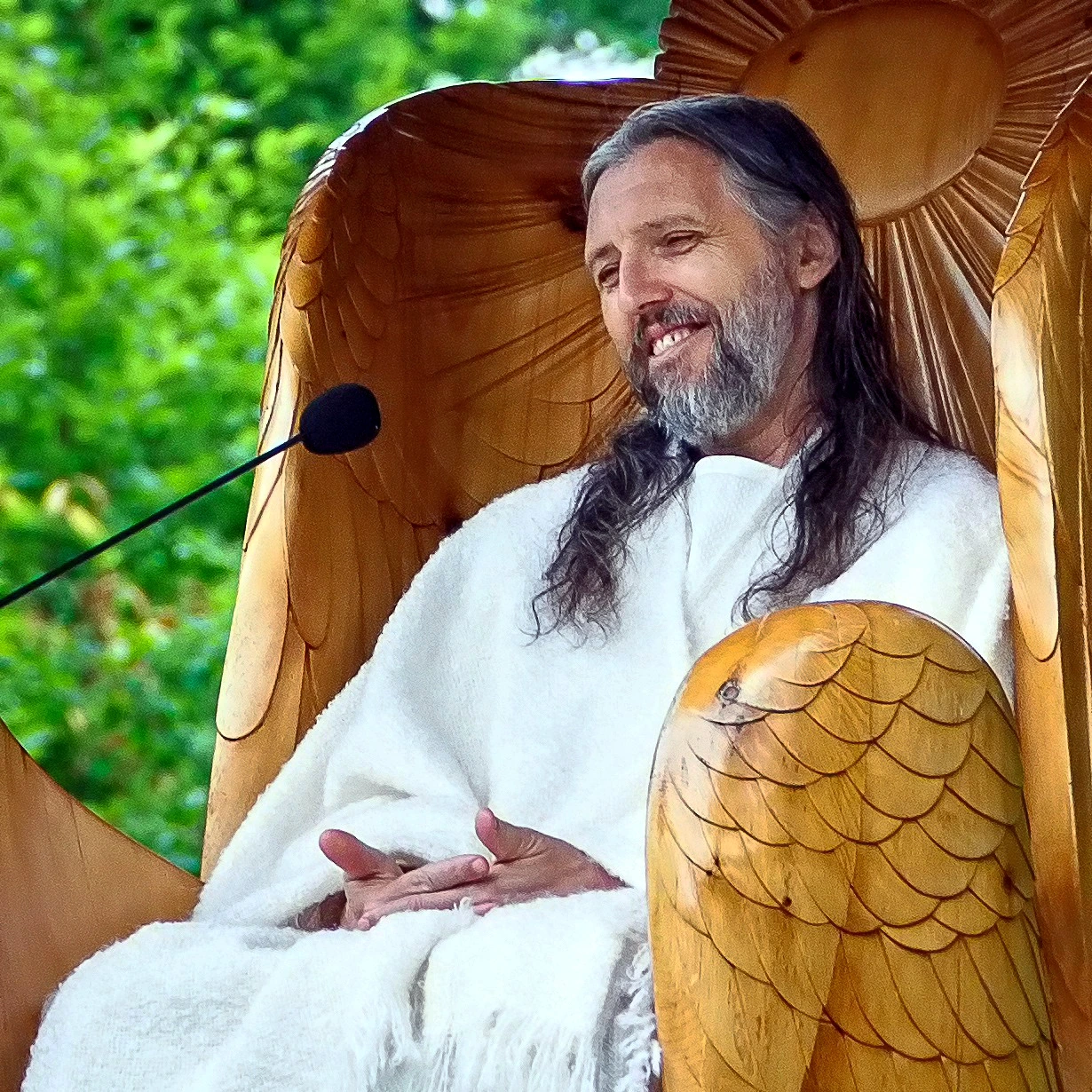
The Vissarion most people are searching for is Sergei Anatolyevich Torop, born January 14, 1961, a Russian religious leader who founded the Church of the Last Testament in Siberia and proclaimed himself a reincarnation of Jesus Christ. His estimated net worth is difficult to pin down precisely because his wealth was never held in a conventional personal portfolio, it flowed through a religious organization, community land holdings, and member donations. Based on available evidence, a reasonable working range sits between roughly $500,000 and $2 million USD in personal and organizational assets at the peak of his movement's activity, though much of that was likely seized or frozen following his arrest in September 2020 and subsequent 2025 conviction.
Vissarion Net Worth Estimate Explained With Sources

Which Vissarion this article is about

The name Vissarion belongs to more than one public figure, so it is worth being direct about who this profile covers. Iancu Constantin Vissarion (1879–1951) was a Romanian writer, inventor, and political agitator, an entirely different person with no connection to the wealth profile here. There is also Vissarion of the Agathonos (Andreas Korkoliakos, 1908–1991), a Greek Orthodox monk venerated as a saint. Neither of those individuals is the subject of modern net-worth searches.
The Vissarion in the search query is Sergei Torop, the Siberian cult leader sometimes called the 'Jesus of Siberia.' He founded the Church of the Last Testament starting around 1991, built a commune near the Minusinsk Basin in Krasnoyarsk Krai, and attracted thousands of followers from Russia and abroad. That community and its associated organizational structure are where his financial story is rooted.
What net worth means on this site
This site estimates net worth by aggregating verified financial data, property records, court filings, regulatory documents, and investigative reporting, and then layers in expert estimates to fill gaps where direct documentation is unavailable. For figures like Vissarion, whose wealth passed through a religious organization rather than a corporate structure or declared personal fortune, the methodology shifts: we look at the documented asset base of the organization, court-identified financial flows, seizure records, member contribution patterns reported in journalism and legal proceedings, and what independent investigators have established about property holdings. The result is always a range, not a single number, and we flag clearly what is verified versus what is inferred or estimated.
Vissarion's wealth overview

Vissarion's financial picture is unusual compared to most profiles on this site. He was not a businessman, oligarch, or salaried public figure. His apparent wealth derived almost entirely from the Church of the Last Testament as an institution: land and buildings in the Siberian commune, donations from followers (some of whom reportedly transferred significant personal assets to the organization), and revenue from media materials, publications, and lectures. The commune near Petropavlovka in Krasnoyarsk Krai represented the most concrete asset base, a large settlement with constructed dwellings, communal infrastructure, and land.
During the September 2020 raid, Russian law enforcement from the FSB and Rosguard recovered weapons, cash, and what TASS described as 'jewels' from properties associated with the Church of the Last Testament leadership. This recovery is the most concrete public evidence of tangible assets held within the organization's sphere. The cash and valuables seized were never publicly quantified in full detail, which is one reason the net-worth estimate carries a wide range.
How the wealth was built: a career timeline
Sergei Torop worked as a traffic police officer before his religious career began. He lost his job in the late Soviet period and by 1991 had declared himself a reincarnation of Jesus Christ, taking the name Vissarion. The timing mattered: the collapse of the Soviet Union created a vacuum of belief systems and institutional authority, and new religious movements attracted significant followings through the 1990s and 2000s.
- 1991: Torop begins preaching in Minusinsk and surrounding Siberian regions, drawing early followers who relocate to a commune he establishes in the taiga.
- Mid-1990s: The Church of the Last Testament formalizes as a registered religious organization; followers begin donating labor, money, and property to the commune, which grows into a settlement of several thousand people.
- 2000s: The movement expands internationally, attracting followers from Europe and elsewhere; media productions, books, and international lecture tours become additional financial streams.
- 2010s: The commune reaches its peak population (estimates range from 4,000 to 10,000 followers at various points); land holdings and built infrastructure represent the peak asset accumulation period.
- September 2020: Russian authorities arrest Torop and two other Church leaders in a coordinated FSB-led operation; properties are raided and assets including cash and valuables are seized.
- June 30, 2025: Torop is convicted and sentenced to 12 years in prison on charges including organizing an illegal religious organization and causing bodily harm. The Church of the Last Testament undergoes court-ordered liquidation proceedings.
The key financial mechanism throughout was member contributions, some of which prosecutors allege involved coercion to transfer property to the organization. Russian court filings hosted publicly, including the full text of the liquidation decision, specifically cite coercion to alienate property as one of the legal grounds for dissolving the Church. This is a significant detail: it means the organization's asset base, which underpinned any personal wealth estimate for Vissarion, was built at least in part through legally contested transfers from followers.
Evidence quality: what is verified versus what is claimed

It is important to separate layers of evidence when assessing Vissarion's net worth, because the information environment around cult-adjacent figures tends to mix hard facts with supporter mythology and hostile government framing.
| Evidence Type | What Is Established | Confidence Level |
|---|---|---|
| Legal proceedings | Torop convicted June 30, 2025; sentenced to 12 years; Church of Last Testament ordered liquidated | High — multiple independent news sources, court records |
| Asset seizures | Cash, weapons, and jewels recovered in September 2020 raid per TASS reporting | Medium — confirmed by state media, full inventory not publicly disclosed |
| Property/land holdings | Commune infrastructure existed near Petropavlovka, Krasnoyarsk Krai; scale visible in journalism and satellite imagery | Medium — reported widely, no formal property registry data publicly available |
| Member donations/property transfers | Court filings allege coerced transfers; prosecution basis includes property alienation claims | Medium — legally asserted, not independently audited |
| Personal liquid wealth | No direct evidence of personal bank accounts or offshore holdings | Low — no public documentation |
| Supporter site claims (vissarion.org) | Confirms identity and organization name; not a financial source | Low for financial purposes |
The vissarion.org domain, while useful for confirming who Vissarion is, publishes materials produced by supporters and should not be used as a financial source. Similarly, Russian state media coverage of the case (TASS, RAPSI) reflects a prosecutorial framing that may overstate certain financial claims while underreporting others. Independent journalism from outlets like The Moscow Times provides useful corroboration but does not contain audited financial detail.
The net worth range and what drives it
Working estimate: $500,000 to $2 million USD, as of late 2025, with the most likely figure closer to the lower end of that range following asset seizures and legal dissolution of the Church.
- Upper bound driver: If the communal land and buildings in Siberia retained any value not fully seized, and if personal cash and valuables were only partially recovered in the 2020 raids, the total could approach $2 million.
- Lower bound driver: If the Church's assets were substantially seized, frozen, or legally transferred out of Torop's effective control through the liquidation process, personal net worth could be near zero or effectively nil.
- Key uncertainty: Russian property records for the commune are not publicly accessible in English-language databases, making independent valuation impossible without on-the-ground reporting or legal document access.
- Prison sentence impact: A 12-year sentence effectively removes Torop from managing any remaining assets, and Russian law allows for further asset confiscation tied to criminal convictions.
- Organizational dissolution: Court-ordered liquidation of the Church of the Last Testament means the legal entity holding most assets has been or is being wound up, which would further reduce any attributable wealth.
Controversies, legal issues, and how they affect the numbers
The controversies surrounding Vissarion are not peripheral to his financial profile, they are central to it. Prosecutors sought liquidation of the Church of the Last Testament as early as September 2020, with RAPSI reporting the case involved allegations of violating members' rights and causing harm. TASS reported the filing context and the prosecution's grounds for seeking the Church of the Last Testament's liquidation in September 2020 Prosecutors sought liquidation of the Church of the Last Testament as early as September 2020. The legal theory included coercion to transfer property to the organization, which means the assets the organization held were legally contested from the moment charges were filed.
CBS News coverage of the September 2020 arrest confirmed the scale of the operation: it was a coordinated law enforcement action involving the FSB, not a routine local matter. That scale suggests Russian authorities treated the Church's financial operations as significant enough to warrant major resource deployment. The recovery of weapons alongside cash and valuables complicated the picture further, because it introduced criminal liability that goes beyond religious organization law and into territory that typically results in broader asset forfeiture.
By June 2025, when the conviction came down, the financial picture had been further clouded by roughly five years of legal proceedings, organizational dissolution pressure, and the broader shutdown of the commune's operational activities. Multiple outlets reported that on June 30, 2025 a court in Novosibirsk sentenced Sergei Torop ("Vissarion") to 12 years in prison for offenses including harming the mental and physical health of followers ‘Jesus of Siberia’ Cult Leader Sentenced to 12 Years in Prison. Any donations or revenue streams that existed before 2020 would have largely ceased during that period. The net effect is that whatever wealth Vissarion commanded at the peak of the Church's activity has almost certainly contracted sharply.
How to verify and update this estimate today
If you want to get a more current or precise figure, here is where to look and what to watch for.
- Russian court records: The liquidation proceedings for the Church of the Last Testament should produce public documentation about what assets were identified and how they were disposed of. RAPSI and the Russian court system's own public database (sudact.ru) are the primary sources.
- Criminal conviction follow-up: Russian criminal courts can issue additional asset confiscation orders tied to the June 2025 conviction. Check TASS and Interfax for any post-conviction asset rulings, which would lower the estimate further.
- Krasnoyarsk Krai property registry: Any formal property holdings registered to the Church or to Torop personally would appear in regional records. Access is difficult from outside Russia but investigative journalists working on the case may surface specifics.
- Follow the commune's fate: Reporting on what happens to the physical settlement near Petropavlovka is the most direct proxy for asset value. If buildings are demolished, sold, or transferred to regional authorities, that will indicate how much was formally assigned.
- International followers and donations: If the movement retains active international supporters (particularly in Germany, Australia, and other countries where it had followings), there may be affiliated entities with their own financial footprints visible in local charity registries.
- Watch for post-sentence reporting: Convictions of cult figures like this sometimes prompt longer investigative pieces that surface previously undisclosed financial details. Outlets like The Moscow Times and Meduza are worth monitoring.
For comparison, this kind of research process, cross-referencing court documents, local property data, and independent journalism, is the same approach applied to profiles of other figures tracked on this site, including contemporaries from the broader Russian and Eastern European public sphere. For comparison, if you are specifically looking up Lubomir Visnovsky net worth, the same checklist of court records, property data, and independent reporting is what you would use to sanity-check any claimed figures. The difference with Vissarion is that his wealth was organizational rather than corporate, which limits the paper trail but does not eliminate it entirely.
The bottom line is that Vissarion's net worth, even at its peak, was modest by the standards of Russian public figures with significant institutional power. His influence came from followers and belief, not capital markets or business operations. As of April 2026, with a 12-year sentence in effect and the Church legally dissolved, whatever personal wealth remained is almost certainly under legal constraint or has been formally seized. The $500,000 to $2 million range reflects the uncertainty, and any new court documentation on asset disposal would be the single most important update signal to watch. For details on how much this cult leader was worth and why the figure is disputed, see the latest breakdown of Stanislav Vishnevskiy net worth. If you are comparing cult and celebrity fortunes, you can also review Igor Vovkovinskiy net worth and how that estimate is calculated. To understand how this compares to other internet-famous personalities, see Igor Vishnyakov net worth and how that figure is estimated.
FAQ
How can I tell whether a page claiming “vissarion net worth” is about Sergei Torop or a different person with the same name?
Check for identifiers that match Sergei Torop, the Church of the Last Testament founder, his 1961 birth year, and the Siberian commune context (Krasnoyarsk Krai, Minusinsk Basin, Petropavlovka). If the article does not mention the church or the 2020 raid/2025 conviction storyline, it is likely mixing up a different “Vissarion.”
Why is it harder to estimate personal wealth for Vissarion than for a typical celebrity or businessman?
Because his finances were allegedly routed through an organization rather than a declared personal portfolio, meaning reported “assets” may be organizational property, seized items, or contested transfers. Any net-worth number you see is usually an inference built from court and asset-disposal records, not a direct balance-sheet of personal holdings.
Do the seized cash and valuables from the 2020 raid translate directly into “Vissarion net worth”?
Not automatically. Seizures show tangible assets recovered, but they do not reveal the full prior asset base, the value of property already sold or transferred, or what was held in different entities. A better approach is to treat seizures as a lower-bound indicator of what was accessible at that time, then look for liquidation and forfeiture details.
What specific documents should I look for if I want the most defensible update after the conviction and dissolution?
Focus on asset-disposal steps after liquidation, such as court-ordered transfer or auction outcomes, records describing forfeiture and who became the legal owner afterward, and any public appendices that list property categories and estimated values. These typically give more grounding than media summaries.
Why do some sources give very different numbers for “vissarion net worth”?
The differences usually come from mixing evidence layers, for example treating supporter claims as verified valuations, or combining organizational assets with assumed personal ownership. Another driver is timing, because asset values at the peak would be different from what remained after seizures, shutdown of commune operations, and years of litigation.
Is the “most likely figure near the lower end” assumption reasonable, or could the peak have been much higher?
A higher peak is possible, but the article’s logic leans toward contraction after 2020 because ongoing donations and revenue streams would likely have slowed during prosecution and dissolution. To challenge the low-end assumption, you would need corroborated documentation of large, liquid holdings or multiple property valuations that survived legal scrutiny.
Can the Church’s property be used as a proxy for Vissarion’s personal net worth?
Only with caution. Organizational ownership does not prove personal entitlement, especially when legal allegations involve coercion and member property transfers. A conservative estimate treats church property as “asset base tied to the movement,” then applies uncertainty around how much could reasonably be considered effectively controlled personal wealth.
What common mistake should I avoid when searching online for “vissarion net worth” articles?
Avoid repeating numbers without checking whether the source specifies what those figures represent (personal assets versus organizational holdings versus seized items). Also watch for duplicate biographies, where unrelated historical figures or religious persons with the same name get pulled into net-worth aggregations.
If I want a current figure today, what is the single most important update signal to watch?
New court documentation or official summaries that state how assets were finally disposed of, including who received properties and whether additional forfeitures occurred. Until those are public, most “current net worth” claims are likely to be speculative.

Clear estimate of Lubomir Višňovský net worth, what counts, key career wealth drivers, and how reliable sources verify i

Stanislav Vishnevskiy net worth estimate, how it’s calculated, asset types, and why sources differ, with verification ti

Slavic Dancer net worth estimate with how it’s calculated, income sources, likely expenses, and verification tips.