
Samuel Reshevsky's net worth at the time of his death in 1992 was almost certainly in the low-to-mid six figures in nominal dollars, which translates to roughly $200,000–$500,000 in 2026 purchasing power when you apply standard CPI inflation adjustments. That range is a reasoned estimate built from documented tournament prizes, known exhibition fees, and his parallel career as an accountant and chess writer. There is no verified probate figure, no estate filing that has surfaced in public searches, and no credible financial archive that puts a hard number on his total assets. The widely cited $80 million figure from certain net-worth aggregator sites has no sourced breakdown and should be disregarded entirely.
Samuel Reshevsky Net Worth: Evidence-Based Wealth Range

Konstantin Volkov
20 May 2026
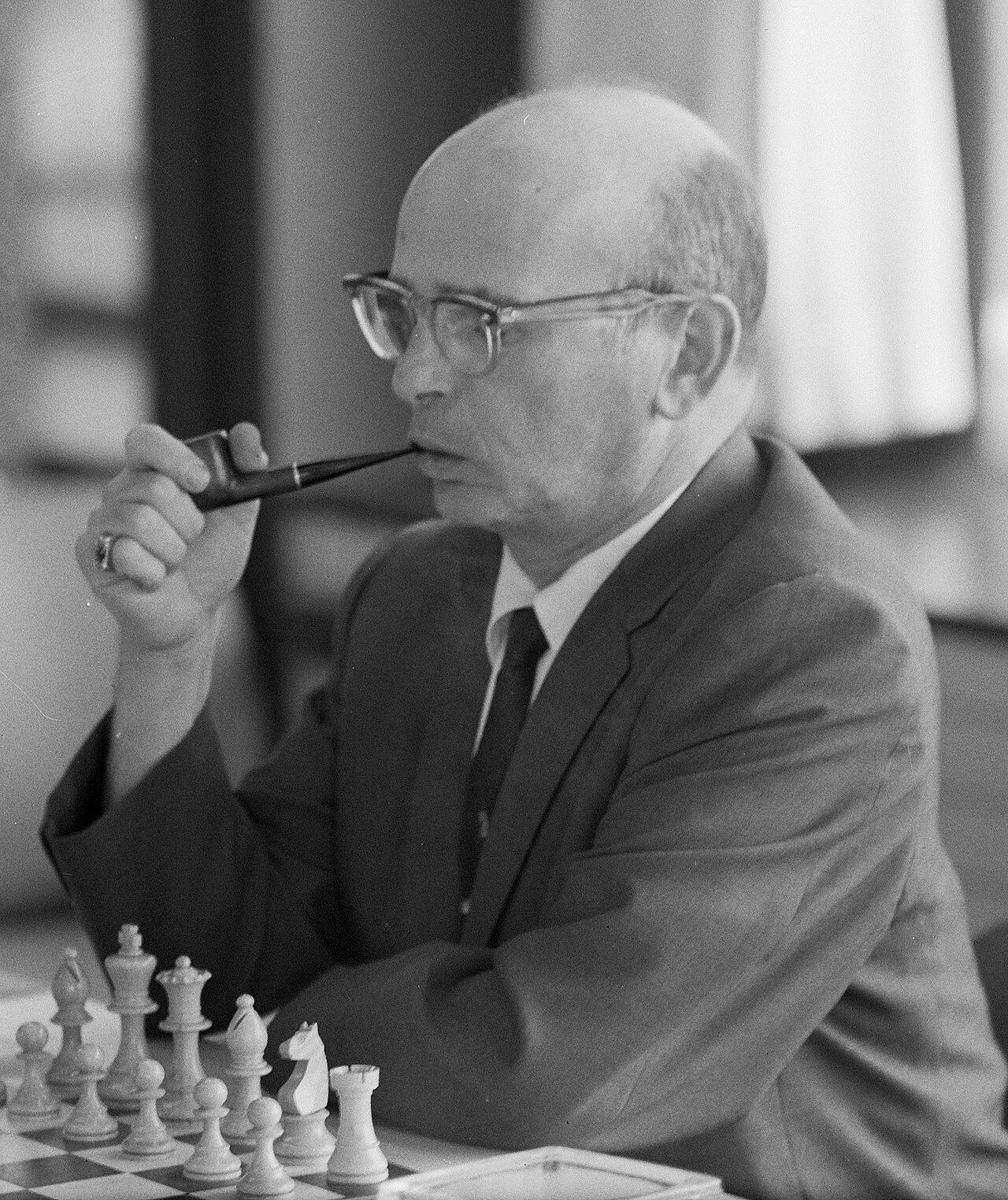
Who Samuel Reshevsky was and why his wealth gets searched

Samuel Herman Reshevsky was born in 1911 in Ozorkow, Poland (then part of the Russian Empire) and died in 1992 in the United States. He is one of the most accomplished chess players of the 20th century, a child prodigy who gave simultaneous exhibitions across Europe and North America as early as age eight, and a multiple-time U.S. Chess Champion. Encyclopaedia Britannica notes he never captured a world championship title despite competing at the highest level for decades, but he was consistently ranked among the world's elite from the 1930s through the 1960s. His Eastern European origins and his prominence in Cold War-era chess culture make him a natural subject for a site tracking the financial trajectories of prominent figures from that sphere. The wealth search is driven partly by curiosity about how chess professionals actually made money in an era before six-figure open tournaments, and partly by the wildly divergent numbers floating around the internet.
What 'net worth' actually means here (and why the numbers conflict)
Net worth is total assets minus total liabilities at a given point in time. For a living public figure with business filings and real estate records, that is at least partially verifiable. For a chess grandmaster who died in 1992 and whose financial life was never the subject of investigative reporting, it becomes an exercise in estimation. Most online figures you will encounter conflate three very different things: lifetime gross earnings (the sum of every tournament prize and appearance fee he ever received), career peak income (the years he was most active and most paid), and actual net assets at death (what he owned after a lifetime of expenses, taxes, and whatever he saved or invested). These are not interchangeable, and sites that do not separate them are not useful. The further complication is currency: prize funds from the 1950s and 1960s are in nominal dollars of those years. A $3,000 first-place prize from the 1963 Piatigorsky Cup is worth roughly $30,000 in 2026 dollars. Comparing historical chess earnings to modern standards without that conversion produces meaningless numbers.
The most credible net worth range and what actually supports it

Working from the documented evidence available, a plausible inflation-adjusted net worth range at the time of Reshevsky's death is $200,000 to $500,000 in 2026 dollars. The lower bound reflects a scenario where most tournament earnings were consumed by a middle-class lifestyle, travel costs, and professional expenses over a 60-year career, with modest savings from his accountancy work. The upper bound reflects a scenario where he accumulated savings from both chess and his professional accounting career, held some real property, and benefited from the relative stability of mid-century American middle-class asset accumulation. If you are specifically looking for the yakov lapitsky net worth, use the same caution here: unsourced aggregator totals are easy to inflate and hard to verify net worth range. Nothing in the accessible public record supports a figure above low-seven figures, and the $80 million claim from NetWorthList has no sourced methodology whatsoever.
The sources that get closest to primary evidence are: the scholarly paper documenting his early exhibition fees (contemporaneous newspaper reports cited $3,000–$4,000 per simultaneous display, while his parents claimed a much lower $150 per exhibition), the Chessgames.com record noting approximately $6,000 in total prize money for the 1961 Fischer-Reshevsky match, and blank" rel="noopener noreferrer">USCF Chess Life archival PDFs that record the Piatigorsky Cup prize fund at $10,000 total with first place receiving $3,000. These are the kinds of data points that support a bounded estimate. Wikipedia's biography and Britannica provide career narrative but no wealth figures. No probate or estate records have surfaced in targeted searches.
How Reshevsky actually made money across his career
Exhibition fees in the early years

The most financially lucrative period of Reshevsky's life may have been his childhood exhibition circuit in the early 1920s, when he was a genuine global celebrity. Contemporaneous newspaper reports cited earnings of $3,000 to $4,000 per simultaneous display. Even if the true figure was closer to the parents' claimed $150 per event, he performed dozens of exhibitions across Europe and North America. In nominal 1920s dollars, even the conservative end adds up meaningfully. Converted to 2026 dollars, $150 per exhibition in 1921 is roughly $2,600 today; the higher newspaper figure would be close to $55,000–$70,000 per event. The discrepancy between family-reported and press-reported figures is a genuine unresolved historical question and is exactly the kind of ambiguity that makes net-worth ranges for historical figures wide.
Tournament prizes through the mid-century
Tournament prize funds in Reshevsky's prime era (1940s through 1960s) were modest by modern standards. The 1963 Piatigorsky Cup had a total prize fund of $10,000, with first place receiving $3,000. The 1961 Fischer-Reshevsky match had approximately $6,000 in total prize money provided by Jacqueline Piatigorsky and the Whittington Piatigorsky Foundation. Reshevsky received the winner's share of that prize fund after the match ended in a scheduling dispute, though the exact split is not documented in the sources I have found. Over a career spanning dozens of major tournaments and U.S. Championships, cumulative tournament earnings likely ran into the tens of thousands of nominal dollars, which in 2026 purchasing power represents perhaps $200,000–$400,000 gross before expenses and taxes.
Professional accounting career
Reshevsky worked as a professional accountant for significant portions of his adult life, which is a frequently overlooked income stream. This gave him a stable salary that chess prizes alone would not have provided during lean competitive years. No specific salary records or employment history have surfaced in public sources, but a mid-century American accountant's income was solidly middle-class and would have provided a meaningful base for asset accumulation over decades.
Writing and book royalties
Reshevsky authored several chess books, which would have generated royalties. Standard publisher royalty structures typically run 10–15% of cover price for hardcovers. Without access to his publishing contracts or royalty statements (none were found in targeted searches), this income stream is plausible but unquantified. Chess instruction books from that era sold in modest volumes, so this likely contributed a supplementary rather than primary income stream.
Assets, investments, and lifestyle: what can and can't be verified
There is no publicly accessible evidence of significant investment portfolios, real estate holdings, or offshore assets for Reshevsky. No property deeds, estate filings, or probate records have surfaced in the searches conducted for this profile. His lifestyle, as far as contemporaneous press coverage suggests, was that of a serious professional and observant Orthodox Jew who famously refused to play chess on the Sabbath, which likely meant declining some lucrative weekend tournament rounds. This is not the profile of someone accumulating significant speculative investments or high-value real estate. The reasonable assumption is that his wealth was primarily liquid savings and possibly a modest primary residence, consistent with a mid-century American professional's financial position. Any claim about specific property holdings or investment portfolios should be treated as unsupported unless backed by a deed or estate document.
| Income Source | Nominal Amount (Historical) | 2026 Approximate Value | Evidence Quality |
|---|---|---|---|
| Exhibition fees (1920s, per event) | $150–$4,000 per display | $2,600–$70,000 per event | Medium: newspaper reports vs. family claims conflict |
| Fischer-Reshevsky match (1961) | Share of ~$6,000 prize fund | ~$30,000–$60,000 total fund | Medium: Chessgames.com records total fund, not split |
| Piatigorsky Cup first prize (1963) | $3,000 | ~$29,000 | Good: USCF Chess Life and tournament records |
| Accountancy salary (career-long) | Unquantified | Unquantified | Low: career documented, no salary records found |
| Book royalties | Unquantified | Unquantified | Low: books documented, no contract figures found |
| Real estate / investments | No evidence found | No evidence found | None: no property or probate records located |
How to evaluate and update this estimate yourself today
If you want to build a more precise number or verify what is here, here is the practical method I would use. It is the same approach that separates a real wealth profile from a content-farm guess.
- Search for probate and estate records: In the U.S., estate probate records are filed in the county where the person died. Reshevsky died in 1992 in New York. Contact or search the New York Surrogate's Court records for that year. If a will was filed, the estate inventory may list asset values. This is the single most direct route to an actual net-worth figure.
- Compile tournament earnings from primary sources: Use USCF Chess Life PDFs (available via the USCF archive) and chess-specific databases like Chessgames.com to find prize fund totals and payout structures for every major event Reshevsky competed in. Note the nominal dollar amount and the year, then use a CPI inflation calculator (the Bureau of Labor Statistics CPI calculator is free and reliable) to convert to 2026 dollars.
- Find the exhibition fee documentation: The scholarly paper on Reshevsky's early celebrity career (published in a Taylor and Francis journal) is the best available source on exhibition fees and explicitly cites contemporaneous newspapers. Tracking down those original newspaper sources via ProQuest Historical Newspapers or Newspapers.com would let you firm up the $150 vs. $3,000–$4,000 discrepancy with direct primary evidence.
- Cross-check against contemporaneous press: Search newspaper archives (ProQuest, Chronicling America, Google News Archive) for Reshevsky's name plus terms like 'prize,' 'earnings,' 'appearance fee,' and 'exhibition' filtered to the 1920s through 1980s. Contemporaneous reports are far more reliable than any retrospective net-worth website.
- Assess source quality before accepting any number: Assign confidence levels. Probate documents and contemporaneous press reports are high quality. Scholarly papers citing those sources are medium-high. Chess organization records (USCF, FIDE) are medium. Wikipedia is useful for navigation but needs sourcing checked. Generic net-worth aggregator sites with no methodology shown are zero quality and should be excluded entirely.
- Reconcile conflicting figures by anchoring to the most specific documented evidence: When two sources disagree, prefer the one with a specific event name, date, and dollar amount over one that gives a round lifetime total. The $6,000 total prize fund for the 1961 Fischer-Reshevsky match is more trustworthy than any site claiming a single lifetime earnings figure, precisely because it is specific and cites an identifiable source.
One thing worth noting for context: Reshevsky's financial profile is structurally different from the oligarchs, entertainers, and sports figures this site typically profiles. He was a professional chess player and accountant in mid-century America, not someone with leveraged business empires or political access to state assets. His wealth story is about the economics of competitive chess and professional life before the sport became commercially significant, which is genuinely interesting in its own right. If you are researching Eastern European-origin figures who built substantial wealth, you will find more dramatic financial profiles elsewhere on this site. But for anyone who wants an honest answer about what a chess grandmaster of Reshevsky's era could realistically accumulate, the answer is: a comfortable middle-class American professional's net worth, built slowly over six decades, and almost certainly not exceeding the low-to-mid six figures in today's dollars. The question of YAKOV SMIRNOFF net worth is often fueled by similarly unsourced claims, so it is best to focus on verifiable career earnings and any credible probate or asset evidence.
FAQ
Why do some sites list Samuel Reshevsky net worth as tens of millions, even though there is no probate or estate filing?
Those numbers usually come from unsourced “headline net worth” aggregation that treats unknowns as if they were confirmed assets. Without a dated breakdown tied to documents like deeds, account records, or an estate inventory, the figure cannot be validated, and the article explains the $80 million claim lacks any sourced methodology.
What’s the difference between Samuel Reshevsky lifetime earnings and Samuel Reshevsky net worth?
Lifetime earnings are the gross sum of prizes, match funds, and exhibition fees, while net worth is what remained after expenses, taxes, living costs, and any debts. A person can have meaningful gross income yet still end life with relatively modest net assets, which fits the mid-century chess-and-accounting context described.
Is the $200,000–$500,000 range for Samuel Reshevsky net worth in nominal dollars or inflation-adjusted dollars?
It is inflation-adjusted to 2026 purchasing power. The article emphasizes that historical chess prize amounts must be converted to a common dollar standard, otherwise comparisons across decades produce misleading results.
How much do taxes and expenses change the estimated Samuel Reshevsky net worth?
They can shift the estimate materially because the range already incorporates a scenario where most chess-related income was consumed by lifestyle, travel, and professional costs over decades. However, because no detailed expense or tax records are publicly available, the estimate remains a bounded range rather than a computed exact figure.
Could Samuel Reshevsky have had additional assets that never showed up in public records?
Yes, small or medium holdings like modest bank savings, household property, or unremarkable investments might not appear in easily searchable online archives. That said, the article states that no probate, estate filing, property deeds, or investment evidence have surfaced, which is why the upper end stays in low-to-mid six figures rather than jumping to large claims.
If the press reported higher exhibition fees than his family claimed, how should that uncertainty be handled in net worth research?
Use the discrepancy to widen assumptions and test multiple scenarios, rather than picking one “true” number. The article treats the competing figures as a historical ambiguity, which is one reason the final conclusion is a range instead of a precise point estimate.
Does the best way to research Samuel Reshevsky net worth rely on chess prize records only?
No. The article argues chess prizes alone are incomplete, because Reshevsky also worked as a professional accountant for significant parts of his adult life, which likely provided steadier base income and influenced asset accumulation even during slower competitive periods.
How should I evaluate “Samuel Reshevsky net worth” claims that reference other grandmasters or unrelated people?
Be cautious if the site makes cross-figure comparisons without document-backed support. The article notes that similar unsourced totals are common on aggregator sites and warns that unrelated or method-free numbers are easy to inflate and hard to verify.
What would count as genuinely verifiable evidence to narrow Samuel Reshevsky net worth closer to a specific number?
Look for documents that enumerate assets or provide a dated snapshot, such as probate inventories, estate settlements, property deeds linked to his name, or credible contemporaneous financial records. Since none have surfaced in targeted searches for this profile, the current estimate cannot be tightened beyond a reasonable range.
Is Yakov Lapitsky net worth research likely to be as reliable as Samuel Reshevsky net worth estimates?
Not necessarily. The article notes the Yakov Lapitsky net worth question is often driven by the same kind of unsourced aggregator totals that are difficult to validate. The more reliable approach is the same one used here: separate earnings from net assets, convert currency properly, and require document-level support.
Next Articles

Andre Agapov Net Worth: Estimate, Sources, and How to Verify
Andre Agapov net worth estimate with sources, assumptions, and steps to verify the right person and range.

Yair Shimansky Net Worth: Estimate, Assets, and How to Verify
Estimate of Yair Shimansky net worth, likely income and assets, plus steps to verify and explain differing figures.

Yakov Lapitsky Net Worth: Updated Estimate and Sources
Yakov Lapitsky net worth estimate with sources, range, method, uncertainty, and how to verify assets and ownership.