
Fyodor Dostoevsky's net worth at the time of his death in 1881 was modest at best and likely close to zero in practical terms. He spent the majority of his adult life in serious debt, only clearing those debts roughly one year before he died. Any figure you see cited online ranging from a few thousand to tens of thousands of roubles should be treated as a rough historical approximation, not a verified number.
Fyodor Dostoevsky Net Worth: How to Estimate It

Konstantin Volkov
8 Jun 2026
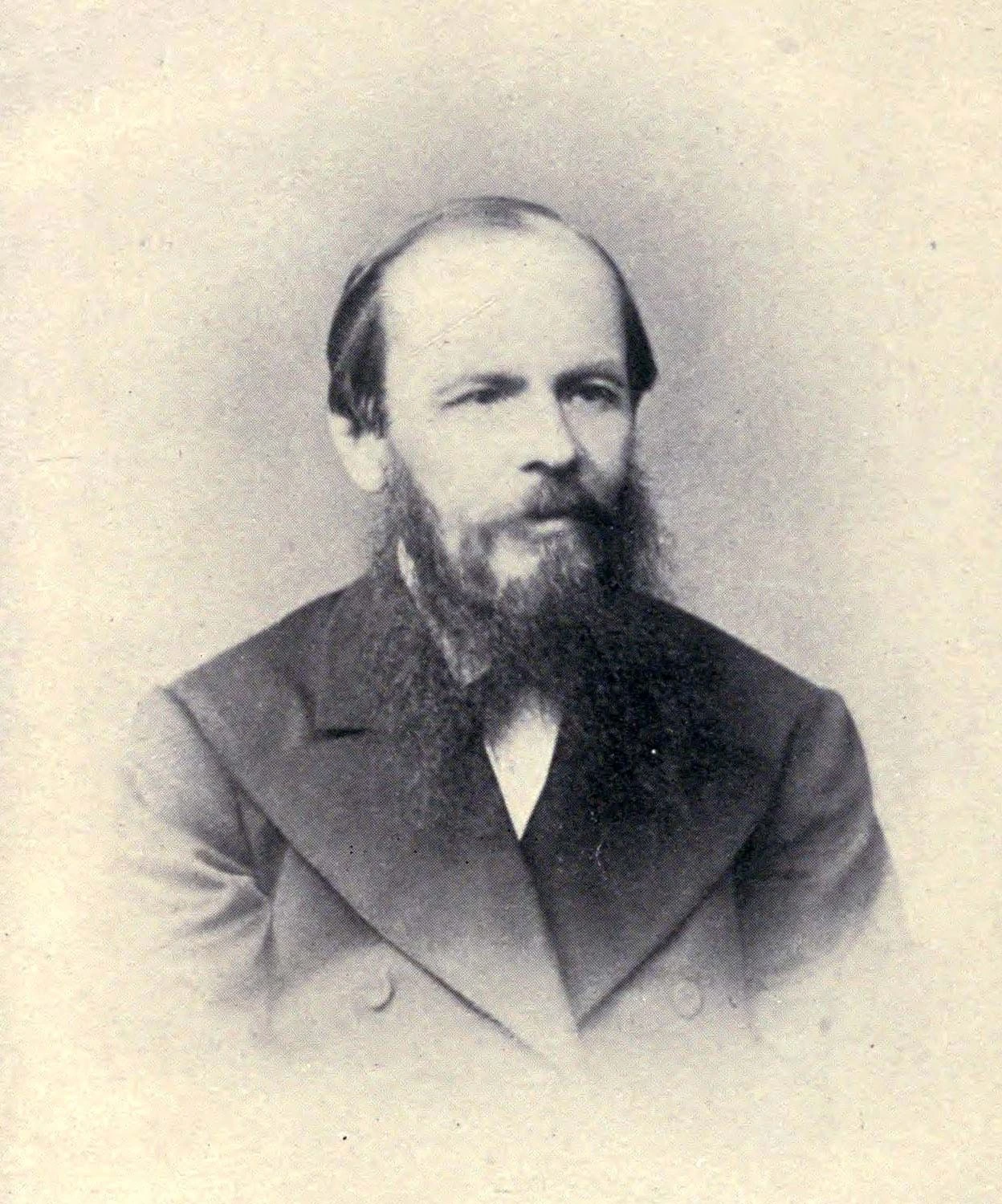
There is no single authoritative estimate, because his finances were never straightforward: income from publishing was real but inconsistent, debts were large and growing with interest, and his gambling habit repeatedly wiped out cash reserves. What follows is a practical breakdown of what the evidence actually shows and how to think about it.
What "net worth" actually means for a historical figure

When a modern net-worth tracking site estimates a living celebrity's wealth, it is aggregating verifiable assets (property, equity, royalties, cash holdings) and subtracting documented liabilities. That process depends on financial transparency that simply did not exist in 19th-century Russia. There were no public filings, no stock portfolios, and no standardized royalty accounting. For a historical figure like Dostoevsky, "net worth" is really a retrospective calculation built from scattered archival documents: publishing contracts, correspondence about debts, estate inventories, and memoir accounts from people who knew him.
The distinction between "net worth at death" and "lifetime earnings" matters enormously here. A writer can earn a significant sum over a career and still die with almost nothing if debts consumed most of it. Dostoevsky is a textbook example of exactly that situation. His literary output was prolific and well-compensated relative to most Russian writers of his era, but understanding his actual financial position requires tracking both sides of the ledger simultaneously, something most online sources skip entirely.
What we know about Dostoevsky's income
Dostoevsky's income came from three primary channels: advances and flat fees from publishers, per-sheet payments for serialized novels in journals, and (later in his career) royalties from collected editions. Russian literary economics in the 1830s through 1880s were cash-driven and volatile, with writers rarely holding capitalized assets the way a modern author might through IP ownership. The economic context of that era meant a writer's financial position could swing dramatically from one publication deal to the next.
The most documented and damaging income event in his life was the 1866 contract with publisher F.T. Stellovsky. This was widely described in Russian-language sources as a "kabal'ny" (bondage or indentured) contract: Dostoevsky received a lump-sum advance under terms that required him to deliver a new novel by November 1, 1866 or forfeit the rights to reprint all his existing works to Stellovsky without any compensation. That clause essentially held his entire backlist hostage. To meet the deadline, Dostoevsky hired Anna Grigorevna Snitkina as a stenographer and dictated "The Gambler" in a matter of weeks, a remarkable feat that also led to their marriage.
Litigation over whether the manuscript was actually delivered on time continued for years, documented in Dostoevsky's correspondence with his lawyer V.I. Gubin from 1871 to 1874. Stellovsky contested the delivery date, meaning the financial risk of the contract did not fully dissipate for years after the nominal deadline passed. This is the kind of detail that makes historical income figures complicated: a contract might look like income on paper but remain legally disputed for nearly a decade.
In his later years, particularly from the mid-1870s onward, his financial situation improved somewhat. "The Diary of a Writer" brought direct reader subscriptions, and his major novels commanded better fees. But it is worth understanding that publishing income in that era worked similarly to what WIPO describes in modern book publishing: advances are not pure profit. They are recouped against future earnings, and expense offsets can mean the actual cash an author sees is significantly less than the headline contract value.
Debts, gambling, and the financial turning points

Dostoevsky's debt burden is probably the most well-documented aspect of his finances, precisely because his wife Anna wrote extensively about it in her memoirs. She describes the total debt load after they returned from abroad as amounting to approximately 25,000 roubles, a figure that included accumulated interest. She also notes that among those debts were what she called "partly fictitious debts" on bills extracted from him under false pretences, adding to the pressure. The family spent the last thirteen years of their married life working systematically to pay it all down. According to Anna, the debts were finally cleared only one year before Dostoevsky's death in January 1881.
The gambling cycle is essential context here. Dostoevsky's 1867 letters, written while abroad, show repeated cash-flow crises tied directly to his roulette addiction. The pattern was documented by Anna and reflected in his fiction: valuables were pawned, the proceeds were gambled away, and emergency letters were sent begging for money to travel or settle immediate accounts. This cycle made it structurally impossible to accumulate savings even during periods of reasonable literary income. In practical terms, any cash that came in was either committed to debt repayment or lost at the casino before it could translate into net assets.
The family also had a complicated relationship with real estate. The Darovoe village estate, inherited from his father, is a point of historical research interest: scholars examining whether that estate was profitable require archival documents (including an 1850 report of the estate headman) rather than modern heuristics. The estate's actual income contribution to his finances remains unclear without those primary sources, which is a good illustration of why historical net-worth calculations carry real uncertainty.
How estimates get calculated (and where the assumptions live)
Researchers who attempt a Dostoevsky net-worth estimate typically work from a combination of sources: documented publishing contracts and known per-sheet payment rates for Russian journals of the period, Anna's memoir figures on debts and their repayment timeline, correspondence that mentions specific cash amounts, and estate inventory records where they exist. The problem is that these sources don't all agree and don't cover the same time periods consistently.
A responsible estimate would separate two questions: what did he earn over his lifetime, and what was his net financial position at death? On lifetime earnings, the numbers are genuinely hard to pin down because many contracts are only partially documented and payment in installments was common. On net worth at death, the picture is clearer in broad strokes: Anna's account suggests debts were cleared only by 1880, leaving roughly one year of relatively debt-free existence. Whatever assets existed at death would have been modest: some property, publication rights to his works, and minimal liquid savings. No credible primary source puts his death-time wealth at a figure that would seem significant even in period terms.
When modern sources attempt to express historical wealth in today's currency, the conversion methodology matters enormously. Purchasing power parity calculations, inflation adjustments, and GDP-based comparisons all produce very different results. A figure of 25,000 roubles in debt sounds manageable in modern dollars depending on which conversion you use, but in the economic context of 1870s Russia it represented a crushing multi-year obligation for a working writer.
Common myths and why the numbers vary

The single biggest mistake in online net-worth estimates for historical literary figures is conflating cultural legacy with financial status. Dostoevsky is one of the most read and studied authors in history. His books have sold hundreds of millions of copies. But virtually none of that commercial success generates income for his estate today, and it certainly was not reflected in his lifetime bank account. Posthumous fame and lifetime wealth are completely separate things, and many casual articles blur that line.
- Confusing popularity or critical stature with financial wealth: Dostoevsky was famous in Russia during his lifetime but still died with minimal assets after decades of debt.
- Citing inflation-adjusted figures without specifying the conversion method: a "net worth" stated in modern dollars can vary by a factor of ten depending on the methodology used.
- Treating Anna's memoir figures as precise accounting: her accounts are the best available evidence but are personal recollections, not audited financial records.
- Ignoring the debt side of the ledger: some sources list income or advances without accounting for the debts that consumed most of that money.
- Confusing "net worth at death" with "peak lifetime earnings": Dostoevsky's earning power in the late 1870s was probably the highest of his career, but that does not mean he accumulated significant wealth.
The variation in estimates across different websites also comes from the fact that most of them are not working from primary sources at all. They are copying and inflating each other's figures, adding currency conversions, and presenting them as though they were researched conclusions. The actual scholarly literature on Dostoevsky's finances is careful, hedged, and built around archival documents. That is a very different product from what you find on most "net worth" aggregator sites.
How to verify figures and spot credible sources today
If you are trying to find a defensible estimate rather than a recycled number, the practical filter is simple: does the source cite primary or secondary historical documents? Credible sources on Dostoevsky's finances will reference Anna Grigorevna's memoirs (published in full, with archival backing), specific publishing contracts, correspondence collections, or academic journals like "The Dostoevsky Journal" or "The Unknown Dostoevsky." Those journals publish peer-reviewed research that includes archival citations, methodology notes, and honest acknowledgment of gaps.
| Source Type | Reliability for Financial Data | What to Look For |
|---|---|---|
| Peer-reviewed Dostoevsky journals (e.g., The Dostoevsky Journal) | High | Archival citations, methodology notes, debt/income figures with context |
| Anna Grigorevna's published memoirs | High as primary evidence, limited as accounting | Specific rouble figures, debt repayment timeline, contract details |
| Academic biographies citing primary sources | Medium-High | Referenced publishing contracts, correspondence with dates and amounts |
| General encyclopedia entries (e.g., Britannica) | Low for financial specifics | Useful for career timeline context only, not cash figures |
| Celebrity net worth aggregator websites | Very Low | Often copy each other; no archival sourcing; treat with skepticism |
A practical step is to cross-reference any rouble figure you find against what Anna specifically wrote: the 25,000-rouble debt figure with accumulated interest, the thirteen-year repayment period, and the one-year debt-free window before his death. If a source's numbers are wildly inconsistent with those anchors, that is a signal the source is not working from primary material. Cambridge Core, Brill, and similarly gated academic databases are where the serious research lives. The New Yorker's 2004 coverage of Anna's memoir is useful for narrative context but is not a financial document.
The bottom line: what a reasonable estimate looks like

A reasonable, evidence-grounded estimate is that Dostoevsky's net worth at death was minimal, probably in the range of a few thousand roubles at most, and possibly near zero in liquid terms after accounting for all obligations. If you are comparing figures, remember that many online claims about Feodor Vassilyev net worth are not grounded in verifiable primary records the way historical analyses are.
He was not destitute at the end of his life: the debts were cleared, he had a family home, and his literary works retained commercial value. But he did not accumulate significant capital. The Stellovsky contract, the gambling losses, the interest-bearing debts, and thirteen years of working to pay creditors instead of saving: all of that ensured he arrived at the end of his life with the fruits of his labor largely consumed.
If you want to frame his financial trajectory more meaningfully than a single death-time figure allows, the better framing is this: Dostoevsky was a high-earning literary professional by the standards of 1870s Russia who nonetheless remained financially vulnerable for most of his life due to structural debt, addiction, and predatory contracts. His situation is not unusual in the context of Eastern European literary careers of that century, where cash flows were volatile and capitalized assets were rare for writers. Unlike a modern celebrity whose royalties compound into lasting wealth, 19th-century Russian novelists operated in a world where income and financial security were rarely the same thing.
For readers exploring similar profiles on this site, it is worth noting that the methodology challenge here is genuinely different from profiling a contemporary figure like a modern Russian entrepreneur or public figure, where financial records, filings, and asset registrations provide a structured basis for estimation. Historical figures require a different standard of evidence and a much higher tolerance for uncertainty in the final number.
The honest answer to "what was Dostoevsky's net worth" is: modest at death, complicated throughout his life, and best understood through the archival record rather than any single rounded figure. You can compare this kind of uncertainty with how articles about Leo Polovets net worth typically rely on more recent, better-documented financial signals.
If you are specifically looking for Fyodor Ovchinnikov's net worth, you will usually need to rely on the same kind of sourcing and methodology checks discussed for historical figures modest at death.
FAQ
What does “fyodor dostoevsky net worth” mean for someone who died in 1881, and what should I look for in a good estimate?
For a historical author, it usually means a reconstructed “net position at death,” not current-day fame. A good estimate should specify the reference point (at death vs. a particular year), list which debts are included (and whether interest is counted), and distinguish documented cash or estate items from more speculative asset guesses (like future royalty value).
Why do some websites give wildly different rouble numbers (thousands vs. tens of thousands) for Dostoevsky?
Most differences come from mixing lifetime earnings with net worth, treating disputed or late payments as certainty, or omitting parts of the debt load (such as interest or “partly fictitious” bills). Another common issue is using a single conversion or rounding approach without showing the underlying rouble arithmetic.
Is it reasonable to treat Dostoevsky’s “net worth at death” as a proxy for how successful he was as a writer?
No. In his case, high professional output did not translate into stable wealth because recurring debt, gambling cash-flow shocks, and contract risk consumed incoming money. A better proxy is payment timing and ability to settle obligations, not fame or total career output.
How should I evaluate an online estimate if it does not cite Anna Grigorevna’s memoirs or specific archival documents?
If there is no clear link between the number and a primary source narrative (especially the debt figure and repayment timeline she describes), treat the estimate as unsupported. You can also check whether their timeline conflicts with the idea that major debts were cleared only about a year before his death.
Do gambling losses mean his net worth would be near zero even in years when he had good publishing income?
Often, yes, because his roulette addiction created frequent liquidity crises. Even if earnings arrived from contracts or serialization, letters and reports about pawned valuables and emergency requests suggest cash was repeatedly diverted to losses and immediate accounts, limiting the chance of building reserves.
Should I compare “lifetime earnings” or “net worth at death” when judging the credibility of a number?
Net worth at death is usually easier to anchor because debts and the repayment window are more concretely described. Lifetime earnings are harder because installment payments, partial documentation, and legal disputes about delivery and rights can distort any single total.
How do contract details, like delivery deadlines and reprint-right forfeiture, affect net worth estimates?
They can radically change risk exposure. A contract might look profitable on paper due to a headline advance, but if legal disputes persist for years or delivery terms threaten the backlist, the effective financial outcome could be much worse than the nominal deal value.
What conversion method is safest when converting “roubles” to modern money?
Avoid trusting a single headline “dollars today” figure unless the method is explained. Purchasing power comparisons, inflation-based conversions, and GDP-relative measures can produce very different magnitudes, and net worth at death for a debt-burdened writer is especially sensitive to the chosen approach.
Did Dostoevsky’s family estate, like the Darovoe village property, materially change his net worth?
It might have helped or barely mattered, but the key point is that profitability depends on archival records about yields and administration. If an estimate treats inherited land as automatically valuable without showing supporting documentation, it is likely oversimplified.
What’s a common mistake when people say “Dostoevsky is wealthy because his books sell”?
That confuses cultural legacy with cash flow for the household during his life. Modern sales do not retroactively prove what he held in assets in 1881, and 19th-century Russian authors typically did not experience compounding wealth the way contemporary IP-based royalty systems can.
If I want a practical “defensible” range, how can I build one instead of trusting a single number?
Start from anchored points (for example, the debt magnitude and the repayment ending near his final year), then treat any asset side as tentative unless supported by inventory or specific estate items. Produce a range for liquid net position after obligations rather than a single precise figure.
Are “Fyodor Vassilyev net worth” style pages reliable for Dostoevsky comparisons?
Be cautious with similarly named figures and with pages that do not clearly identify the historical person and the evidence base. For Dostoevsky, reliability should hinge on documented debts, contract disputes, and memoir-backed repayment details, not on reused third-party totals.
Next Articles

Toshko Raychev Net Worth: Estimate, Breakdown, and How to Verify
Get an estimated Toshko Raychev net worth range, breakdown by assets and income, plus a checklist to verify it.

Leo Polovets Net Worth: Best Estimate, Sources, and How to Verify
Estimated Leo Polovets net worth with sources, assumptions, disambiguation, and steps to verify or update the figure.

Fyodor Ovchinnikov Net Worth 2026: Estimate, Sources, and Breakdown
Estimate of Fyodor Ovchinnikov net worth for 2026, how it was calculated, plus factors affecting wealth and verification